Skin rejuvenation
Mesotherapy at CoLaz clinics
Mesotherapy at CoLaz delivers a tailored cocktail of vitamins, minerals, amino acids and brightening agents into the mesoderm, the mid-layer of the skin, through fine micro-injections. From £199 per single session, with a course of six at £995, across our seven UK clinics.
From
£199 per session
single session.
- Session time
- ~45 min
- Downtime
- Minimal
- Consultation
- Free
- Locations
- 7 UK clinics
Reply typically within 5 minutes
Or book by email form →Good for
Who books this treatment.
- Dull, dehydrated or tired-looking skin lacking a healthy glow
- Uneven tone, dark spots and post-inflammatory pigmentation
- Early ageing, fine lines and loss of skin quality
- Patients wanting a topical-meets-injectable boost without filler
- Combination skin that needs hydration and brightening together
- Anyone seeking visible glow ahead of an event or photoshoot
Aftercare
For the first forty-eight hours.
- Avoid touching, rubbing or massaging the treated area for twenty-four hours
- Skip makeup for twelve hours after treatment
- Avoid saunas, steam rooms, sunbeds and intense exercise for forty-eight hours
- Apply SPF 50 daily for the next two weeks while the skin settles
- Mild redness, small marks or light swelling for one to two days is normal
What to expect
From your first consultation onwards.
-
01
Free consultation to assess skin, history and agree the cocktail to be used
-
02
Skin cleansed and a topical numbing cream applied for ten to fifteen minutes
-
03
Tailored mesotherapy solution placed across the face in fine micro-injections
-
04
Cooling and a soothing barrier cream applied in clinic before you leave
-
05
Follow-up sessions booked at the two to four-week interval to complete the course
Mesotherapy is the tailored nutrient cocktail that bypasses the skin barrier. Vitamins, minerals, amino acids and brightening agents are placed directly into the mid-layer of the skin through fine micro-injections, where they can do far more than any topical cream is capable of. From £199 per single session, with a course of six at £995, across our seven UK clinics.

How mesotherapy actually works
Mesotherapy is a placement technique rather than a single product. The clinician selects a customised cocktail of ingredients based on your skin concern: B-complex and C vitamins for energy and brightening, hyaluronic acid for hydration, amino acids for collagen support, and brightening agents such as glutathione or tranexamic acid for pigmentation.
This cocktail is placed into the mesoderm, the mid-layer of the skin, through a series of fine micro-injections across the face. At this depth, the ingredients act directly on the cells that need them, bypassing the skin barrier that limits how much any topical cream can ever deliver.
Because the cocktail is tailored to your concern rather than chosen from a fixed menu, a brightening protocol looks different from a hydration protocol. The right blend for your skin is agreed at consultation, with the goal stated clearly before any solution is mixed.
What mesotherapy is best for
The classic mesotherapy candidate has dull, dehydrated or uneven skin and wants a real glow boost rather than a structural change. The treatment is one of the most reliable on the menu for restoring brightness, tone and hydration, particularly in the run-up to an event or photoshoot where a visible glow is the goal.
It also works well on early ageing, fine lines and loss of skin quality. For pigmentation concerns, including melasma and post-inflammatory marks, a brightening cocktail with glutathione and tranexamic acid often delivers visible change where topical creams have stalled.
Mesotherapy is not a structural treatment. Where firmness, elasticity or volume are the real concerns, Sunekos, Profhilo or dermal filler will give a better result. Many patients combine mesotherapy with these treatments in a wider plan: mesotherapy for tone and brightness, Sunekos or Profhilo for structure.
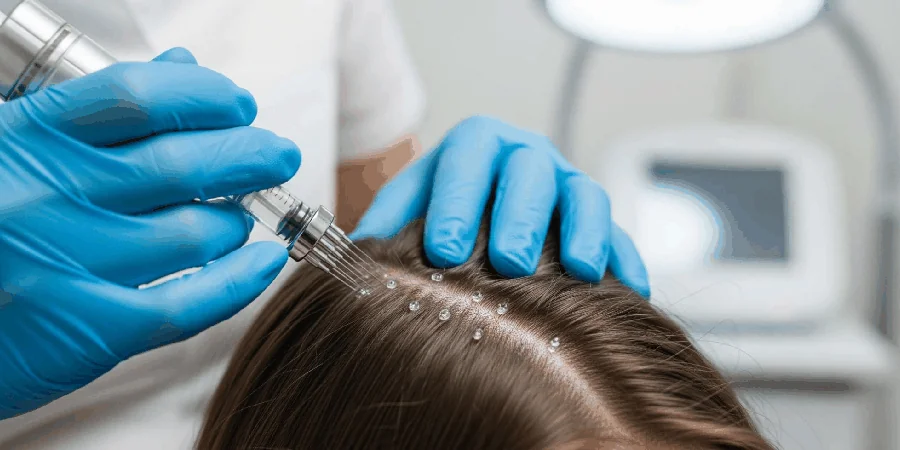

After your mesotherapy
Expect small injection points, mild redness and possible light swelling for one to two days. Most patients return to work the next day with light makeup once twelve hours have passed. There is no flaking, no peeling and no significant downtime beyond avoiding heat and rubbing for the first day.
No touching, rubbing or massaging the area for twenty-four hours. Saunas, steam rooms, sunbeds and intense exercise are out for forty-eight hours. SPF 50 every morning for two weeks while the skin settles is non-negotiable.
An early glow appears within a week. The fuller brightening and hydration improvement builds across the course of four to six sessions and is most striking when compared in photographs across the full protocol. Most patients book a single maintenance session every two to three months once the initial course is complete.
Available at all seven UK CoLaz clinics
Mesotherapy is delivered at every CoLaz clinic in the UK. Use the clinic finder to choose the location that suits your postcode and schedule, or book a free consultation directly through the link below. Each clinic replies via WhatsApp within five minutes during opening hours.
Often considered alongside
Patients booking mesotherapy often consider Sunekos for amino-acid skin boosting alongside the nutrient cocktail, Profhilo for bio-remodelling on top of mesotherapy brightness, Hydrafacial as a complementary surface maintenance, and salmon DNA polynucleotide for a deeper regenerative pairing.
Common questions
What patients ask first.
What is mesotherapy and how does it work? +
Mesotherapy is a technique that places small amounts of a customised solution into the mesoderm, the mid-layer of the skin, through a series of fine micro-injections. The solution typically contains vitamins (B-complex, C, E), minerals, amino acids, hyaluronic acid and brightening agents such as glutathione or tranexamic acid. Once placed in the dermis, these ingredients work directly where they are needed, bypassing the skin barrier that limits how much a topical cream can deliver.
What can mesotherapy treat? +
Mesotherapy is the standout treatment for dull, dehydrated and uneven skin that needs a real glow boost. It works well on early signs of ageing, fine lines, loss of skin quality and pigmentation concerns including melasma and post-inflammatory pigmentation. The cocktail is tailored to your concern, so a brightening protocol will weight glutathione and vitamin C heavily, while a hydration protocol will lead with hyaluronic acid and amino acids.
How is mesotherapy different from Sunekos or Profhilo? +
Mesotherapy delivers a custom cocktail of nutrients, vitamins and brightening agents into the skin to feed and brighten it. Sunekos and Profhilo are specific patented injectables that bio-stimulate fibroblasts to produce new collagen and elastin, rebuilding the skin structure rather than feeding it. They serve different purposes: mesotherapy for tone, brightness and hydration; Sunekos and Profhilo for firmness, elasticity and structural quality. Many patients combine them in a wider treatment plan.
How many mesotherapy sessions will I need? +
A standard course is four to six sessions spaced two to four weeks apart. Visible glow shows within a week of the first session; the structural and brightening improvements build over the course. Most patients book the course of six for the strongest result, then maintenance every two to three months. For pigmentation protocols, a longer course may be agreed at consultation.
Is there downtime after mesotherapy? +
Downtime is minimal. Expect small injection points, mild redness and possible light swelling for one to two days. Most patients return to work the next day with light makeup once twelve hours have passed. Saunas, steam rooms, sunbeds and intense exercise are out for forty-eight hours. SPF 50 daily for two weeks while the skin settles is non-negotiable.
Who should not have mesotherapy? +
We do not treat patients who are pregnant or breastfeeding, who have an active skin infection or cold sore in the treatment area, who have a known allergy to any constituent of the cocktail, who are on blood-thinning medication without prior medical clearance, or who have a history of keloid scarring. Medical history and skincare are reviewed at consultation and the cocktail is adjusted or treatment declined where appropriate.
How much does mesotherapy cost at CoLaz? +
A single mesotherapy session is £199. A course of six is £995, working out at approximately £166 per session, a meaningful saving and the protocol most patients choose because mesotherapy results build with cumulative sessions. The cocktail is tailored at consultation to your concern; pricing covers the customised solution and the application. A consultation is required before any course is booked.
Still deciding
WhatsApp your nearest clinic. Reply within five minutes.
Where to book
Available at all seven UK clinics.
Start here
Derby
DE23 6PZ · 07533 030599
Visit clinic page
Mesotherapy in DerbyWembley
HA9 8AF
Mesotherapy in WembleyPaddington
W2 1JQ
Mesotherapy in PaddingtonSlough
SL1 4XP
Mesotherapy in SloughReading
RG30 1AD
Mesotherapy in ReadingSouthall
UB1 1NF
Mesotherapy in SouthallHounslow
TW5 0BY
Mesotherapy in HounslowFrom the CoLaz blog
Related reading.
8 min read
PRP for hair loss: how many sessions and how long do results last?
Three to four initial PRP sessions, then a top-up every three to six months, is the standard protocol. Here is what the published trials show and how we plan a PRP course at CoLaz.
8 min read
Why is my hair thinning? Causes and the treatments that actually help
Hair thinning has more than one cause, and the right treatment depends on which cause is yours. Here is how the main types differ and the UK treatments that work for each.
8 min read
PRP and autoimmune conditions: 3 inflammation risks to weigh first
PRP uses your own blood to prompt healing, but autoimmune conditions change how your body responds. Here are the three inflammation risks to weigh and how CoLaz screens for them.
8 min read
PRP Side Effects: Common Reactions and Rare Risks Explained
PRP uses your own blood, so most side effects are mild and short-lived. Here are the common reactions, the rare risks that matter, and how a properly run clinic keeps them low.
Often considered alongside
Related treatments.
First to consider
Sunekos
Sunekos at CoLaz is an injectable skin booster that combines hyaluronic acid with six essential amino acids to bio-stimulate fresh collagen and elastin in the dermis.
Skin rejuvenation
Injectables
Profhilo
Profhilo at CoLaz is an injectable hyaluronic acid treatment that hydrates and bio-remodels the skin from within, improving firmness, tone and elasticity rather than adding volume.
Skin rejuvenation
Hydrafacial
Hydrafacial at CoLaz follows the official six-step protocol, detox, cleanse, peel, extract and hydrate, fuse and protect, and LED rejuvenation, adapted into six concern-based bundles, from the thirty-minute Express to the premium JLO Glow.
Skin rejuvenation
Salmon DNA Polynucleotide
Salmon DNA polynucleotide at CoLaz is a regenerative injectable that uses purified polynucleotide fragments to bio-stimulate fibroblasts, rebuilding skin from within.
Begin
Book a free consultation,
without obligation.
Tell us what you would like to change. Your clinician will recommend a plan, confirm the price in writing, and leave the booking to you.
Book a free consultation →