
Meso HairMax vs PRP: which works better for hair thinning?
 Owner, CoLaz Aesthetics Clinic

The short version
- PRP has the larger body of published evidence for pattern hair thinning. Scalp mesotherapy, the group Meso HairMax belongs to, has smaller studies and formulas that vary from clinic to clinic.
- Neither is a cure. Both aim to support follicles that are still alive, and both need a course of sessions plus maintenance, which we plan at about every 6 months.
- Meso HairMax needs no blood draw, so it suits people who dislike needles or blood tests. PRP uses your own blood and is the better-evidenced of the two.
- Some patients with stubborn thinning have both. Before either, we ask you to rule out treatable causes such as low ferritin, vitamin D or thyroid problems with your GP.
- At CoLaz, PRP is offered at six clinics and Meso HairMax at Reading and Hounslow. We confirm your plan in writing before anything is booked.
TL;DR
- PRP has the larger body of published evidence for pattern hair thinning. Scalp mesotherapy, the group Meso HairMax belongs to, has smaller studies and formulas that vary from clinic to clinic.
- Neither is a cure. Both aim to support follicles that are still alive, and both need a course of sessions plus maintenance, which we plan at about every 6 months.
- Meso HairMax needs no blood draw, so it suits people who dislike needles or blood tests. PRP uses your own blood and is the better-evidenced of the two.
- Some patients with stubborn thinning have both. Before either, we ask you to rule out treatable causes such as low ferritin, vitamin D or thyroid problems with your GP.
- At CoLaz, PRP is offered at six clinics and Meso HairMax at Reading and Hounslow. We confirm your plan in writing before anything is booked.
Meso HairMax vs PRP is the question we hear most from patients with early hair thinning who have decided they want an injectable option. The honest answer is that PRP has the stronger evidence, Meso HairMax is the gentler and less invasive of the two, and the better choice depends on what is behind your thinning and what you are comfortable with.
This post sets out how the two differ, what the research does and does not show, and how we decide between them at CoLaz.
What is the difference between Meso HairMax and PRP?
The difference is what goes into your scalp: PRP injects concentrated platelets from your own blood, while Meso HairMax injects a ready-made mix of vitamins, minerals and amino acids.
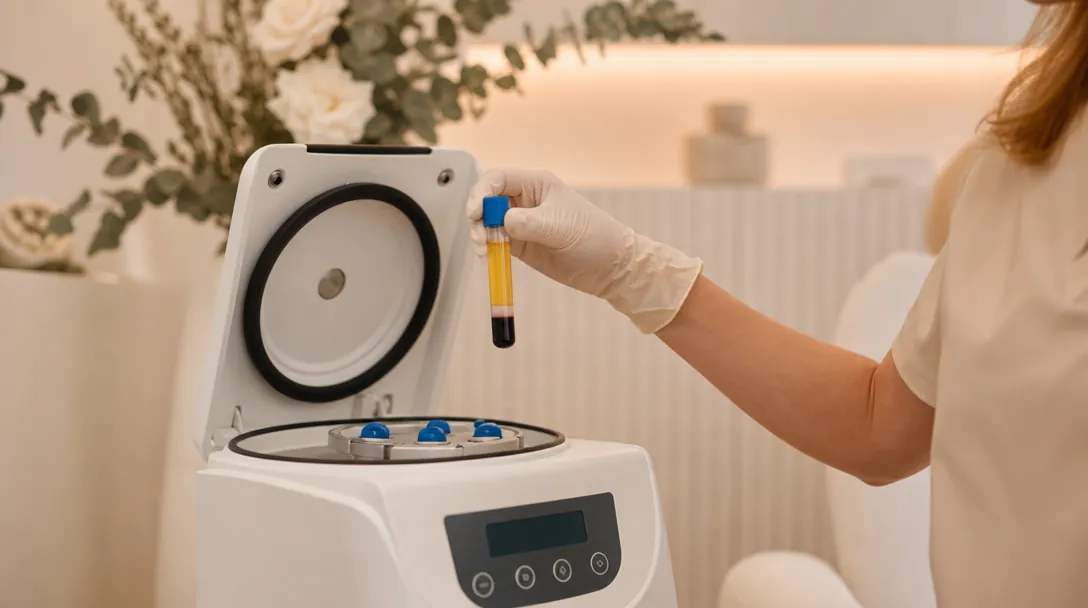
With PRP hair loss, we take a small blood sample, spin it in a centrifuge to concentrate the platelets, and inject the plasma across the thinning areas. Platelets carry growth factors, which are signalling proteins that are thought to nudge weakened follicles back towards their active growth phase.
Meso HairMax works differently. There is no blood draw. The formulated cocktail is injected as a grid of small points into the scalp, and the idea is to supply the building blocks the follicle uses and to improve the local environment around it.
Mesotherapy is a delivery method, not one product. A recent review of injectable therapy for pattern hair loss found that multivitamin and peptide formulas were the most studied, followed by drugs such as dutasteride, minoxidil and finasteride. That matters, because a study of one mesotherapy formula tells you little about another.
Meso HairMax vs PRP: which has stronger evidence?
PRP has the stronger evidence, with several randomised trials and pooled analyses behind it, while scalp mesotherapy rests on smaller and more varied studies.
For PRP, a meta-analysis covering 30 studies and 687 patients found that 29 reported beneficial results and 24 reached statistical significance on at least one measured outcome. A separate pooled analysis of randomised trials found that PRP increased hair density at 3 and 6 months compared with placebo. In studies in women, PRP increased terminal hair density but not hair thickness, and the authors urged caution until larger studies confirm it.
For mesotherapy, a systematic review found it was mostly studied in pattern hair loss and suggested a supportive role, with reported gains in density, thickness and patient satisfaction. The recent review of 30 studies was more guarded. It concluded that injectables may offer a cosmetic benefit, but that small samples, varied protocols and short follow-up mean standardised randomised trials are needed before they can be recommended as routine therapy.
There is one head-to-head comparison worth knowing about, with a caveat. A retrospective study of 72 patients compared two PRP products with two mesotherapy products over 6 months and found significant improvement in both groups. The mesotherapy products in that study contained growth factors and stem cell-conditioned media, not a vitamin and amino acid mix like Meso HairMax, so it is only an indirect guide.
What results and timelines can you realistically expect?
Hair grows slowly, so judge either treatment at 3 to 6 months rather than after one session, and expect to need maintenance to hold the result.
Here is how the two compare in our clinics:
| PRP | Meso HairMax | |
|---|---|---|
| What is injected | Platelet-rich plasma from your own blood | A cocktail of vitamins, minerals and amino acids |
| Blood draw | Yes | No |
| Typical course | 3 to 4 sessions, 4 weeks apart | 4 to 8 sessions, 2 to 4 weeks apart |
| Session length | About 60 minutes | 45 to 60 minutes |
| Maintenance | About every 6 months | About every 6 months |
| Price | From £350 (Stage 1, single session) | From £250 (Stage 1, single session) |
| Where | Six clinics, not Derby | Reading and Hounslow |
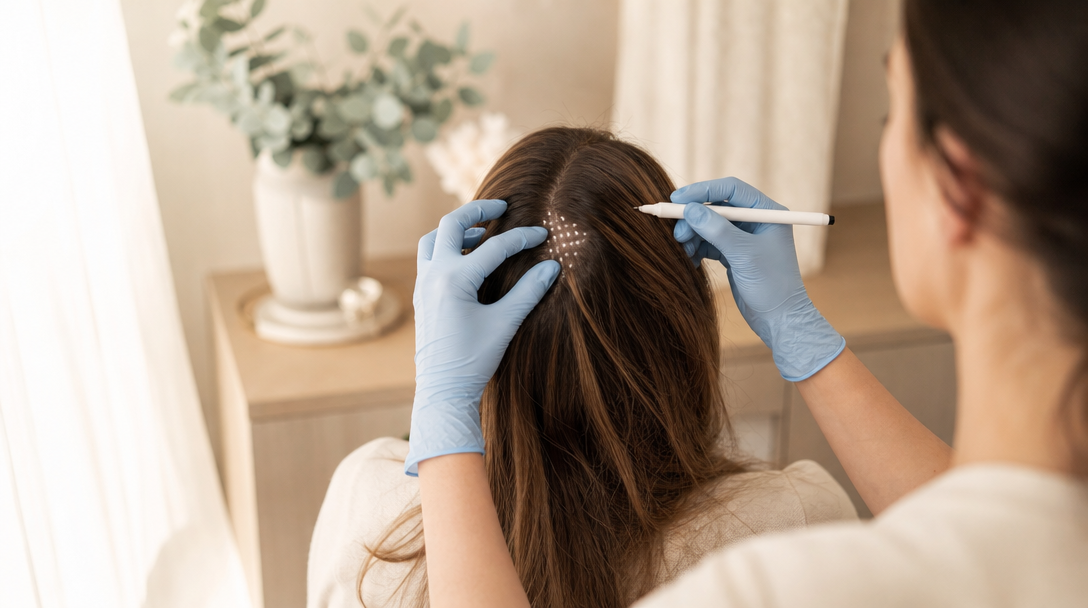
The exact number of sessions depends on your stage of thinning, and we write it down at the consultation. If you want the detail on the PRP course, our guide to PRP sessions goes through it.
Maintenance is part of the result, not an upsell. In a half-head trial of 20 men given three PRP treatments 30 days apart, 4 patients reported progressive hair loss from about 12 months and were treated again. We would rather tell you that on day one than have you wonder why the result faded.
Which is more comfortable, and what are the risks?
Meso HairMax is the lighter option because it needs no blood draw, but both involve a grid of small scalp injections and both can leave the scalp tender for a day or so.
Most patients find both manageable. After PRP, mild tenderness for around 24 hours is normal. After Meso HairMax, it is a similar story, and topical anaesthetic is available if you would like a more comfortable session.
The published side effects are mostly minor. A mesotherapy review of 11 studies and 576 patients listed bruising, pain, headache and, less often, infection. The wider injectable review also reported rarer problems, including acute dermatitis, scarring and paradoxical hair loss, which is one reason we use qualified clinicians and screen carefully.
We do not treat patients who are pregnant or breastfeeding for either treatment. We also screen for blood-thinning medication, certain blood conditions (for PRP), and autoimmune conditions or an active scalp infection (for Meso HairMax). In many cases we will refer you back to your GP first.
Can you have Meso HairMax and PRP together?
Yes, some patients with stubborn thinning have both, but the published evidence for the combination is limited, so we treat it as a plan for individual cases and not a promise.
The two work through different routes, which is the logic for combining them. Where the thinning is more advanced, a clinician may suggest PRP as the main course with Meso HairMax added, or the other way round, depending on how your scalp responds.

Because Meso HairMax is only offered at Reading and Hounslow, a combined plan is only possible at those two clinics. If you live nearer another clinic, PRP is available at six of our seven, and we will tell you plainly what is and is not possible where you are.
Do you need to see your GP before either treatment?
Yes, we ask for it, because treatable causes of shedding such as low iron or a thyroid problem need medical treatment, not scalp injections.
The NHS advises seeing a GP to find out what is causing your hair loss before thinking about a commercial hair clinic, and it is clear that no treatment is 100% effective. It names finasteride and minoxidil as the main treatments for male pattern baldness, with minoxidil also used for women. Finasteride carries MHRA warnings about depression, suicidal thoughts and sexual side effects, so it is a conversation for you and your prescriber.
A patient at our Slough clinic shows why the GP step matters. She came in worried about thinning at her parting, some months after having a baby. We sent her to her GP first to check ferritin, vitamin D and thyroid, because those need ruling out before we move to PRP.
Her bloods showed low ferritin, which her GP corrected with iron supplements over 3 months. We then started PRP, one session every 4 weeks for 3 sessions, with a top-up at month 6. By month 9 her parting looked visibly fuller. Because her iron was treated at the same time, we cannot credit PRP alone, and that is exactly the point: the medical basics come first. If you want to understand your own pattern, our guide to why hair thins is a good place to start.
Who is a good candidate for each?
Both treatments are aimed at early to moderate pattern thinning, where the follicles are still present but weakened.
The BAD patient leaflet describes female pattern hair loss as diffuse thinning mainly over the top of the scalp, with a widening parting, and notes it can accompany conditions such as PCOS. This early stage, while follicles are still producing hair, is where both treatments make most sense.
- Meso HairMax suits early thinning, and people who would rather avoid a blood draw.
- PRP suits early to moderate thinning where you want the option with the larger evidence base, and you are comfortable with a blood sample.
- Neither is the right first step for sudden or patchy hair loss, an inflamed or scarred scalp, or very advanced thinning. Those need a GP or dermatologist first.
How do we choose between them at CoLaz?
We choose after a free consultation, based on your pattern, your history and your bloods, and we write the plan down before you decide anything.
The consultation covers your medical history, medication, any recent blood results, the stage of your thinning and what you would like to change. We then write down the recommended treatment, the number of sessions, the spacing, the price per session and the maintenance schedule. You take that plan away and decide in your own time.
If PRP is the better fit, we say so. If Meso HairMax at Reading or Hounslow suits you better, we say that. If neither is right for you yet, we tell you that too, because an honest no protects you.
To talk it through, book a free consultation at your nearest CoLaz clinic.
Ready to begin
Book a free PRP Hair Loss consultation at your nearest CoLaz clinic
Time with a qualified clinician: a skin assessment, an honest recommendation and no obligation. Read about PRP Hair Loss at CoLaz, from £350 (Women Stage 1 or Male Stage 1, single session).
More on Hair loss
Keep reading
-

Hair loss treatment UK: a realistic 2026 guide to what actually works
Minoxidil, finasteride, PRP, scalp mesotherapy, laser therapy, exosomes and transplants. What the evidence actually shows for each, what they cost, and the combined pathway most clinicians recommend. Read the article -

Female hair loss treatment: realistic options in 2026
Female pattern hair loss looks nothing like the male version, and the pathway is different too. What the evidence supports in 2026, and why bloods come first. Read the article -
PRP for hair loss: how many sessions and how long do results last?
Three to four initial PRP sessions, then a top-up every three to six months, is the standard protocol. Here is what the published trials show and how we plan a PRP course at CoLaz. Read the article
Book a free consultation at your nearest CoLaz clinic
Time with a qualified clinician: a skin assessment, an honest recommendation and a written plan. No obligation.