
Hair loss treatment UK: a realistic 2026 guide to what actually works
 Owner, CoLaz Aesthetics Clinic
The short version
- There is no cure for pattern hair loss. Every treatment that works only works for as long as you keep using it, and the NHS is clear that no treatment is 100 percent effective.
- Start with your GP and a blood test, not with a clinic. Low ferritin and thyroid problems are common, treatable causes of shedding that no scalp injection will fix.
- Topical minoxidil and oral finasteride have the strongest evidence base. Finasteride now carries strengthened MHRA warnings for psychiatric and sexual side effects, so it is a prescriber conversation, not an online purchase.
- PRP, scalp mesotherapy and low-level laser therapy are supporting treatments with real but modest published effects. They work best added to a medical base, not instead of one.
- Injectable exosome and stem cell treatments for hair are not lawful cosmetic treatments in the UK. Walk away from any clinic offering them.
TL;DR
- There is no cure for pattern hair loss. Every treatment that works only works for as long as you keep using it, and the NHS is clear that no treatment is 100 percent effective.
- Start with your GP and a blood test, not with a clinic. Low ferritin and thyroid problems are common, treatable causes of shedding that no scalp injection will fix.
- Topical minoxidil and oral finasteride have the strongest evidence base. Finasteride now carries strengthened MHRA warnings for psychiatric and sexual side effects, so it is a prescriber conversation, not an online purchase.
- PRP, scalp mesotherapy and low-level laser therapy are supporting treatments with real but modest published effects. They work best added to a medical base, not instead of one.
- Injectable exosome and stem cell treatments for hair are not lawful cosmetic treatments in the UK. Walk away from any clinic offering them.
Searching for hair loss treatment in the UK returns a wall of confident promises, and almost none of them come with a number attached. This guide does the opposite. Below is what the published evidence actually says about each of the main options, what each one realistically achieves, and the order most clinicians would put them in.
The honest starting point is the one the NHS states plainly: no treatment is 100 percent effective, and the main drug treatments only work for as long as they are used.
What actually causes most hair loss?
Most long-term hair loss in adults is androgenetic alopecia, better known as male or female pattern hair loss. The British Association of Dermatologists explains that a hormone called dihydrotestosterone (DHT) changes the hair follicles on the scalp, so that in a process called miniaturisation the hairs they produce get gradually thinner and lighter until the follicle stops producing hair at all.
It is strongly genetic. Over 190 genes have been identified as contributing, which is why the pattern and the speed vary so much between family members. The same organisation is direct about the outlook: there is no cure, and progression usually runs over years to decades rather than months.
Pattern hair loss is not the only cause, though, and this matters more than most people realise. Sudden diffuse shedding, patchy loss, an itchy or scarred scalp, or hair loss alongside fatigue and weight change all point somewhere else. In women in particular, the most common cause of hair loss is still female pattern hair loss, but it typically starts in the 40s to 60s, so thinning much earlier than that deserves a proper look before anyone starts treating it.
Where does hair loss treatment in the UK actually start?
It starts with your GP and a blood test, not with a clinic. Before any aesthetic treatment is worth paying for, the treatable medical causes need ruling out: ferritin (iron stores), thyroid function, vitamin D and a full blood count are the usual first-line checks, with anything further guided by your symptoms.
This is not a formality. Low iron stores are one of the most commonly identified contributors to diffuse shedding, especially in women of reproductive age, and correcting them takes months of supplementation rather than an injection. A thyroid problem behaves the same way. If either is driving the shedding, a course of scalp treatment will not hold the result.
A patient came to our Slough clinic worried about thinning at her parting line. She was 33 and eight months past her last delivery. We sent her to her GP first, and her bloods came back with low ferritin, which the GP corrected over three months with iron supplements. Only then did we start a course of PRP, and by month nine her parting was visibly fuller. We do not skip the GP, because aesthetic treatments work best once the medical basics are sorted.
If you want the fuller picture of what drives thinning in the first place, we have written separately about why hair thins and when it is worth getting checked.
What does the evidence say about minoxidil and finasteride?
These two are the medical base of hair loss treatment, and everything else in this guide is best thought of as sitting on top of them. Both are decisions for a prescriber or pharmacist, not for a beauty clinic, and CoLaz does not supply either.
Topical minoxidil is applied daily to the scalp. The BAD describes 5 percent minoxidil liquid or foam as slowing the progression of hair loss and acting as a hair growth stimulant. The American Academy of Dermatology sets the timeline honestly: minoxidil results usually take 6 to 12 months to show, a temporary increase in shedding in the first two to eight weeks is common, and if you stop applying it, you lose its benefits.
Finasteride is a tablet that reduces DHT levels, and the evidence for slowing loss in men is strong. It also now carries strengthened UK warnings. In its safety update, the MHRA states that finasteride is associated with depression, suicidal ideation and sexual dysfunction which may persist after treatment is stopped. A patient alert card is now supplied in every pack, prescribers are told to ask about any history of depression before prescribing, and patients are told to stop the medicine and contact their prescriber if suicidal thoughts or depression develop.
That is not a reason to dismiss the drug. It is a reason to get it from a prescriber who takes a proper history, rather than from an online form.
Does PRP work for hair loss?
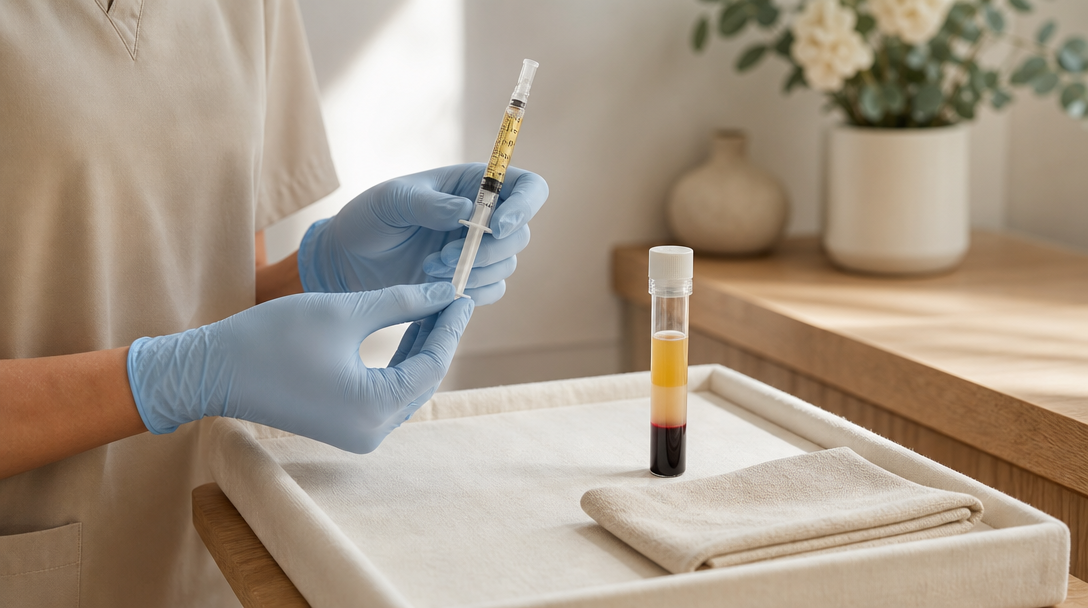
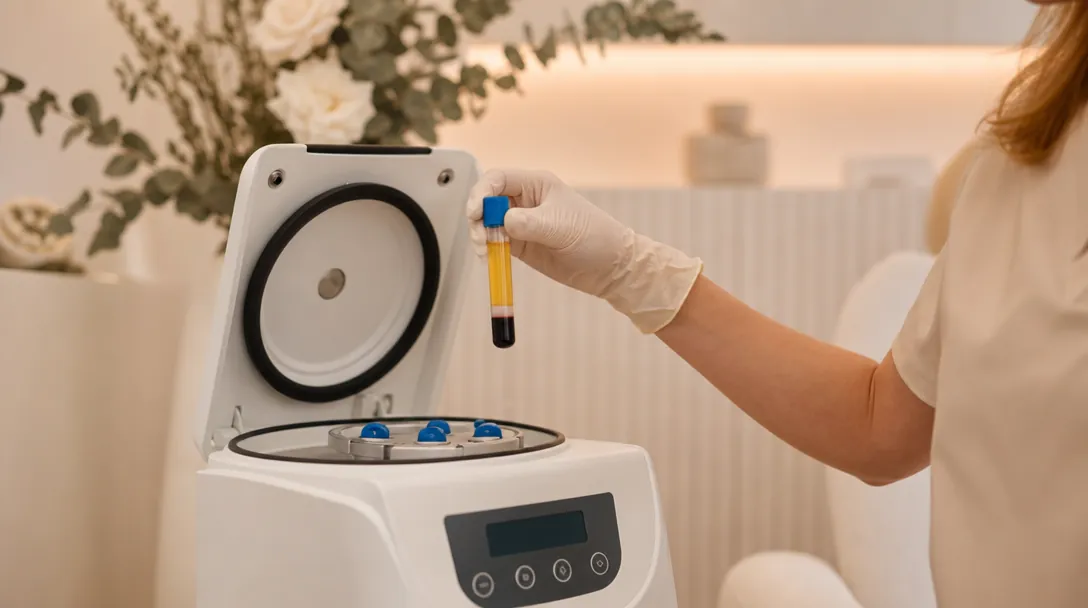
Yes, with modest and well-documented effect sizes, and it works best alongside minoxidil rather than instead of it. PRP (platelet-rich plasma) means drawing a small amount of your own blood, spinning it in a centrifuge to concentrate the platelets and growth factors, and injecting that concentrate into the scalp.
A systematic review of five randomised trials covering 227 participants compared PRP added to topical minoxidil against minoxidil alone. The combination increased hair density by a mean of 21.81 hairs per square centimetre at three months, with a significant improvement in patient satisfaction. The authors were equally clear about the limitation: the evidence quality is very low, only one trial had a low risk of bias, and PRP preparation methods varied widely between studies.
The AAD’s summary is similar in tone, describing PRP as a treatment that studies show can be safe and effective, with a typical schedule of monthly injections for around three months followed by maintenance every three to six months. That matches what we see in practice.
At CoLaz, PRP hair loss treatment runs as three to four sessions four weeks apart, then maintenance roughly every six months, from £350 per session. We screen ferritin, vitamin D and thyroid first, and we do not treat during pregnancy or breastfeeding, or where a patient is on blood-thinning medication.
Where does scalp mesotherapy fit?
Scalp mesotherapy sits alongside PRP as a supporting injectable, delivering a cocktail of vitamins, amino acids and peptides into the scalp rather than a blood-derived concentrate. It is popular internationally, and it is often chosen by patients who would rather avoid a blood draw.
The published evidence is thinner than for PRP and depends heavily on what is in the syringe. Reviews of dutasteride mesotherapy, the most studied version, report some efficacy with fewer systemic effects than tablets, but also note that standardised protocols and large trials are still missing, and that injection pain, headache and scalp tightness are common after treatment. Note that the drug-based version is a prescriber-led treatment and is not what a vitamin and peptide cocktail does.
Our own version, Meso HairMax, is a non-prescription vitamin, amino acid and peptide cocktail. It runs as four to eight sessions two to four weeks apart, from £250 per session, and is currently offered at our Reading and Hounslow clinics. Some patients combine it with PRP where thinning is stubborn.
Does low-level laser therapy grow hair?
Yes, modestly, and it is the lowest-effort option on this list because it is done at home. Low-level laser therapy (LLLT) uses red light in the 650 to 660 nm range, delivered by a comb, cap or helmet device, to stimulate follicles.
The evidence is better than most people expect. A meta-analysis of 11 double-blinded randomised controlled trials found a significant increase in hair density with LLLT compared with sham devices, in both men and women, and with both comb-type and helmet-type devices. In one 16-week sham-controlled trial of 60 patients using a helmet device for 25 minutes every other day, hair density rose by 41.90 hairs per square centimetre in the treated group against 0.72 in the control group, with no adverse events reported.
Two caveats are worth carrying. The AAD notes that while results are promising, not everyone who used a laser device saw regrowth. And as with everything else here, the benefit depends on continued use.
Exosomes and stem cell injections: the ones to be careful with

This is the part of the market where the marketing has run well ahead of the law. Injectable exosome and stem cell treatments for hair are being advertised in UK clinics at premium prices, and they should not be.
Save Face, the UK register of accredited practitioners, puts the position bluntly: the MHRA considers injected exosomes to be medicinal products, and injecting exosomes, whether intradermally, subcutaneously or intravenously, cannot lawfully be used in aesthetic procedures in the UK. No exosome product holds a UK marketing authorisation for hair loss. There are no NICE or BAD guidelines endorsing them for any form of alopecia.
If a clinic offers you injectable exosomes for hair loss, or describes them as stem cell exosomes from donor tissue, that is not a legal cosmetic treatment. It is a straightforward reason to book elsewhere. We do not offer them, and we would not.
Is a hair transplant worth it?
For the right candidate it can be, but it is surgery, it is expensive, and it does not stop the underlying process. A transplant moves DHT-resistant follicles from the back and sides of the scalp into thinning areas. It redistributes hair rather than creating new hair, so patients who have surgery without also treating the ongoing loss often need more work later.
The NHS notes that a hair transplant is not funded on the NHS because it counts as cosmetic surgery, and that UK costs range from £1,000 to £30,000 depending on the extent of the loss and the clinic. Risks include bleeding, infection, reaction to the anaesthetic, visible scarring and the possibility that the transplant does not take.
Travelling abroad for a lower price carries its own problems. In 2023, BAHRS, BAAPS, BAPRAS and the Turkish plastic surgery society issued joint minimum guidelines in response to the rise in overseas hair transplant surgery. Their standards are a useful checklist for any provider: a doctor-led consultation, a two-week consideration period before payment, explicit disclosure if technicians rather than doctors will perform the incisions, and a 24/7 route for managing complications.
The realistic hair loss treatment pathway in the UK
Most clinicians build the plan in layers rather than picking a single treatment. The order below is the one we would recognise from consultations across our seven UK clinics.
- Rule out the medical causes. GP visit, bloods for ferritin, thyroid, vitamin D and full blood count. Correct anything that comes back low, and give it three to six months.
- Set the medical base. Topical minoxidil for most people, with finasteride discussed with a prescriber where appropriate. Expect 6 to 12 months before judging it.
- Add a clinic-based stimulant. PRP or scalp mesotherapy as a course, then maintenance. This is where a clinic like ours fits.
- Add a home device if you want more. An LLLT cap or helmet used consistently, alongside the above.
- Consider surgery last. Only once the loss is stable and the medical base is in place, and only with a doctor-led UK-standard provider.
The honest summary of the whole ladder is that these treatments hold ground and win a little back. They do not restore the hair of a decade ago, and anyone who tells you otherwise is selling.
What we do at CoLaz before starting any hair treatment
Every hair loss patient at CoLaz starts with a free consultation, and a meaningful number of them leave with a referral back to their GP rather than a booking. We take a full medical history, look at the pattern of thinning, ask how long it has been happening and what changed around the time it started.
If the picture suggests iron, thyroid, a medication effect or a scalp condition, we say so and we wait. If PRP or Meso HairMax is appropriate, we write the plan down before anything is booked: the number of sessions, the spacing, the price per session and the maintenance schedule. You take that plan away and decide.
We also say no. We do not treat during pregnancy or breastfeeding, we do not treat patients on blood-thinning medication with PRP, and we do not start a course when the underlying cause has not been established. Saying no protects the patient, and it is the part of the consultation that most often gets skipped elsewhere.
Your next step
If you have been thinning for six months or more and your bloods are clear, a course of PRP or scalp mesotherapy is a reasonable next layer on top of a medical base. If you are not sure where you sit, that is exactly what the consultation is for.
You can see the full range of options on our hair thinning page, or book a free consultation at any of our seven UK clinics and we will tell you honestly what is worth doing and what is not.
Ready to begin
Book a free PRP Hair Loss consultation at your nearest CoLaz clinic
Time with a qualified clinician: a skin assessment, an honest recommendation and no obligation. Read about PRP Hair Loss at CoLaz, from £350 (Women Stage 1 or Male Stage 1, single session).
More on Hair loss
Keep reading
-

Female hair loss treatment: realistic options in 2026
Female pattern hair loss looks nothing like the male version, and the pathway is different too. What the evidence supports in 2026, and why bloods come first. Read the article -
PRP for hair loss: how many sessions and how long do results last?
Three to four initial PRP sessions, then a top-up every three to six months, is the standard protocol. Here is what the published trials show and how we plan a PRP course at CoLaz. Read the article -

Why is my hair thinning? Causes and the treatments that actually help
Hair thinning has more than one cause, and the right treatment depends on which cause is yours. Here is how the main types differ and the UK treatments that work for each. Read the article
Book a free consultation at your nearest CoLaz clinic
Time with a qualified clinician: a skin assessment, an honest recommendation and a written plan. No obligation.