
Why is my hair thinning? Causes and the treatments that actually help
 Owner, CoLaz Aesthetics Clinic
The short version
- Hair thinning has at least five common causes: genetic pattern hair loss, telogen effluvium, iron deficiency, thyroid disease, and PCOS-driven androgen excess.
- Pattern hair loss runs in families and is driven by DHT shrinking follicles over time. It is progressive without treatment.
- Telogen effluvium is diffuse all-over shedding two to three months after a trigger such as illness, surgery, childbirth or severe stress. It usually recovers in six to twelve months.
- Licensed UK treatments include topical minoxidil for men and women, oral finasteride for men, and PRP for early to moderate pattern hair loss.
- At CoLaz, every hair thinning consultation includes bloods and a scalp examination before we recommend a treatment, because the cause decides the answer.
“Why is my hair thinning?” is one of the most common questions we hear in our UK clinics, from men in their thirties watching the parting widen and from women in their forties noticing fewer hairs in the brush every morning. The honest answer is that there is more than one cause, and the right treatment depends on which one is yours.
This post sets out the five most common reasons hair thins, how to tell them apart, and the UK treatments that actually help for each. It is written as the conversation we have at the start of a CoLaz hair consultation, not as a sales pitch.
How much hair shedding is normal?
Losing around 50 to 100 hairs a day is normal across the population. Above that, or any noticeable change in the density of your hair when you part it, is worth investigating.
The NHS overview is explicit on this point. Shedding in that range is part of the hair cycle and does not represent thinning. Real thinning shows up as a wider parting, a softer ponytail, more scalp showing through under bright light, or hair that feels finer between the fingers than it used to.
The next question is which of the common causes is driving the change. The five we see most often at CoLaz are genetic pattern hair loss, telogen effluvium, iron deficiency, thyroid disease and PCOS-driven androgen excess.
Is it genetic pattern hair loss?
Pattern hair loss is genetic and hormonal, driven by sensitivity of the hair follicles to dihydrotestosterone (DHT). It is the single most common cause of thinning in both men and women.
In men, the pattern is recognisable: a receding hairline, thinning at the temples, and a widening bald spot at the crown. The British Association of Dermatologists describes the mechanism as miniaturisation: DHT progressively shrinks affected follicles, producing finer, lighter hairs until the follicle stops growing altogether. More than 190 genes have been linked to the condition, which is why it can run unevenly through a family.
In women, the pattern is different: diffuse thinning across the top of the scalp, with the parting widening over time and the frontal hairline usually preserved. Female pattern hair loss affects around 12% of women by age 30 and 30 to 40% by age 60 to 69. Most women with the condition have normal testosterone levels; the issue is follicle sensitivity, not hormone excess.
What gives pattern hair loss away in a consultation:
- A clear family pattern, usually on the mother’s or father’s side.
- Gradual onset over years, not weeks.
- Loss concentrated on the crown, temples or central parting rather than spread evenly across the scalp.
- Otherwise normal blood tests for iron, ferritin and thyroid function.
Pattern hair loss does not reverse on its own and is progressive without treatment.
Is it telogen effluvium?
Telogen effluvium is diffuse all-over shedding triggered two to three months after a stressor: a major illness, surgery, childbirth, severe weight loss, a bereavement or a high fever. The shedding is dramatic but usually self-limiting.
The biology is that a stressor pushes a larger-than-usual proportion of follicles out of the active growth phase and into the resting phase simultaneously. Three months later they all shed together. The Patient.info clinical reference describes the typical pattern: handfuls of hair in the shower, a thinner ponytail, but no patches of bald scalp.
The good news is that most people recover within six to twelve months once the underlying trigger is resolved. The trick is identifying the trigger, because patients often forget the illness or stressor that preceded the shedding by three months. A hospital-based study of diffuse hair loss in women found psychological stress and iron deficiency anaemia to be the two most common drivers.
Telogen effluvium is the one cause of hair thinning where the right answer is often patience plus correction of any nutritional deficiency, not an injectable treatment.

Could it be iron or thyroid?
Iron deficiency and thyroid disease are two of the most important treatable medical causes of hair thinning, and both are missed regularly because they can sit with otherwise normal full blood counts.
Low ferritin (your body’s iron stores) can drive hair shedding even when haemoglobin is in the normal range. A JAAD-published study on iron deficiency in female pattern hair loss and chronic telogen effluvium found higher rates of low ferritin in both groups than in controls. The mechanism is that low iron pushes follicles out of the active growth phase prematurely.
Thyroid disease, both under- and over-active, also drives diffuse thinning. The NHS Inform alopecia page lists thyroid problems alongside nutritional deficiencies and medication effects in its temporary-cause list. Both forms of thyroid dysfunction can be picked up with a single blood test.
This is why we routinely run bloods at the start of a CoLaz hair consultation. A meaningful number of cases that arrive as a request for PRP turn out to need iron supplementation or a GP referral for thyroid management instead, and the hair recovers on its own once the underlying issue is corrected.
What suggests a medical driver rather than a genetic one:
- Sudden onset over weeks rather than slow widening over years.
- Diffuse thinning across the whole scalp, including the back, rather than concentrated on the crown.
- Other symptoms: fatigue, cold intolerance, weight change, pale skin, heavy periods.
Could it be PCOS or hormonal?
In women, polycystic ovary syndrome (PCOS) can drive hair loss on the scalp and hair growth on the face and body at the same time. Both are caused by elevated androgens.
The NHS PCOS overview lists “thinning hair and hair loss from the head” and “excessive hair growth on the face, chest, back or buttocks” together as common symptoms. The mechanism is that PCOS raises levels of androgens including DHT, which binds to receptors on scalp follicles and triggers the same miniaturisation process seen in genetic pattern hair loss.
What suggests PCOS as a driver:
- Hair thinning on the scalp combined with hirsutism on the face, chest or abdomen.
- Irregular or absent periods.
- Acne that started or worsened in adulthood.
- Weight gain that resists usual interventions.
The treatment route is different here. The first step is a GP work-up and, in many cases, a referral to gynaecology or endocrinology. Aesthetic treatment for either the scalp thinning or the hirsutism comes after the hormonal picture is being managed, not before.
What are the treatments that actually help?
For genetic pattern hair loss in men and women, the licensed UK treatments are topical minoxidil and (in men) oral finasteride, with PRP, microneedling and platelet-derived treatments as evidence-based add-ons. For other causes, the answer is to treat the cause first.
A condensed summary of what works for what:
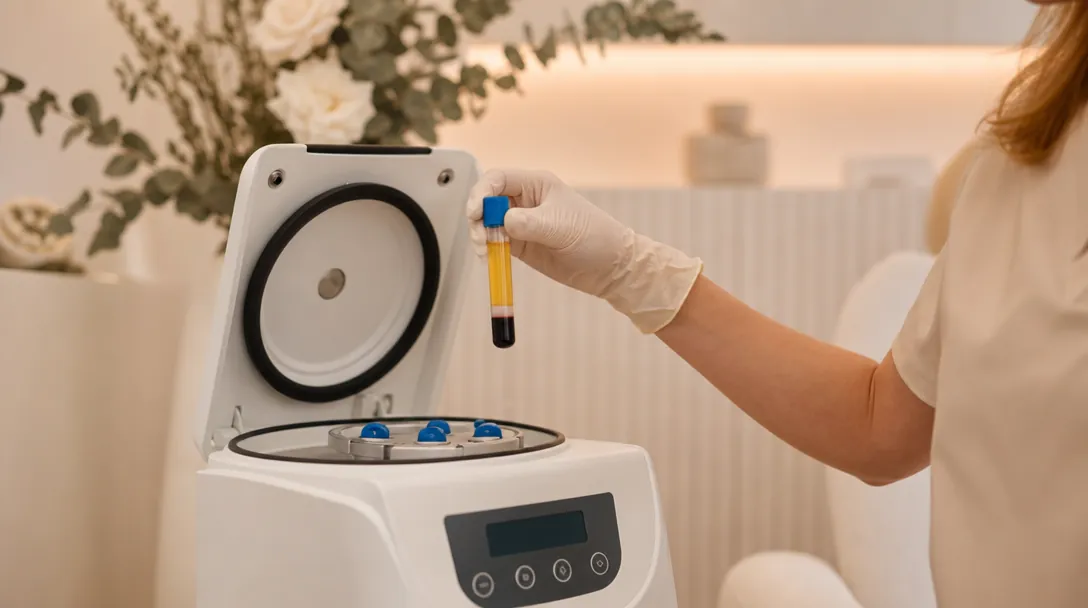
- Pattern hair loss, early to moderate. Topical minoxidil 5% (available over the counter), oral finasteride for men (prescription-only), PRP for hair loss as an evidence-based clinic addition. The Harvard Health overview of PRP for hair loss describes the standard schedule of three monthly sessions followed by quarterly top-ups.
- Pattern hair loss, advanced. Hair transplantation is the better conversation than PRP once a meaningful area is already bald. Combine with topical minoxidil to protect the surrounding native hair.
- Telogen effluvium. Identify and correct the trigger. Supplement iron if ferritin is low. Wait. Most people see visible recovery within six to twelve months without injectable treatment.
- Iron-deficiency-driven thinning. Iron supplementation under GP guidance, plus dietary changes. Hair density typically recovers as ferritin rises.
- Thyroid-driven thinning. GP referral for thyroid function testing and management. Aesthetic treatment is rarely the right first step here.
- PCOS-driven thinning. GP and endocrinology input first. Once hormonal management is in place, PRP for hair loss can be added as part of a layered plan; the published PRP trial data supports it for androgen-driven pattern hair loss.
Two important honesty points. First, no current treatment is a cure for genetic pattern hair loss; every option requires continued use to maintain the result. Second, dramatic claims should be treated with the same scepticism the JCCP applies to the wider aesthetics sector. If something promises a permanent fix in a single session, it is not a hair treatment in the clinical sense.
How does CoLaz approach a hair thinning consultation?
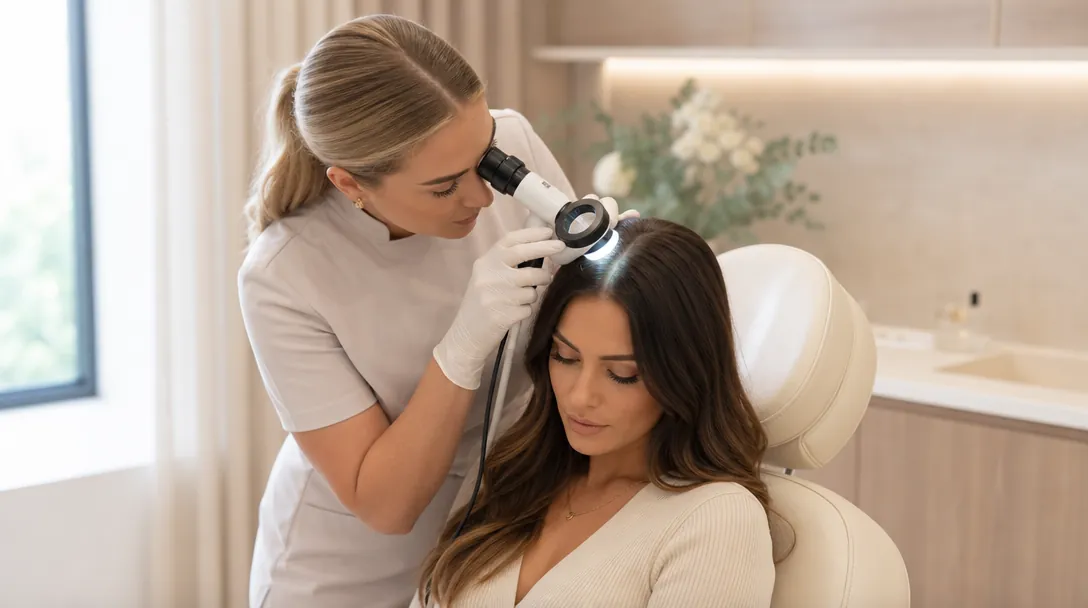
Every patient who comes in asking why their hair is thinning gets the same structured assessment: a detailed history, a scalp examination under a magnifying lamp, and a blood test for iron, ferritin and thyroid function before any treatment plan is written.
The order matters. We screen for the medical causes first because they are common, treatable, and often missed. We confirm the pattern next because pattern hair loss responds to a different treatment to telogen effluvium. And we write the plan in writing only after both, so the recommendation matches your actual cause rather than a default sales path.
If your pattern fits and your bloods are normal, we will talk through the licensed options (topical minoxidil, and finasteride for men through a GP or registered prescriber) and the in-clinic add-ons we offer, including PRP for hair loss and meso HairMax. If your pattern points to a medical cause, we will say so and recommend the GP route.
We do not sell PRP packages to patients whose hair loss is going to recover on its own with iron supplementation, and we do not sell PRP to patients whose pattern hair loss is too advanced for it to help. If you want a frank read on which kind of thinning is yours and what realistically helps, the free consultation at your nearest CoLaz clinic covers it in full.
Concerned about hair thinning specifically? Our dedicated hair thinning and loss page lays out the treatment routes by pattern, with no upsell.
Ready to begin
Book a free PRP Hair Loss consultation at your nearest CoLaz clinic
Time with a qualified clinician: a skin assessment, an honest recommendation and no obligation. Read about PRP Hair Loss at CoLaz, from £350 (Women Stage 1 or Male Stage 1, single session).
More on Hair loss
Keep reading
-

Hair loss treatment UK: a realistic 2026 guide to what actually works
Minoxidil, finasteride, PRP, scalp mesotherapy, laser therapy, exosomes and transplants. What the evidence actually shows for each, what they cost, and the combined pathway most clinicians recommend. Read the article -

Female hair loss treatment: realistic options in 2026
Female pattern hair loss looks nothing like the male version, and the pathway is different too. What the evidence supports in 2026, and why bloods come first. Read the article -
PRP for hair loss: how many sessions and how long do results last?
Three to four initial PRP sessions, then a top-up every three to six months, is the standard protocol. Here is what the published trials show and how we plan a PRP course at CoLaz. Read the article
Book a free consultation at your nearest CoLaz clinic
Time with a qualified clinician: a skin assessment, an honest recommendation and a written plan. No obligation.