
PRP Side Effects: Common Reactions and Rare Risks Explained
 Owner, CoLaz Aesthetics Clinic
The short version
- Most PRP side effects are mild and short-lived: swelling, redness, bruising and tenderness at the injection site, usually settling within 24 to 72 hours.
- Because PRP is made from your own blood, a true allergic reaction to the plasma itself is very unlikely.
- Rare but serious risks (infection, nerve irritation, prolonged inflammation) are almost always tied to poor sterile technique or an untrained injector, not to PRP itself.
- The treatment area changes what you feel: scalp tenderness and itching, facial redness and mild swelling, or a temporary joint flare.
- Blood thinners, anti-inflammatory medicines and individual healing all affect how much bruising you get, which is why a proper consultation comes first.
Most PRP side effects are mild, short-lived and easy to manage: some swelling, redness, bruising and tenderness where the injections went in, usually settling within a few days. That is the honest headline, and it holds true when the treatment is done properly by a medically trained injector in a clean clinical setting.
Platelet-rich plasma (PRP) is often talked about in glowing terms and its side effects get glossed over, which leaves people either worried by scare stories or caught off guard when their skin looks a little pink afterwards. This guide separates what is normal from what is not, covers the rare risks that genuinely matter, and explains why who does your treatment, and where, makes the biggest difference to how safe it is.
What are the most common PRP side effects?
The most common PRP side effects are mild swelling, redness, bruising and tenderness at the injection site, and they usually settle within 24 to 72 hours.
PRP is generally well tolerated, and published reviews describe the adverse effects as mild and infrequent. A large review of PRP in aesthetic dermatology reports that the usual reactions are transient pain during and shortly after injection, along with redness, swelling, bruising, itching and short-lived skin dryness. A separate review of PRP across medical and aesthetic use notes that effects such as burning, redness, swelling and bruising are temporary and typically resolve in under two weeks.
Here is what most people actually notice:
- Swelling and redness at the injection sites are the most frequently reported effects, and they usually calm down within one to three days.
- Tenderness or mild discomfort can follow the injections, especially in sensitive areas like the scalp or under the eyes.
- Bruising is common, particularly in areas rich in small blood vessels, or if you bruise easily in general.
- A feeling of tightness or slight pressure under the skin can follow a facial PRP session as the fluid settles.
None of these mean something has gone wrong. They are the expected signs of a fine needle going into skin, plus a little fluid volume, and they fade on their own. Good aftercare, which every patient at CoLaz is given in writing, helps them settle faster.
Why is PRP considered a low-risk treatment?
PRP is considered low-risk mainly because it is made from your own blood, so the plasma being injected is not a foreign substance your body can reject.
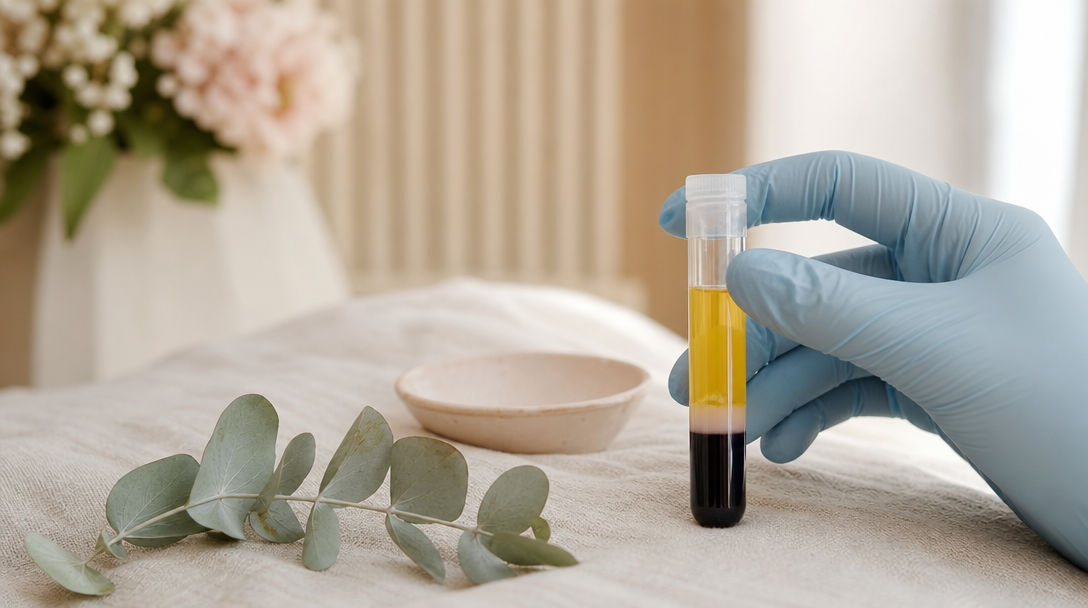
The process is simple in principle: a small sample of your blood is drawn, spun in a centrifuge to concentrate the platelets, and the resulting plasma is injected back into the target area. Because the material is autologous (your own), a true allergic reaction to the plasma itself is very unlikely. Systematic reviews of PRP for hair loss have reported no cases of allergic reaction, and the British College of Aesthetic Medicine notes that using the patient’s own blood is one of the reasons PRP has a reassuring safety record.
That said, low-risk is not no-risk. The safety of PRP depends almost entirely on how the blood is handled and how the injections are performed, which is where clinic standards come in. The plasma is still a blood product, and preparing and re-injecting it carries real responsibilities around sterile technique and clinical competence.
What are the rare but serious risks of PRP?
Serious PRP complications are uncommon, and when they do happen they are usually linked to poor sterile technique or an untrained injector rather than to PRP itself.
It is worth understanding the rare risks so you know what a well-run clinic is protecting you from:
- Infection. Any injection breaks the skin, so infection is always a theoretical risk. It is uncommon with PRP, but it becomes a real danger when equipment is not sterile. The most serious documented example involved an unlicensed spa in the United States, where a CDC investigation linked several HIV cases to PRP microneedling performed with unsafe blood-handling and no proper infection control. That case is about the setting, not the treatment: it is exactly why blood products must only be handled in a properly regulated clinic.
- Nerve irritation or tissue injury. If an injection is placed incorrectly, it can irritate a nerve or nearby tissue. This is a training and anatomy issue, which is why the injector’s qualifications matter.
- Prolonged inflammation. In rare cases the treated area stays inflamed longer than expected, more often reported with joint injections than with facial or scalp PRP.
- Sensitivity to added products. You cannot be allergic to your own plasma, but you can react to something used alongside it, such as a topical numbing cream. This is picked up at consultation.
- Vascular events. Any injection near the eyes carries a small but recognised risk if a vessel is involved. Published safety papers on PRP stress that this is why facial injections should only be carried out by trained medical professionals who understand facial anatomy.
The common thread is clear. These are not reasons to fear PRP, they are reasons to be careful about who does it and where.
PRP side effects vary by treatment area
Where the PRP is injected changes what you are likely to feel afterwards, because different areas have different sensitivity and blood supply.
- Scalp (hair loss PRP): expect tenderness, mild itching and sometimes a little dryness or flaking for a few days. Reviews of scalp PRP also list short-lived scalp itching among the mild effects, all of which settle quickly.
- Face (PRP facial): redness and a mild sunburn-like feeling are common for up to 48 hours, sometimes with light peeling if PRP is combined with microneedling. A JAAD review of PRP with microneedling confirms that mild redness, swelling and bruising are the usual reactions.
- Under-eye area: this delicate skin bruises and swells more easily, so a little puffiness here is normal and not a sign of a problem.
- Joints (medical PRP): injections into a knee or shoulder can cause a temporary flare of soreness before any improvement is felt.
Each of these responses is considered normal. Following your aftercare, keeping the area clean and protected, and not picking or rubbing it, gives the best recovery.
Are PRP side effects the same for everyone?
No. How you respond to PRP depends on your own healing, your medical history and any medicines you take, so two people can have quite different experiences.
Several things shift the balance:
- Your healing response. Some people are simply more sensitive to injections or heal more slowly, so they swell or bruise a little more.
- Your medical history. Conditions affecting circulation, clotting or the immune system can change how the area recovers, and some are reasons PRP is not suitable at all.
- Your medications. Blood thinners and anti-inflammatory medicines (such as ibuprofen and other NSAIDs) can increase bruising. Safety guidance for PRP flags recent NSAID use as a relative contraindication, because these drugs can blunt the platelet activity PRP relies on. That is one reason your injector will ask what you take before treating you.
This is exactly why a proper consultation matters. At CoLaz every PRP treatment starts with a medical review so we can flag anything that raises your risk and set realistic expectations before you commit.
Common myths about PRP side effects
A lot of PRP worry comes from things that sound alarming but are not grounded in how the treatment actually works. A few worth clearing up:
- “PRP involves blood, so it must cause infections.” In a clean, regulated clinic using your own blood and sterile equipment, the infection risk is very low. The problems that make headlines come from unlicensed settings ignoring basic hygiene, not from PRP done properly.
- “My face swelled, so something went wrong.” Mild swelling after facial PRP is normal and temporary. Unlike fillers, PRP does not add artificial volume, so any puffiness is short-lived fluid, not a lasting change.
- “Bruising means the treatment failed.” Bruising can happen even with flawless technique, especially in vascular areas. It reflects a nicked tiny vessel, not a failed treatment.
- “PRP is guaranteed to work with no downtime.” No aesthetic treatment can promise a fixed result, and some short-lived redness or tenderness is part of the normal process. Anyone promising zero downtime and a certain outcome is overselling it.
Knowing what is normal, and what is not, lets you approach PRP with realistic confidence rather than either fear or false reassurance.
How does CoLaz keep PRP side effects to a minimum?
At CoLaz we keep PRP side effects low by using medically trained injectors, strict sterile technique and a full consultation before every treatment.
The evidence is consistent that PRP is safest in trained hands and clean conditions, and both UK bodies and the NHS say the same. The JCCP has called for PRP to be treated as a higher-risk procedure precisely because handling blood products demands proper training, infection control and clinical governance, and recent PRP guidance for hair treatments underlines the same point. The NHS advice on choosing a practitioner is blunt: avoid anyone who has only done a short course, always have a consultation first, and ask what happens if something goes wrong.
How we work:
- Every PRP treatment is carried out by a medically trained clinician following clinical protocols across all our clinics.
- Blood is drawn and processed in a closed-system centrifuge to reduce any contamination risk.
- You get a full consultation and medical review first, so anything that raises your risk (medications, health conditions, unrealistic goals) is flagged before we start.
- Aftercare is tailored to the treatment area and given in writing to support faster, calmer healing.
The NHS also recommends checking beforehand exactly what a procedure involves and what could go wrong, which is a conversation we welcome, not avoid.
If you are considering PRP for your face or PRP for hair loss, the safest first step is a proper assessment. Book a free consultation at your nearest CoLaz clinic and we will talk you through what to expect, what is normal afterwards, and whether PRP is genuinely the right choice for you. If you want a wider view first, our guide on how to choose a clinic covers the checks that keep any injectable treatment safe.
Ready to begin
Book a free PRP Face consultation at your nearest CoLaz clinic
Time with a qualified clinician: a skin assessment, an honest recommendation and no obligation. Read about PRP Face at CoLaz, from £375 (face only, therapist single session).
More on Aesthetics
Keep reading
-

How to tell a qualified aesthetic clinician from a great one
Six checks you can run on a qualified aesthetic clinician in about 60 seconds, and six more that only show up once you are sitting in the consultation room. Read the article -

JCCP, Save Face and CQC: what each register actually checks
Three names come up when you try to check an aesthetic clinic, and they do three different jobs. A plain-English guide to what JCCP, Save Face and CQC each look at, what they leave out, and how to run the checks yourself. Read the article -

How much do dermal fillers cost in the UK? An honest 2026 price guide
Filler pricing in the UK swings from £150 to £600 per ml, and the gap is not random. Here is what you are actually paying for, which quotes should make you walk away, and how to price-check a clinic properly. Read the article
Book a free consultation at your nearest CoLaz clinic
Time with a qualified clinician: a skin assessment, an honest recommendation and a written plan. No obligation.