
5 questions to ask at your first aesthetic consultation
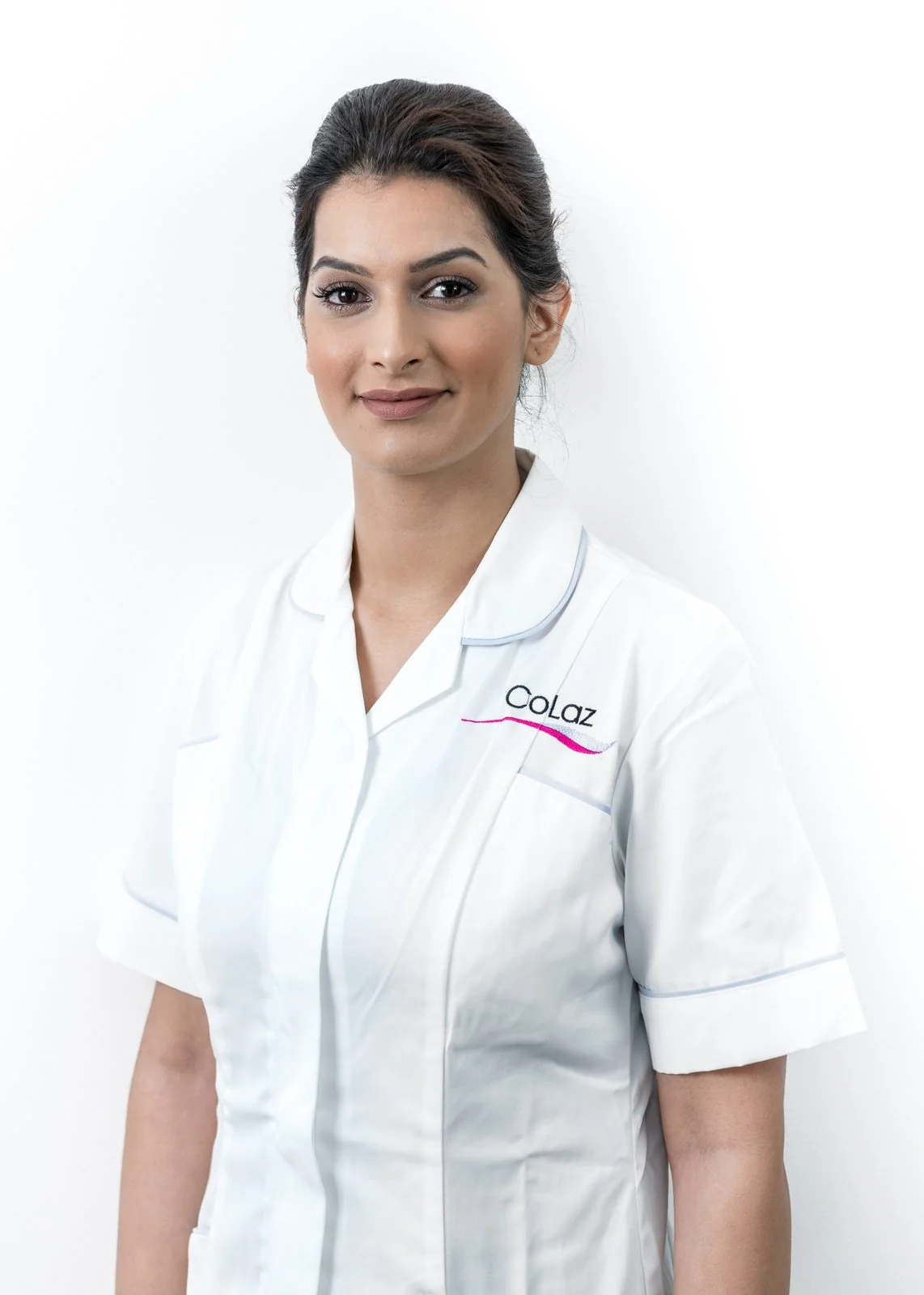 Owner, CoLaz Aesthetics Clinic
The short version
- Ask what qualification the person holds for the specific treatment you want, not for aesthetics in general.
- Ask which register they are on, then check it yourself on the JCCP or Save Face site before you book.
- Ask what the complications protocol is. A practitioner who cannot answer this in detail should not be treating you.
- Ask for the treatment plan and aftercare in writing, and expect time to think before you commit.
- Ask what happens if you are unhappy. The answer tells you more about a clinic than any before-and-after photo.
TL;DR
- Ask what qualification the person holds for the specific treatment you want, not for aesthetics in general.
- Ask which register they are on, then check it yourself on the JCCP or Save Face site before you book.
- Ask what the complications protocol is. A practitioner who cannot answer this in detail should not be treating you.
- Ask for the treatment plan and aftercare in writing, and expect time to think before you commit.
- Ask what happens if you are unhappy. The answer tells you more about a clinic than any before-and-after photo.
Most people spend longer researching a washing machine than the person who is about to inject their face. That is not a criticism of patients. It is a criticism of an industry that has made it genuinely hard to tell a well-trained clinician from someone who did a weekend course.
The good news is that five aesthetic consultation questions will separate the two, and you can ask all of them in about ten minutes. None of them require you to know anything medical. They only require the person opposite you to answer clearly.
Why do aesthetic consultation questions matter more than the treatment itself?
Because in England, right now, almost nothing about who holds the needle is regulated by law.
There is no legal requirement for a person injecting dermal filler in England to hold any medical qualification at all. The government confirmed in its licensing response that this gap is what the new scheme is designed to close. Until it lands, the register and the questions you ask are the safety net.
This is the part patients find hardest to believe. The Care Quality Commission regulates independent clinics that provide cosmetic surgery, but purely cosmetic laser, IPL and injectable work sits largely outside that. Laser and IPL clinics instead register with their local authority in most of England, which is a premises and safety check rather than a judgement on the practitioner’s skill.
After thirteen years at CoLaz, across reception, the treatment room and now the whole group, I can tell you the pattern behind almost every complication we see referred in. It is not bad luck. It is a consultation that never really happened.
Question 1: What qualification do you hold for this specific treatment?
Ask about the treatment you want, not about aesthetics in general, because the two are not the same thing.
“I’m fully qualified” is not an answer. “I hold a VTCT Level 4 Certificate in Laser and IPL Treatments, and I have done roughly 400 of these” is an answer. The NHS is direct on this and tells patients to ask how many of the procedure the practitioner has performed, and to avoid anyone who has only completed a short training course.
Level 4 is the qualification that covers laser and IPL safety, skin typing and wavelength selection in the UK. At CoLaz, every practitioner delivering laser, IPL and energy-device treatments holds a VTCT or Ofqual Level 4 qualification. That is not a marketing line, it is the floor we hire to.
Be aware that qualification inflation is real. The JCCP warns that many Level 7 courses advertised in aesthetics are not recognised or accredited by the key bodies. A certificate on the wall and an accredited qualification are not automatically the same object.
Question 2: Which register are you on, and can I check it right now?
Ask for the register name and the name they are registered under, then look it up yourself before you book.

The two registers that matter in UK non-surgical aesthetics are the JCCP register, which is overseen by the Professional Standards Authority, and Save Face, which is a government-approved accreditation scheme that inspects clinics in person. The NHS names both as the checks it expects patients to make.
A registered practitioner will be relaxed about this question. They will spell their surname for you and wait while you search. Someone who deflects, or who says the register is “just a paid membership thing”, has told you something useful.
If the treatment involves botulinum toxin, add one more layer. It is a prescription-only medicine, which means it cannot legally be advertised to the public at all, and the CAP rules prohibit even indirect references in marketing. A clinic running social media adverts naming the brand is a clinic that either does not know the rules or has decided they do not apply to it. Neither is reassuring.
Question 3: What is your complications protocol?
This is the question that ends the most consultations, and it is the one I would keep if I could only keep one.
You are not testing whether complications happen. They happen to good practitioners too. You are testing whether this person has a plan, the drugs, and the training to run it at 9pm on a Saturday when your lip goes white.
For hyaluronic acid filler, the specific answer you want to hear involves hyaluronidase, the enzyme that dissolves the filler in a vascular occlusion. The clinical literature is clear that outcomes depend on speed, with intervention within 48 hours associated with better results. So the follow-up question is simple: do you keep it on site, and who administers it? Hyaluronidase is itself a prescription-only medicine, so a non-prescribing injector needs a prescriber available, not a phone number they have never called.
The NHS lists the risks of fillers plainly, including infection, nerve damage and blindness. A practitioner who looks uncomfortable when you say those words out loud is not the practitioner for you.
Good answers sound specific and slightly boring. Bad answers sound like reassurance. “That never happens here” is the worst answer in aesthetics.
Question 4: Can I have the treatment plan and aftercare in writing?
Yes is the only acceptable answer, and you should be given it before you pay for anything.

A written plan does three jobs. It forces the practitioner to commit to a specific product, dose and schedule instead of improvising. It gives you something to read at home when nobody is watching your face. And it gives you a record if the result does not match what was promised.
At CoLaz the plan is written down and handed over at the end of the consultation, before any course is booked. For every laser, IPL and energy-device treatment there is also a patch test 48 hours before the first session, and we confirm the course in writing only after we have seen how your skin responded. The patch test is not a formality. It is the difference between a course that works and a course that should never have been sold.
You should also get time. The JCCP and CPSA Code of Practice expects a cooling-off period as part of valid consent, and the NHS says your practitioner should give you time to decide after the consultation. Same-day treatment is not automatically wrong for a returning patient on a repeat treatment. Same-day treatment pushed on a first-timer who arrived to “just ask about prices” is a sales tactic wearing a clinical coat.
Question 5: What happens if I am unhappy with the result?
Ask this even though it feels awkward, because the answer maps the clinic’s entire attitude to you after your card has been charged.
You are listening for a process, not a promise. Is there a review appointment built in, and when? Two weeks is standard for anti-wrinkle injections, because that is when the result has settled. Who pays if a correction is needed? What is the complaints route if the conversation breaks down?
Note what you are not listening for. Nobody can promise you a specific outcome, and any clinic that does is telling you something regulators would take a dim view of. The honest version sounds like this: we plan the result we expect, we review it, and if it needs adjusting we tell you now what that costs.
A patient came to our Reading clinic in her early fifties asking for filler in her cheeks because a colleague had had it. What she was actually unhappy with was loose skin along her jawline and a tired look across the whole face. Cheek filler would not have fixed that. We planned a course of Profhilo instead, which is a skin remodeller rather than a volumiser, and by week eight her jawline looked tighter without her face changing shape.
She got the right treatment because the consultation was a conversation, not an order form. The right product is whichever one matches the goal, not whichever one the patient walked in asking for.
What do good answers to these aesthetic consultation questions sound like?
Good answers are specific, unhurried and slightly boring; bad answers are warm, vague and fast.
| What you ask | Good answer | Walk away |
|---|---|---|
| Your qualification for this? | Names the exact qualification and rough case numbers | ”I’m fully trained”, “I’ve done loads” |
| Which register? | Spells their name, waits while you check | ”Registers are just a paid badge” |
| Complications protocol? | Names the drug, where it is stored, who prescribes | ”That never happens here” |
| Plan in writing? | Hands it over before payment | ”We’ll sort the details on the day” |
| If I’m unhappy? | Names a review date and who pays for what | Vague reassurance, or a guarantee |
Red flags that should end a consultation
- A discount that expires today, or a price that drops when you hesitate.
- A fixed multi-session package sold before any patch test has been done.
- No medical history taken, no questions about your medication or skin conditions.
- Pressure to treat an area you did not come in about.
- Treatment offered in a home, a hotel room, or at a party.
- Reluctance to name the product being injected or the device being used.
Any one of these is a reason to leave and think. You are allowed to walk out of a consultation. You are allowed to walk out of a consultation you booked, drove to and feel guilty about leaving. The awkwardness lasts a minute; the filler lasts far longer.
What changes when the new licensing rules arrive?
A lot, but not yet, so the questions above still do the work for now.
In August 2025 the government announced a crackdown confirming that the highest-risk procedures, such as liquid Brazilian butt lifts, will become CQC-regulated activities restricted to qualified healthcare professionals. Lower-risk treatments including fillers will move into a local authority licensing scheme with mandatory training, insurance and hygiene standards, alongside age restrictions for under-18s.
That is the direction of travel, and it is overdue. It is also not law yet, and a licence when it arrives will be a minimum standard rather than a mark of skill. A licensed practitioner who cannot explain their complications protocol will still be the wrong choice.
Where to start
Book a consultation, ask the five questions, and notice how the answers feel. If you would like to see how we answer them, every one of our seven UK clinics runs a free consultation with no obligation to book anything, and you will leave with your plan in writing. It is worth reading our guide to choosing a clinic first, and browsing the treatments you are considering so you arrive with specifics.
The single best predictor of a good outcome is not the device, the brand or the price. It is whether the half hour before the treatment was a real clinical conversation. Ask the five questions. A good clinic will be pleased you did.
Ready to begin
Book a free Dermal Fillers consultation at your nearest CoLaz clinic
Time with a qualified clinician: a skin assessment, an honest recommendation and no obligation. Read about Dermal Fillers at CoLaz, from £150 (1ml, lip, jawline, chin, naso-labial or marionette, therapist tier).
More on Aesthetics
Keep reading
-

How to tell a qualified aesthetic clinician from a great one
Six checks you can run on a qualified aesthetic clinician in about 60 seconds, and six more that only show up once you are sitting in the consultation room. Read the article -

JCCP, Save Face and CQC: what each register actually checks
Three names come up when you try to check an aesthetic clinic, and they do three different jobs. A plain-English guide to what JCCP, Save Face and CQC each look at, what they leave out, and how to run the checks yourself. Read the article -

How much do dermal fillers cost in the UK? An honest 2026 price guide
Filler pricing in the UK swings from £150 to £600 per ml, and the gap is not random. Here is what you are actually paying for, which quotes should make you walk away, and how to price-check a clinic properly. Read the article
Book a free consultation at your nearest CoLaz clinic
Time with a qualified clinician: a skin assessment, an honest recommendation and a written plan. No obligation.