Skin · 27 May 2026 · 8 min read
IPL skin rejuvenation: what it treats and what it does not
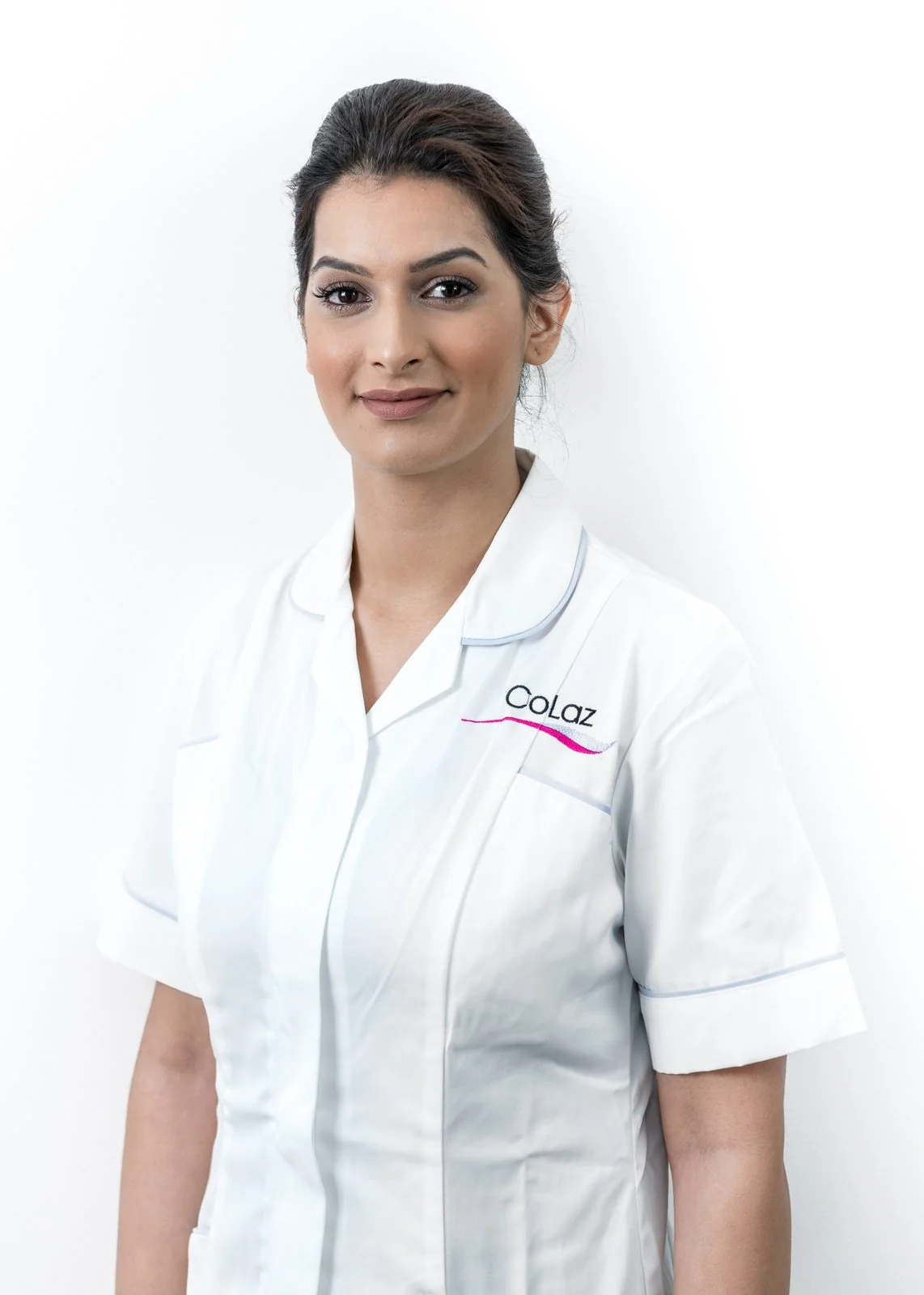
By Alaiyka Parvez
Owner, CoLaz Aesthetics Clinic
The short version
- • IPL is a broad-spectrum light treatment, not a single-wavelength laser, and works by targeting melanin and haemoglobin in the upper layers of the skin.
- • It is most effective for sun-induced brown spots, freckles, broken capillaries, rosacea redness and mild diffuse skin dullness.
- • It is not effective for deep wrinkles, sagging skin or volume loss, and does not work on white, grey or very fine hair.
- • IPL is not safe on every skin tone; longer-wavelength lasers are usually the right choice for darker skin types (Fitzpatrick IV to VI).
- • At CoLaz, every IPL course starts with a free consultation and a patch test, and we will tell you on day one if IPL is not the right treatment for your skin.
IPL has been in UK clinics for two decades, and a lot of the marketing around it has been quietly oversold. The honest version is that IPL is excellent at certain things, weak at others, and unsafe on certain skin tones if it is used without a proper patch test. The job of a good clinician is to tell you which group you sit in on day one, not after three sessions.
Below is the realistic scope of IPL skin rejuvenation, what it actually treats, what it does not, and the safety boundaries we work within at CoLaz IPL skin rejuvenation appointments.
What is IPL, and how is it different from a laser?
IPL stands for intense pulsed light. It uses a broad spectrum of light wavelengths (typically 500 to 1200 nanometres) rather than the single, focused wavelength of a laser. The skin then absorbs the wavelengths that match its targets, mainly melanin in pigmented spots and haemoglobin in small blood vessels.
The StatPearls clinical review of IPL explains the practical consequence: IPL is a versatile tool that can handle several different targets in one pass, but it is less selective than a laser. A pico or Q-switched laser hitting a single pigmented spot can be more precise than IPL at the same target. IPL is more useful when you have a mixed picture of brown spots and small red veins across a large area, which is most photo-damaged skin in the UK.
It also means IPL has stricter skin-type boundaries than some lasers. A comparison study of IPL against Alexandrite and Nd:YAG lasers showed that IPL works well on light skin but is much less safe on darker skin tones, because the broad spectrum hits more of the melanin in the surrounding skin rather than just in the spot you want to fade.
What does IPL skin rejuvenation actually treat?
IPL most reliably treats sun-induced brown spots, freckles, broken capillaries, mild rosacea-related redness and overall diffuse skin dullness from photodamage. It does not treat texture, deep lines or skin laxity.
The clinical review of IPL lists its main evidence-supported indications as: telangiectasia (small visible blood vessels), photorejuvenation, hyperpigmentation, lentigines and ephelides (sun spots and freckles), rosacea, and certain forms of acne. That is the honest scope of the treatment.
Here is what each of those looks like in practice:
- Sun spots and freckles on cheeks, temples, chest and hands respond best to IPL, often darkening then flaking off over a week before the skin underneath shows clearer.
- Broken capillaries (tiny red threads around the nose, cheeks and chin) often disappear in one to three sessions.
- Rosacea redness (the diffuse pink-flush of mild to moderate rosacea) usually softens over a course rather than disappearing.
- Mild dullness from photodamage evens out as the tone reflects light more uniformly.
Across a four to six session course three to four weeks apart, you will typically see brown spots fading at each visit, redness softening session by session, and overall skin tone evening out. Most patients then need maintenance once or twice a year.
What does IPL not treat?
IPL does not treat deep wrinkles, sagging skin, structural volume loss, established melasma in many cases, or any skin tone darker than Fitzpatrick IV without significant safety considerations. It is not a substitute for collagen-stimulating treatments or volume work.
This is where most patient disappointment comes from. The biology of IPL is to absorb light into pigmented or red targets, which converts to a small amount of heat that breaks down the target. That mechanism does not produce significant collagen remodelling, and it does not tighten skin. For lines and laxity, the right tools are different: a Profhilo course for bio-remodelling, microneedling for collagen induction, or HIFU for lifting.
Specifically, IPL does not reliably do any of the following:
- Soften deep lines or wrinkles. Fine surface texture may improve slightly, but established dynamic wrinkles need a different approach.
- Lift the jowls or neck. IPL has no effect on the deeper structures that cause sagging.
- Remove every kind of pigmentation. Melasma in particular is hormonally driven and can sometimes worsen with IPL if it is not approached very carefully.
- Treat raised moles. Pigmented melanocytic naevi (moles) should be assessed by a doctor before any light treatment near them, and IPL is not a mole-removal treatment.
- Permanently remove hair on light, white or grey hair. Light treatment depends on melanin, and the Leeds Teaching Hospitals NHS Trust patient information is explicit that white, grey, blonde and very fine hair will not respond.
If your concern is volume loss, deep wrinkles, significant laxity or pigmentation that has been there since childhood, IPL is the wrong tool, and we will say so on day one.
Is IPL safe for all skin tones?
No. IPL is generally safer and more effective on Fitzpatrick skin types I to III (light to olive). It carries a higher risk of pigmentation change and burns on skin types IV to VI (Asian, Mediterranean, African and Caribbean tones), and we usually choose a different tool for those skin types.
The reason is straightforward. IPL targets melanin, and darker skin has more melanin in the surrounding skin, not just in the spot you want to treat. The light cannot tell the difference, so the energy that should sit on the target spreads into the rest of the skin, which is where post-inflammatory hyperpigmentation and small burns come from. The comparison study of IPL against Alexandrite and Nd:YAG lasers makes this trade-off explicit: the long-pulsed Nd:YAG laser at 1064 nm is the safer choice for Fitzpatrick types IV to VI because the longer wavelength bypasses surface melanin.
At CoLaz, for darker skin types asking for pigmentation work, we usually recommend Pico Laser over IPL. For hair removal on darker skin, we use long-pulsed Nd:YAG, not IPL. We will discuss this honestly at the consultation, and we will not push IPL on a skin type where the safer answer is a laser.
What does a typical IPL session feel like, and what is the recovery?
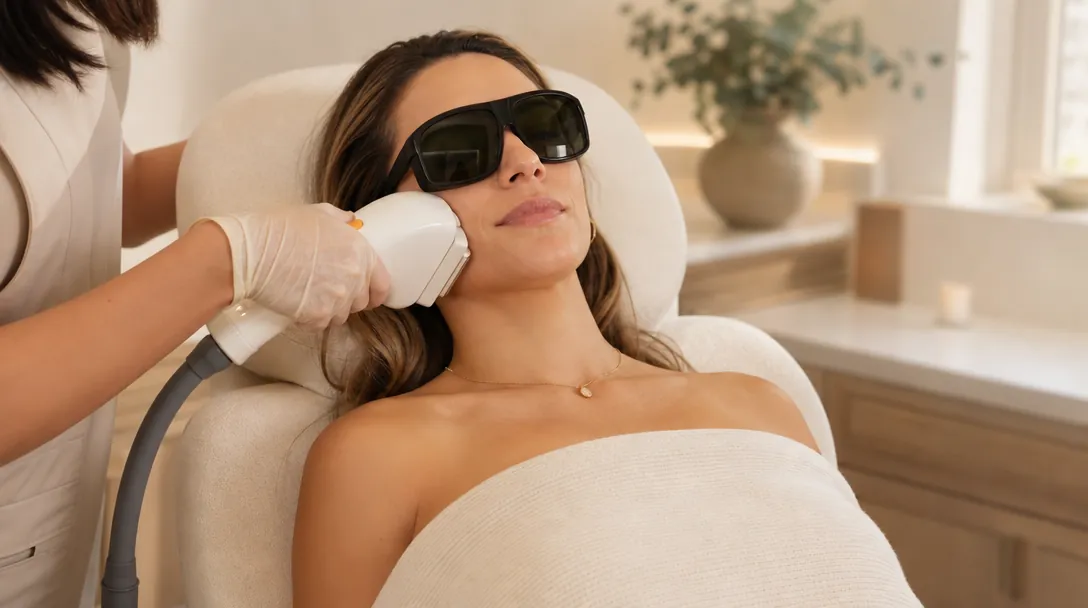
An IPL session feels like a quick warm pinch or a rubber-band flick. No anaesthetic is needed for most areas, the session takes 15 to 30 minutes, and recovery is usually one to three days of mild redness.
What to expect after a session:
- Day 0: mild redness, like sunburn, fading over hours.
- Day 1 to 2: brown spots may temporarily darken. This is normal and means the pigment is being broken down.
- Day 3 to 7: pigmented spots flake off in tiny brown specks. The skin underneath looks clearer.
- Day 7 onwards: skin tone evens out, redness from broken capillaries continues to soften.
We ask every IPL patient to use a broad-spectrum factor 30 or higher sunscreen with a four-star UVA rating throughout the course, to avoid sunbeds and self-tan, and to skip retinoids and AHAs for at least five to seven days around each session. New tan on the skin is the biggest reason IPL sessions get rescheduled, and we would rather move a session than treat tanned skin.
How many IPL sessions do you actually need?
Most patients need four to six IPL sessions, three to four weeks apart, for visible and lasting improvement, plus one or two maintenance sessions a year.
The number within that range depends on what you are treating:
- Sun spots and freckles: usually three to four sessions.
- Rosacea redness: four to six sessions, sometimes more for stubborn diffuse flush.
- Broken capillaries: often one to three sessions per area.
- Mixed photodamage (the most common request): four to six sessions to address brown and red together.
Anyone selling IPL as a one-and-done treatment for general skin rejuvenation is not telling the full story.
Who should not have IPL?
A good consultation will rule certain patients out before any energy hits the skin. We do not treat IPL on:
- Skin with a recent tan (sunbed, sun or self-tanner) within two weeks.
- Pregnancy or breastfeeding as a precaution.
- Active cold sores or recent herpes simplex in the area; IPL can reactivate the virus.
- Active acne with open lesions in the immediate treatment area.
- Photosensitising medication such as roaccutane within six months, or certain antibiotics.
- Suspicious or changing moles in or near the treatment area, which need GP review first.
For darker skin types asking about pigmentation, we typically recommend Pico Laser over IPL because the safety margin is better and the result on stubborn pigment is more reliable.
How does CoLaz plan an IPL course?
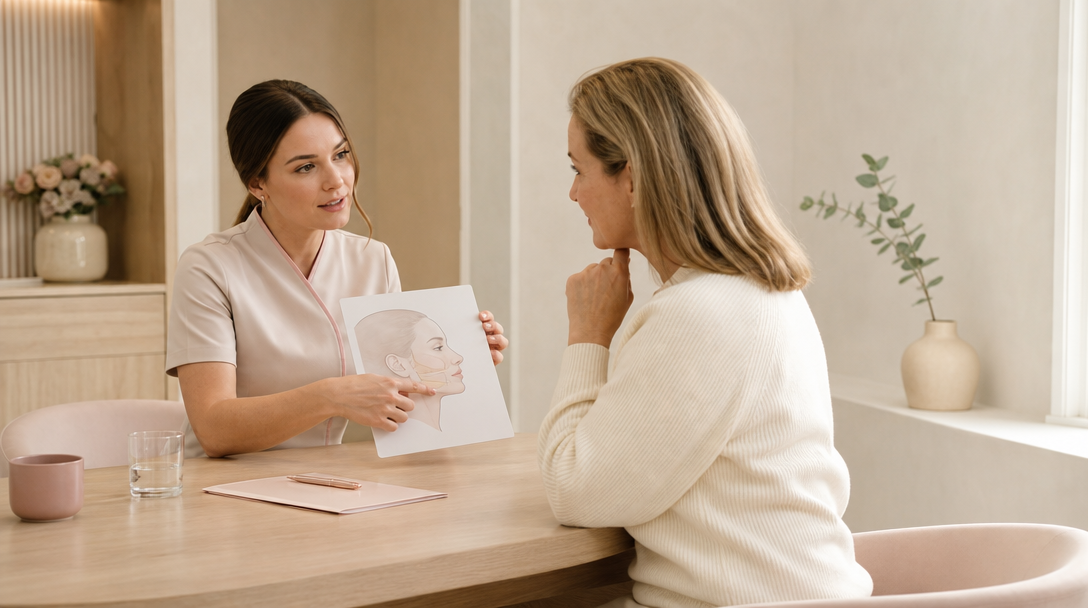
Every new IPL patient at CoLaz starts with a free consultation and a patch test 48 hours before the first session. The full course is only confirmed in writing after the patch test, never on day one, because we want to see how your skin responds before we commit you to a plan.
The regulatory side matters here. Lasers and IPL are a JCCP-recognised modality, and the NHS guidance on choosing a cosmetic practitioner recommends checking that your practitioner is on a Professional Standards Authority-accredited register such as the JCCP or Save Face. Every CoLaz IPL practitioner is trained to that standard.
The honest version of an IPL plan is the boring one: a clear list of what we expect to improve, a clear list of what we will not touch, the realistic number of sessions, a patch test before we book the first one, and side-by-side photographs at the start and end. If you would like to find out whether IPL is the right tool for what you want to change, the free consultation is the place to start.
Ready to begin
Book a free IPL Skin Rejuvenation consultation at your nearest CoLaz clinic.
Thirty minutes with a qualified clinician. Skin assessment, candid recommendation, no obligation. Read about IPL Skin Rejuvenation at CoLaz, from £120 (face, single session).
WhatsApp replies in minutes during opening hours
About the author
Alaiyka Parvez
Owner, CoLaz Aesthetics Clinic
Alaiyka Parvez bought the CoLaz franchise network in 2023, having joined the company as a Slough clinic employee in 2013 and gone on to open the Hounslow and Wembley franchises. She writes here on the treatments CoLaz delivers across its seven UK clinics.
Read more about Alaiyka and CoLaz →More on Skin
Keep reading.
11 August 2026 · 10 min
HIFU treatment results: month by month, what is realistic
HIFU tightens skin gradually rather than instantly. Here is the honest month-by-month results timeline, how long the effect lasts, and who is a good candidate.
28 July 2026 · 10 min
Types of chemical peels: glycolic, salicylic, TCA and Jessner explained
Glycolic for dull and sun-damaged skin, salicylic for oily and acne-prone, lactic for sensitive, mandelic for pigmentation in deeper skin tones, TCA for resurfacing with downtime. A clear decision guide to the main types of chemical peels.

14 July 2026 · 7 min
Microneedling aftercare day by day: the realistic 7-day timeline
What to expect after microneedling, day by day, plus the simple aftercare that protects your skin and your results across the first week.
Begin
Book a free consultation
at your nearest CoLaz clinic.
Thirty minutes with a qualified clinician. Skin assessment, candid recommendation, written plan. No obligation.