
Polynucleotide under-eye treatment: what it fixes and what it doesn't
 Owner, CoLaz Aesthetics Clinic
The short version
- Polynucleotides are purified DNA fragments, usually from salmon or trout, injected to improve skin quality rather than to add volume.
- Under the eyes they help thin, crepey skin, fine lines and some pigmented or vascular dark circles, with the best result at around 3 months.
- They do not fill a hollow tear trough (that is a job for dermal filler) and they do not remove true eye bags (that is a job for surgery).
- Most patients need 2 to 3 sessions, spaced 2 to 3 weeks apart, with a top-up at around 6 months.
TL;DR
- Polynucleotides are purified DNA fragments, usually from salmon or trout, injected to improve skin quality rather than to add volume.
- Under the eyes they help thin, crepey skin, fine lines and some pigmented or vascular dark circles, with the best result at around 3 months.
- They do not fill a hollow tear trough (that is a job for dermal filler) and they do not remove true eye bags (that is a job for surgery).
- Most patients need 2 to 3 sessions, spaced 2 to 3 weeks apart, with a top-up at around 6 months.
Polynucleotide under eye treatment is one of the most asked-about injectables in the clinic right now, and a lot of the questions come from people who are not sure what it will actually do for them. Some hope it will erase dark circles. Some think it is the same as a filler. Some have booked it expecting their eye bags to disappear.
The honest answer is that polynucleotides do one thing very well and several things not at all. This guide sets out what they fix under the eyes, what they cannot fix, and how to tell which group you are in before you spend any money.
What are polynucleotides, and what are they made of?
Polynucleotides are short, purified fragments of DNA that are injected into the skin to support repair and skin quality. Most of the products used in UK clinics are made from salmon DNA or trout sperm DNA, filtered and sterilised to remove the proteins that could trigger a reaction, so what remains is a regenerative building block rather than a foreign substance.
Once in the skin, the fragments are thought to work through the adenosine A2A receptor and a nucleotide salvage pathway, which together nudge the skin’s own fibroblasts to produce more collagen. In practical terms, the research reviews describe polynucleotides that stimulate collagen, improve elasticity and hydration, and calm inflammation.
That last point matters for the eye area. This is a skin-quality treatment, not a volumiser. It changes the fabric of the skin, not its shape.
What do polynucleotides actually fix under the eyes?
Under the eyes, polynucleotides improve the quality of thin, crepey, tired-looking skin and can soften fine lines. The under-eye area has some of the thinnest skin on the body, so anything that thickens and hydrates it tends to show.
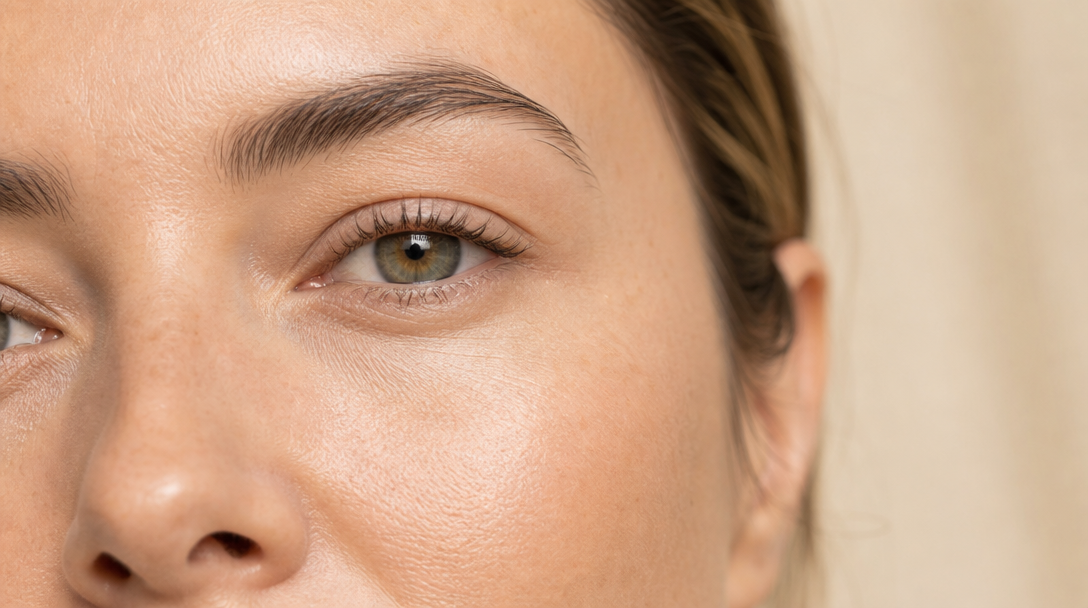
The evidence points the same way. A randomised split-face trial comparing polynucleotide with a plain hyaluronic acid injection found the polynucleotide side showed a greater improvement in skin elasticity, hydration and surface roughness over time. A separate study using a combined polynucleotide and hyaluronic acid complex reported measurable gains in periorbital treatment of skin texture and firmness.
So the realistic wins are: smoother, more resilient under-eye skin, softened fine crinkling, and better hydration. If your under-eye concern is mainly about skin quality, this is the treatment that matches the goal. You can read more about how the injectable itself works on our polynucleotide treatment page.
Can polynucleotides get rid of dark circles?
Sometimes, and it depends entirely on what is causing the dark circle. Dark circles are not one thing, and matching the treatment to the cause is the whole game.
Dermatology reviews group under-eye darkness by its various causes: pigment (extra melanin, often after inflammation or in darker skin tones), vascular (blue or purple tones from visible vessels under thin skin), structural (shadow cast by a hollow tear trough), fat herniation (a true bag), and general ageing and laxity. Most people have a mix.
Polynucleotides help the first two the most. By thickening thin skin and calming inflammation, they can reduce how visible surface pigment and underlying vessels are, and they support the skin-quality element of ageing under-eyes. What they do not do is fill a shadow or lift a bag. If your darkness is really a shadow from a hollow, no amount of skin-quality work will remove it. Our dark circles page walks through which cause responds to which treatment.
What can’t polynucleotides do under the eyes?
Polynucleotides cannot fill a hollow tear trough and cannot remove a true eye bag. These are the two most common reasons people are disappointed, so it is worth being blunt about them.
A hollow tear trough is a loss of volume and support, which casts a shadow. The tool that corrects volume is a dermal filler, placed by a trained injector. The tear trough is one of the highest-risk areas on the face for filler because it sits over major vessels under very thin skin, and Save Face flags a rare risk of vascular occlusion there, so it is not a decision to rush. Fillers are also temporary, which the NHS guidance on cosmetic procedures makes clear, so they need topping up.
A true eye bag is different again. It is usually herniated orbital fat, where fat from the eye socket pushes forward against a loosened lower lid. No injectable removes that pad. The recognised fix for a genuine fat-pad bag is surgery (lower blepharoplasty), which is outside what any non-surgical clinic, including CoLaz, offers. We will tell you this at the consultation rather than sell you a course that cannot deliver.
Who is a good candidate for polynucleotide under-eye treatment?
The best candidate has thin, crepey or mildly pigmented under-eye skin with early fine lines, and does not have a deep hollow or a true fat-pad bag as their main problem. If skin quality is the issue, you are likely to be pleased. If shadow or bulge is the issue, you are likely to be underwhelmed.
In our consultations, the most common reason we turn an under-eye request in a different direction is exactly this mismatch. Someone books polynucleotides because a friend had them, when what they actually dislike is a hollow that needs filler, or a bag that needs a surgical opinion. At CoLaz, we would rather match the treatment to the goal than treat the wrong layer. Where the concern is skin texture and tone around the eye specifically, we may suggest Lumi Eyes, a polynucleotide formulation designed for that area.
We do not treat patients who are pregnant or breastfeeding for polynucleotides, and we do not treat over recent filler in the same area. Both are checked at the free consultation.
How many sessions do you need, and when will you see results?
Most patients need 2 to 3 sessions, spaced 2 to 3 weeks apart, then a maintenance session at around 6 months. Polynucleotides work by gradually improving the skin, so this is not a one-visit fix.

A recent observational study of polynucleotide injections around the eyes gives a realistic timeline. Across 42 patients having two sessions three weeks apart, the greatest improvement in lower-eyelid and crow’s-feet scores, and the highest patient satisfaction, landed at 3 months rather than immediately. So the result builds over weeks, and judging it too early is a mistake.
On price, our salmon DNA polynucleotide treatment starts from £179 per session, and Lumi Eyes for the under-eye area starts from £180 per session. The exact plan, number of sessions and total cost are written down for you at the consultation before you commit to anything.
Are polynucleotide injections safe, and what are the side effects?
Polynucleotides are generally well tolerated, with side effects that are usually mild and short-lived. The most common are small injection bumps, mild swelling, and occasionally minor bruising for a few days.
The published studies back this up. The periorbital observational study reported minimal adverse events and no delayed complications over six months, and the wider aesthetic-medicine review found no serious adverse events across the studies it looked at, with redness and swelling that settled within days.
Two honest caveats. First, no aesthetic result is guaranteed, and the ASA is clear that clinics cannot make guarantees about cosmetic outcomes, so treat any before-and-after promise with caution. Second, safety in the eye area depends heavily on who injects you. Choose a qualified, checkable practitioner, and if you are ever unsure whether a treatment suits you, that is a conversation for the consultation and, where your medical history is involved, your GP.
Start with an honest consultation
Polynucleotides are a genuinely useful under-eye treatment for the right person, and the wrong treatment for the wrong problem. The difference is not the product, it is the assessment. If you know whether your concern is skin quality, a hollow, or a bag before you book, you will not waste a course on the wrong layer.
If you are not sure which one you have, that is exactly what the assessment is for. Book a free consultation at your nearest CoLaz clinic and we will tell you honestly what will help and what will not, and write the plan down before you decide.
Ready to begin
Book a free Salmon DNA Polynucleotide consultation at your nearest CoLaz clinic
Time with a qualified clinician: a skin assessment, an honest recommendation and no obligation. Read about Salmon DNA Polynucleotide at CoLaz, from £179 (single session).
More on Skin
Keep reading
-

Acnelan treatment: the in-clinic peel for active, inflammatory acne
Acnelan is a professional acne peel system with a daily home routine. Here is what is in it, how the course runs, what results look like and when another route suits you better. Read the article -

Sunekos vs Profhilo: which skin booster is right for your skin?
Sunekos and Profhilo are both injectable skin boosters, but one is pure stabilised hyaluronic acid and the other adds amino acids. Here is how they differ and how to choose. Read the article -

PRP face treatment: what it actually does for your skin
PRP uses a small sample of your own blood to support collagen and skin repair. Here is what the research really shows, how many sessions most people need and what to expect on the day. Read the article
Book a free consultation at your nearest CoLaz clinic
Time with a qualified clinician: a skin assessment, an honest recommendation and a written plan. No obligation.