
How many ultrasound cavitation sessions for visible inch loss?
 Owner, CoLaz Aesthetics Clinic
The short version
- Most patients need six to ten ultrasound cavitation sessions for visible circumference reduction, spaced about 72 hours apart.
- Peer-reviewed studies show adipocyte size drops measurably after treatment, with typical waist or thigh reductions in the two to four centimetre range across a course.
- Visible change is usually noted from session three or four, with the full result settling six to twelve weeks after the last session.
- Cavitation is a contouring treatment, not a weight loss treatment. Lifestyle, hydration and lymphatic drainage between sessions decide the result.
- At CoLaz the full course is planned in writing after a consultation, with a tape measurement and photographs at each session so you can track progress.
Six to ten sessions, spaced about three days apart, is the realistic answer for most patients who come in for ultrasound cavitation at one of our UK clinics. The range is honest because cavitation is a contouring treatment, not a weight loss treatment, and the inch loss you can see in the mirror depends on more than the machine.
Below is how cavitation actually works in the fat layer, what the published evidence shows for course length, what visible change to expect at each stage, and how we plan a course at CoLaz so the result you book is the result you get.
How does ultrasound cavitation work?
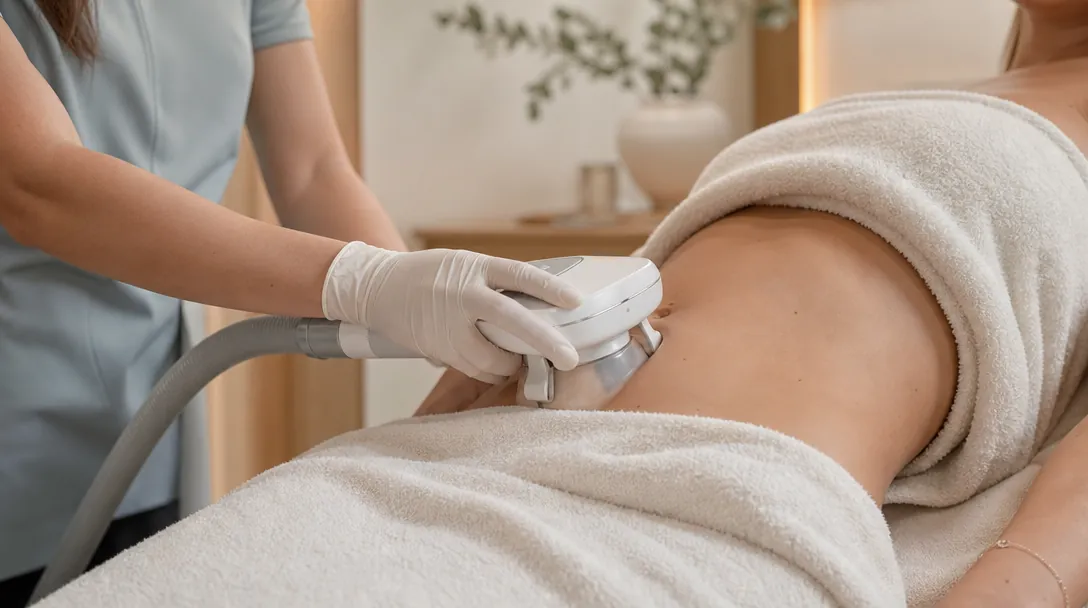
Ultrasound cavitation uses low-frequency sound waves to create tiny pressure bubbles inside the fat layer under your skin. Those bubbles disrupt the membrane of fat cells, and the released triglycerides are cleared away through the lymphatic system.
The mechanism is not vaporising fat, and it is not killing cells in large numbers. A 2015 histological study on human abdominal tissue showed a statistically significant reduction in adipocyte size after cavitation, with micropores forming in the cell membrane and triglycerides leaking into the surrounding tissue, while the surrounding microvasculature, stromal tissue and epidermis stayed intact. That selectivity is why a well-run cavitation handpiece feels warm but does not bruise or burn the skin.
A separate ex-vivo study on porcine subcutaneous fat confirmed that cavitation can be induced at clinically relevant settings without overheating the surrounding tissue, which is the safety argument for using cavitation in conscious patients rather than under anaesthetic.
The point is mechanical, not magic. The fat layer thins because the fat cells are smaller and partly emptied, and the body removes the released lipids over the following days through normal lymphatic and hepatic pathways.
How many ultrasound cavitation sessions do you actually need?
Six to ten sessions is the typical course for the abdomen, flanks, thighs or upper arms. Smaller areas like the inner knees often need fewer; larger or more stubborn areas need closer to ten.
The range comes straight from the published trials. A 2023 clinical analysis used a protocol of eight sessions, comparing once-weekly and twice-weekly schedules on localised abdominal fat. A 2020 placebo-controlled RCT used ten sessions of ultrasound for twenty minutes, twice a week, with at least 48 hours between sessions. Other trials combine cavitation with radiofrequency or aerobic exercise and measure outcomes after eight to twelve sessions.
What that looks like as a CoLaz course:
- Sessions one and two: stocktake. We measure circumference and take standardised photographs. You will not see an inch-loss result yet; the priority is tolerating the handpiece comfortably and letting the lymphatic system start clearing.
- Sessions three and four: first visible change. Most patients see a small tape-measure drop and a softer feel in the treated area. Clothes start to fit slightly differently around the abdomen or thighs.
- Sessions five to seven: the meaningful drop. Circumference reduction in the order of two to three centimetres across the course is realistic on the abdomen for most patients who are sticking to the lifestyle guidance.
- Sessions eight to ten: consolidation. The final sessions reinforce the result and treat any uneven pockets. The full effect settles six to twelve weeks after the last session.
A patient asking for visible inch loss from one or two cavitation sessions is asking for a result the technology does not deliver, regardless of the brand of the machine.
Why are cavitation sessions spaced 72 hours apart?
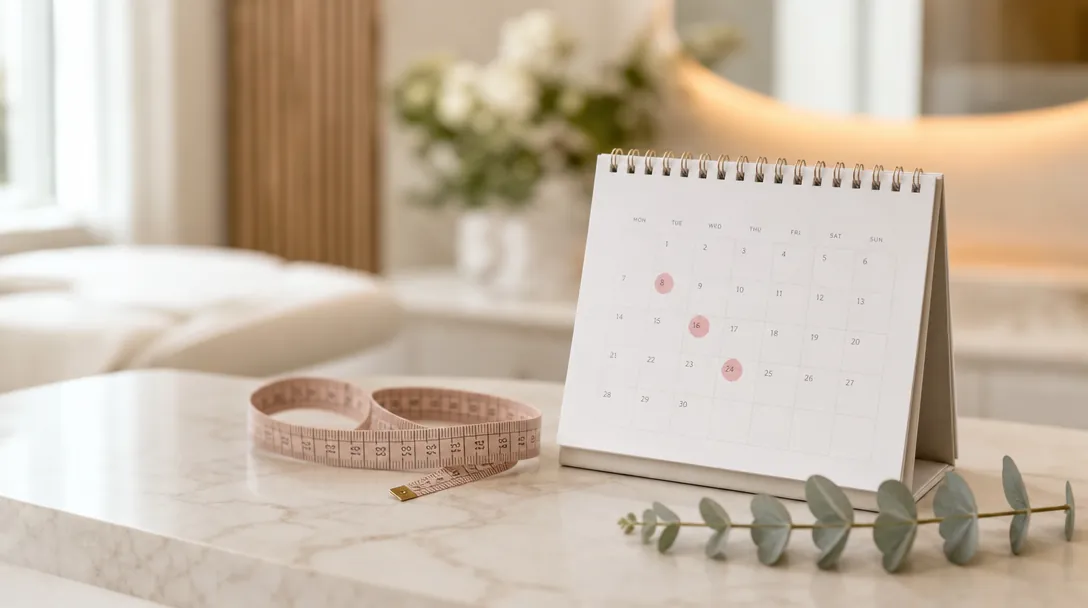
Sessions are spaced about 72 hours apart because the lymphatic system needs that time to clear the lipids released by the previous session. Treating the same area before the body has cleared the load reduces the effect and increases the risk of tenderness.
The studies that compared spacing schedules consistently use intervals of at least 48 hours, and most clinics in the UK settle on twice-weekly treatments. The Healthline overview describes the same broad pattern: small treatments spread across weeks rather than back-to-back sessions.
People sometimes ask whether sessions can be done daily to finish the course faster. The short answer is no. The cells from the last session are still being processed. A second session 24 hours after the first is treating an area that is partway through clearing, not an area that is ready to release more lipid. Patients who push the pace tend to swell, not slim.
If a session has to be moved by a few days, that is fine. Stretching the whole course out for weeks at a time means losing some of the cumulative effect, and we will usually recommend a top-up at the end.
How much inch loss is realistic?
Published trials of ultrasound cavitation on abdominal fat typically report circumference reductions in the two to four centimetre range across a full course, with adipocyte size measurably reduced on imaging. That is not a dramatic transformation, but it is real and measurable.
A 2022 paper on combined ultracavitation and radiofrequency on abdominal adiposity reported objective fat layer reduction on ultrasound imaging across the treatment course. A 2021 RCT on focused cavitation combined with aerobic exercise in patients with non-alcoholic fatty liver disease showed superior subcutaneous and visceral fat reductions in the combined-treatment group compared with exercise alone, including significant changes in waist circumference and BMI.
Two honest caveats:
- Not every trial shows a circumference win. The placebo-controlled trial mentioned above found photograph-based improvement but no statistically significant waist-hip ratio change. The literature is mixed because the effect is modest and the measurement methods vary.
- Cavitation does not “remove” fat in the way liposuction does. It reduces the size of fat cells in the treated area and clears some of the released lipids. If you regain weight after a course, the same cells will refill.
The published evidence supports modest, area-specific contouring. That is the result we promise at CoLaz, and that is the result the tape measure shows.
What decides whether your course gives you visible inch loss?
Five things, all of which sit alongside the machine settings, decide whether your course delivers a result you can see in the mirror.
- Hydration. Two litres of water on treatment days helps the lymphatic system clear released lipids. Patients who treat dehydrated tend to bruise more and clear less.
- Lymphatic drainage between sessions. A short walk after each session, plus light self-massage of the treated area, supports clearance. We will show you the pattern at your first visit.
- A stable weight. Cavitation contours the area you treat. If your weight is fluctuating significantly, the result blurs. Most patients we treat are within five to ten kilograms of their target weight already.
- Alcohol intake. The liver clears the released lipids; heavy drinking competes for the same metabolic capacity. We will ask you to keep alcohol moderate across the course.
- Skipping sessions. A course of cavitation only works as a course. Missing two sessions in a row gives the fat layer time to settle, and the cumulative effect drops.
If you have an active medical condition such as liver or kidney disease, an active implanted device like a pacemaker, or you are pregnant or breastfeeding, cavitation is contraindicated and we will tell you that at the consultation rather than at the first session. The contraindication list is the same across the JCCP and Save Face standards we follow.
What happens after the course?
Once the full course is done, the contouring result on the treated area is stable for as long as your weight is stable. Most patients book a single top-up session every six to twelve months to maintain the result.
The biology is straightforward. Cavitation reduces the size of fat cells in the treated area and partly empties them. Those cells are still there; if you put on weight, they refill. If your weight stays in the range you were treated at, the contour holds. That is why we recommend a stable weight before the course rather than treating during a big weight-loss phase.
For patients who want a stronger fat-reduction result than cavitation can give, two adjacent treatments suit different profiles:
- Electrolipolysis pairs micro-current with cavitation in some protocols and can suit patients with mixed contour issues.
- Fat freeze (cryolipolysis) targets a specific pocket and produces a stronger single-area reduction over twelve to sixteen weeks, but is less suited to broad areas.
- Radio frequency is often added after a cavitation course for skin tightening over the same area.
How does CoLaz plan your cavitation course?
Every new cavitation patient at CoLaz starts with the same path: a free consultation, written measurements and photographs on day one, and a planned course in writing with the spacing, the target areas and the realistic outcome agreed upfront.
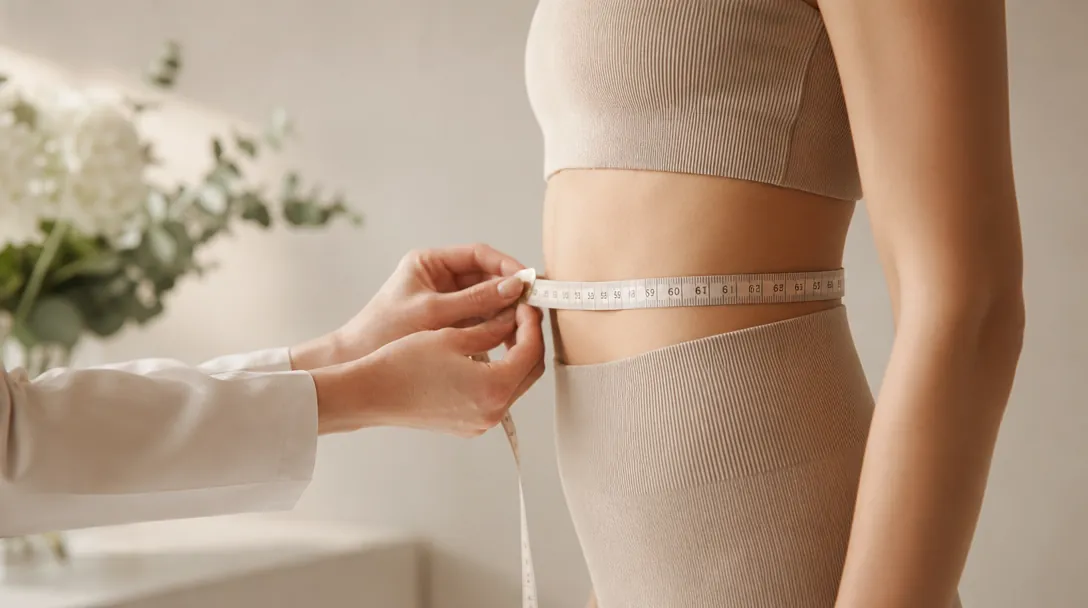
We track tape measurements at every session so you can see the millimetre and centimetre changes as the course progresses, rather than waiting until the last session to find out. If the result is tracking ahead of plan, we shorten the course; if your lymphatic drainage needs more support between sessions, we add radio frequency rather than just adding cavitation visits.
We do not sell large fixed-package courses upfront before we know how your body responds. Most patients book the first four or five sessions, see the tape-measure drop, and confirm the back end of the course from session four onwards.
If you want to find out whether ultrasound cavitation makes sense for your goal, the free consultation at your nearest CoLaz clinic covers it in full and the patch test is included.
Ready to begin
Book a free Ultrasound Cavitation consultation at your nearest CoLaz clinic
Time with a qualified clinician: a skin assessment, an honest recommendation and no obligation. Read about Ultrasound Cavitation at CoLaz, from £149 (per session, single).
More on Body
Keep reading
-

Fat freezing for the stomach: what 8 weeks of results actually look like
Stomach fat freezing needs 8 to 12 weeks before the result is visible, because that is how long the body takes to clear the treated fat cells. The honest timeline, the published numbers and the candidacy rules we use at CoLaz. Read the article -

Aqualyx vs Lemon Bottle: the safe and unsafe ends of fat dissolving
Aqualyx and Lemon Bottle are both sold as fat dissolving injections, but only one is regulated. A clinical, honest comparison of safety, evidence and who each suits. Read the article -
Does fat freezing actually work?
Cryolipolysis reduces a treated fat pocket by about 15 to 28% per cycle in published trials. It is contouring, not weight loss. Here is the honest evidence at CoLaz. Read the article
Book a free consultation at your nearest CoLaz clinic
Time with a qualified clinician: a skin assessment, an honest recommendation and a written plan. No obligation.