
Does fat freezing actually work?
 Owner, CoLaz Aesthetics Clinic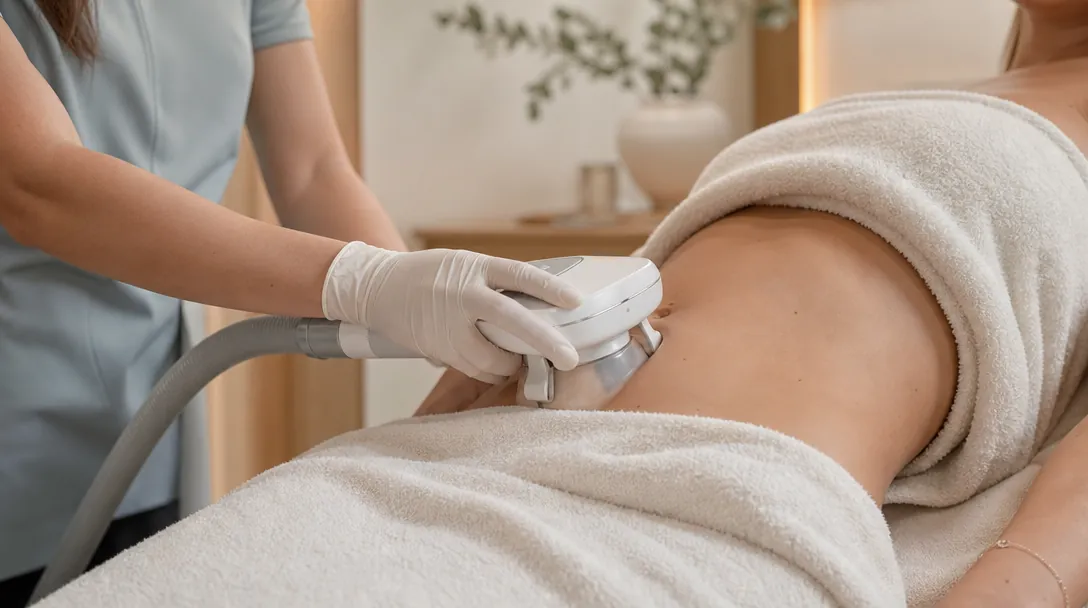
The short version
- Fat freezing reduces the treated fat pocket by roughly 15 to 28 percent per cycle in published trials, not your overall body weight.
- Results show up gradually over 6 to 12 weeks as the body clears the damaged fat cells.
- Two to three sessions per area, spaced 6 to 8 weeks apart, is the typical course at our clinics.
- It is body contouring for stubborn pockets, not a treatment for obesity or for loose skin.
- Rare side effects include a paradoxical fat increase in around 0.05 to 0.4 percent of treatments, which newer devices and proper sizing reduce further.
The honest answer is yes: fat freezing works on what it is designed to do, which is reducing the size of a localised fat pocket by about 15 to 28 percent per cycle. It does not work as a weight-loss treatment, it does not work on loose skin, and it does not work in the way the most aggressive clinic adverts imply.
Below is what the peer-reviewed evidence says about cryolipolysis (the medical name for fat freezing), how results show up, who it is for, and how we plan it for every new fat freezing patient at CoLaz.
How does fat freezing work?
Fat freezing works by cooling fat cells in a specific area to a temperature that damages them without harming the skin, blood vessels or nerves around them. Over the following weeks, your body breaks down those damaged cells and clears them through your lymphatic system.
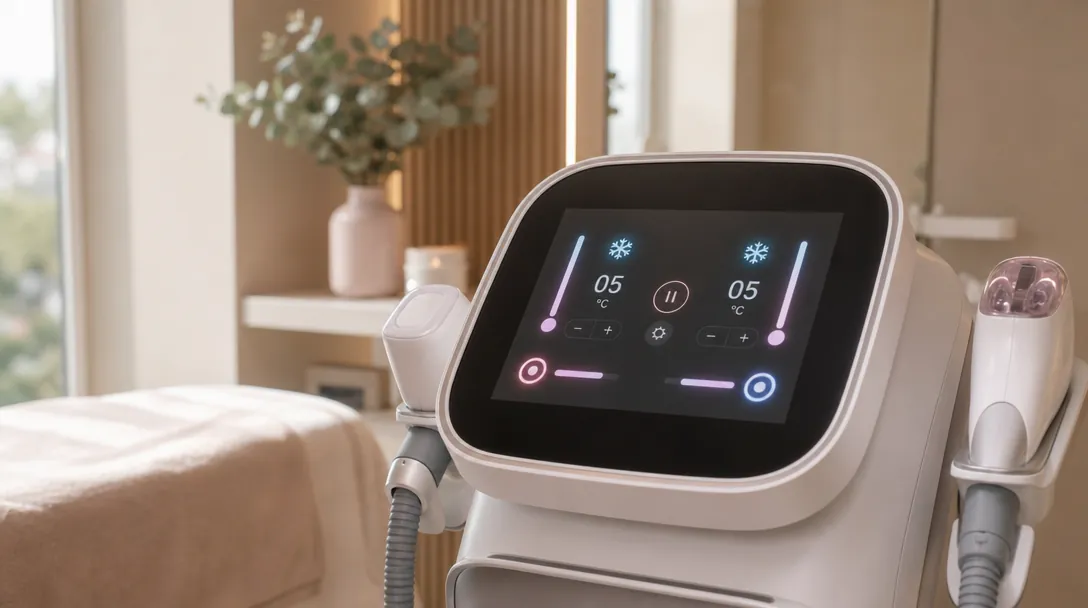
The technical name is cryolipolysis. A vacuum applicator pulls a fold of tissue into a cooling cup, lowers the temperature to around 4 to -10 degrees Celsius, and holds it there for 35 to 75 minutes. Fat cells are unusually sensitive to cold, so this temperature selectively triggers a controlled cell death in the fat, while the skin, vessels and nerves recover within hours.
After the session, you walk out the same day. Over the following 6 to 12 weeks, the gradual contour change appears as the body clears the damaged cells.
This is a different mechanism from weight loss. Weight loss shrinks every fat cell in your body proportionally. Fat freezing permanently reduces the number of fat cells in the treated pocket, but does nothing to the rest of you.
Does the published evidence support fat freezing?
Yes. Cryolipolysis is one of the most studied non-surgical body-contouring procedures, with multiple systematic reviews confirming meaningful, measurable fat reduction in treated areas.
A widely-cited safety and efficacy review of cryolipolysis pooled data across multiple studies and found average fat reductions of 14.67 to 28.5 percent on caliper measurements, and 10.3 to 25.5 percent on ultrasound measurements, after a single treatment cycle. The same review confirmed a favourable safety profile, with only mild, short-term side effects for the vast majority of patients.
A systematic review and meta-analysis in the World Journal of Plastic Surgery found significant reductions in BMI, local circumference and fat thickness, but no significant effect on overall body weight. The authors concluded that cryolipolysis works as a localised contouring method, not a weight-loss treatment. That is exactly the way we frame it to patients.
For under-the-chin fat specifically, a 2024 submental cryolipolysis meta-analysis found a mean reduction in submental fat thickness of -2.78 mm and volume of -19.57 cm³, a small number in absolute terms but a visible change in a prominent area. The most recent 2023 practical review in the Journal of Cosmetic Dermatology confirms cryolipolysis as clinically useful for localised subcutaneous fat reduction in well-selected patients, with limitations around large treatment areas and visceral (deep-belly) fat that the technology does not reach.
When do you actually see results?
Visible results from fat freezing typically appear at 4 to 8 weeks after the session, with the final result of one cycle at 12 weeks. Most clinics, including ours, ask you to wait the full 12 weeks before deciding whether you want a second cycle on the same area.
The timeline matches the underlying biology. The cold damages the fat cells immediately, but the body needs time to recognise the damaged cells, remove them through the lymphatic system, and clear the metabolites through the liver. Patients who expect an overnight change leave disappointed, even when the treatment is actually working.
What to expect in the weeks after a session:
- Week 1 to 2. Redness, mild swelling, occasional bruising and a temporary “blocky” feel. Sensation may be reduced for two to three weeks.
- Week 3 to 4. The treated area starts to feel softer as the body begins clearing the damaged cells.
- Week 6 to 8. Visible contour change in most patients; clothes fit slightly differently before the change is obvious in the mirror.
- Week 12. The result is settled. Photographs at this point are the honest measure of the response.
We take standardised photographs at the consultation and three months after each treatment. Memory is unreliable when it comes to body shape; the only fair way to assess whether the treatment worked is the photographs.
Who is fat freezing for, and who is it not for?
Fat freezing is for patients who are at or near their target body weight and have a localised fat pocket that does not respond to diet or exercise. It is not a treatment for obesity, for general weight loss, or for loose post-pregnancy skin.
The patients who get the best results share three characteristics: a stable, healthy weight; a small, discrete fat pocket (love handles, lower abdomen, inner thighs, under the chin); and reasonable skin elasticity over the area. In that group, two to three cycles per area typically produce a visible, photograph-confirmed change.
The treatment is not appropriate for:
- Patients well above their target weight. A patient who needs to lose two or three stone is better served by sustained diet, exercise and (where appropriate) GP-supervised weight management.
- Patients with significant skin laxity. Removing fat from under loose skin can make the laxity look worse; skin-tightening treatments such as radio frequency or HIFU are usually a better starting point.
- Patients with cryoglobulinaemia, cold agglutinin disease or paroxysmal cold haemoglobinuria, all absolute contraindications because of the cold trigger.
- Patients with hernias in the treatment area, or who are pregnant or breastfeeding.
We screen for all of this at the consultation. Saying “this is not the right treatment for you” is part of the standards we follow on the JCCP register and through Save Face.
How many sessions does a typical course take?
Two to three sessions per area, spaced 6 to 8 weeks apart, is the typical course. A single session reduces the treated fat pocket by roughly 15 to 28 percent; a second session targets the remaining cells; a third is reserved for patients who want a further refinement after a 12-week review.
Each session lasts 35 to 75 minutes depending on the area and applicator. The first 5 to 10 minutes are mildly uncomfortable as the area cools and the tissue numbs; after that, the area is numb and the treatment is well tolerated.
We do not sell multi-session packages upfront. The most common pattern at CoLaz is one session, a 12-week review with photographs against baseline, and then a second session only if there is a useful further change to make. If the first review shows the result is what you wanted, we stop.
What are the risks and side effects?
Most side effects of fat freezing are mild, short-term and resolve on their own. The main risks to know about are temporary numbness in the treated area and, very rarely, a paradoxical increase in fat called paradoxical adipose hyperplasia.
Common short-term side effects (resolving within 1 to 4 weeks) include redness, mild swelling, occasional bruising, a “blocky” feel in the treated tissue, and reduced sensation in the skin for two to three weeks. Reduced sensation is the most commonly reported lingering effect and is almost always self-limiting.
The rare but specific risk to know about is paradoxical adipose hyperplasia (PAH), where the treated area enlarges instead of shrinking, typically two to three months after the session. A multicentre review of 8,658 cycles in 2,114 patients found an incidence of 0.15 percent per cycle and 0.43 percent per patient. Critically, newer-generation applicators reduced the PAH rate by over 75 percent compared with older 2015 to 2016 models.
PAH is also documented in earlier multi-centre reports and in the StatPearls summary, which lists male sex and the abdomen as risk factors. Treatment, when needed, is liposuction at six to nine months once the new fat has matured. We discuss PAH explicitly at every consultation; any clinic that does not mention it is either using outdated equipment or not informing patients fully.

How is fat freezing regulated in the UK?
Fat freezing is classified in the “green tier” of the proposed UK licensing scheme for England. The House of Commons Library briefing confirms that all licensed practitioners will need minimum standards of training, insurance and premises hygiene under the framework.
Until the framework is in force, the most reliable signals of a safe clinic are voluntary registration with the JCCP and listing on Save Face (both Professional Standards Authority-recognised registers). CoLaz is on both. The other practical signal is the equipment: a clinic running current-generation devices with appropriately-sized applicators and a clear PAH protocol is offering the treatment safely. A clinic running unbranded or older devices at heavy-discount prices may not be.
How does CoLaz plan your fat freezing course?
Every new fat freezing patient at CoLaz starts with the same two-step gateway: a free consultation with the clinician, and standardised photographs taken at baseline before the first session is booked.
A few principles we apply at every visit:
- One area per session, in most cases. Treating multiple areas in a single session is possible but stretches the appointment and recovery.
- Photographs, not opinions. The 12-week review uses the baseline photo on the same lighting, posture and camera distance.
- No multi-session packages. The decision to do a second cycle is made at the 12-week review, when we can see whether the first session worked as expected.
- An honest “no” when needed. If we conclude that fat freezing will not give a useful result, we say so at the consultation and recommend a different route.
If you want to find out whether fat freezing is right for you, book a consultation at your nearest CoLaz clinic. The assessment is free, photographs are taken at baseline, and we will not start a course unless we both expect to see a result that is worth the time and the cost.
Ready to begin
Book a free Fat Freeze consultation at your nearest CoLaz clinic
Time with a qualified clinician: a skin assessment, an honest recommendation and no obligation. Read about Fat Freeze at CoLaz, from £159 (any single area, single session).
More on Body
Keep reading
-

Fat freezing for the stomach: what 8 weeks of results actually look like
Stomach fat freezing needs 8 to 12 weeks before the result is visible, because that is how long the body takes to clear the treated fat cells. The honest timeline, the published numbers and the candidacy rules we use at CoLaz. Read the article -

Aqualyx vs Lemon Bottle: the safe and unsafe ends of fat dissolving
Aqualyx and Lemon Bottle are both sold as fat dissolving injections, but only one is regulated. A clinical, honest comparison of safety, evidence and who each suits. Read the article -

How many ultrasound cavitation sessions for visible inch loss?
Six to ten sessions is the typical course for visible circumference change, but the result depends on the area, the technology and what you do between sessions. Here is how we plan ultrasound cavitation at CoLaz. Read the article
Book a free consultation at your nearest CoLaz clinic
Time with a qualified clinician: a skin assessment, an honest recommendation and a written plan. No obligation.