
Lemon Bottle fat dissolving: what it is and is it safe?
 Owner, CoLaz Aesthetics Clinic
The short version
- Lemon Bottle is a South Korean fat dissolving injection sold widely in the UK since 2023, marketed as a quick fix for stubborn pockets of fat.
- It is not licensed by the MHRA, not CE marked, and not approved by the FDA. The UK General Pharmaceutical Council issued a public warning about it in April 2025.
- Reported complications include severe bruising, infections, abscesses and tissue necrosis. Switzerland's Swissmedic banned it in 2024.
- Aqualyx is the regulated alternative used in the UK, with phosphatidylcholine and deoxycholate active ingredients and over a decade of clinical use.
- At CoLaz we offer Aqualyx and Lemon Bottle on our menu, but every patient gets a full consultation about regulatory status and safer alternatives before any injection is booked.
Lemon Bottle has been one of the most-asked-about treatments in our seven UK clinics for the last two years. It is sold at low prices, it is everywhere on social media, and it is marketed under bold “fat melting” claims. It is also unlicensed in the UK, and UK regulators have publicly warned about it.
This post explains what Lemon Bottle actually is, why the regulators have flagged it, what the safer regulated alternative looks like, and how we handle Lemon Bottle enquiries at CoLaz when a patient asks for it by name.
What is Lemon Bottle fat dissolving?
Lemon Bottle is a South Korean injectable solution marketed as a “fat dissolving” treatment for small pockets of stubborn fat. It is sold as a cosmetic product, not a medicine.
The brand is owned by SIF Medicos. According to the manufacturer’s marketing, the formula combines riboflavin (vitamin B2), bromelain (a pineapple enzyme), and a lecithin-based fat-binding ingredient. It is injected directly into the subcutaneous fat layer in small areas such as the under-chin, flanks, abdomen, inner thighs and upper arms.
The marketing claim is that the solution breaks fat cells down so the body can clear them through the lymphatic system. The clinical reality is less tidy. There is no robust clinical evidence on Lemon Bottle published in peer-reviewed journals, and chemical engineers and aesthetic doctors quoted in trade press say the website lacks the safety data needed to assess it properly. That alone is unusual for any injectable on sale in the UK.
Is Lemon Bottle licensed in the UK?
No. Lemon Bottle is not licensed by the MHRA, not CE marked, and not approved by the US FDA. It sits in a regulatory grey area as a cosmetic product, not a medicine.
This matters because licensed medicines in the UK have to pass safety, quality and efficacy testing before they are allowed on the market. Cosmetic products do not. The General Pharmaceutical Council made the point bluntly in its April 2025 statement, warning that “non-medicinal, unregulated, unlicensed” products like Lemon Bottle have “potentially caused serious harm” and that pharmacies should not be supplying it as if it were a medicine.
The GPhC followed up the following month with a further statement telling pharmacy owners that unlicensed products must carry no medicinal claims on the packaging or in promotion. Switzerland’s medicines regulator Swissmedic went further: in March 2024 it issued a public warning against Lemon Bottle, describing it as having “no medicinal effect” and advising people not to use it.
The FDA’s stance on the wider category is also worth understanding. The agency has formally warned that fat dissolving injections sold under brand names including Lemon Bottle, Aqualyx, Lipodissolve, Lipo Lab and Kabelline are not FDA approved. Only Kybella, used under the chin, is FDA-cleared in this category in the US.

What are the safety concerns?
The documented complications from unlicensed fat dissolving injectables include severe bruising, infections, abscesses, painful nodules under the skin, and in some cases tissue necrosis.
That list is not speculation. It comes directly from the GPhC’s own communications and from the FDA’s consumer warning. The FDA notes permanent scarring, serious infections, skin deformities, cysts, and deep painful knots in patients who received unapproved fat dissolving injections.
Three things drive the risk:
- Unknown formulation. Because Lemon Bottle is sold as a cosmetic, the manufacturer does not have to publish a full ingredient list or stability data the way a licensed medicine has to. If something goes wrong, your clinician cannot tell A&E exactly what is now sitting in your fat layer.
- Wide availability to untrained injectors. The product is sold openly online for under £20 a vial in some places. There is no statutory rule in the UK that says only a doctor, nurse or dentist can inject it, which is a known gap the JCCP has been campaigning to close.
- No published safety trials. Unlike Aqualyx, which has been on the market in the UK since 2013 and has been studied in peer-reviewed work, Lemon Bottle has no comparable evidence base.
The pattern is consistent across the UK aesthetics press. Independent registers like Save Face have repeatedly warned about complications from unlicensed fat dissolvers and the difficulty of treating them when injectors disappear after the procedure.
How does Lemon Bottle compare with Aqualyx?
Aqualyx is the regulated comparator in the UK. It contains phosphatidylcholine and deoxycholate, has been in clinical use since 2013, and is supplied through licensed pharmacy distribution to qualified clinicians.
The mechanism is similar in principle: a solution is injected into the subcutaneous fat layer, and the active ingredients are believed to disrupt the membrane of fat cells so the triglyceride contents can be cleared by the lymphatic system over the following weeks. The differences are in the ingredients, the evidence and the regulation.
A quick comparison:
- Aqualyx. Active ingredients phosphatidylcholine and deoxycholate. On the UK market since 2013. Supplied via licensed pharmacy. Reasonable peer-reviewed evidence base, even if not FDA approved. Typically two to eight sessions spaced four to six weeks apart. Visible result over six to twelve weeks.
- Lemon Bottle. Ingredients listed as riboflavin, bromelain and a lecithin-based component. On the UK market since around 2023. No MHRA or CE approval, no FDA approval, no published clinical trial data of the type that would support typical UK prescribing. GPhC has publicly warned about it.
Neither is suitable for weight loss. Both are intended for small pockets of localised fat in people already close to their target weight. If anyone tells you a fat dissolving injection will replace a healthy weight management plan, walk away.
Independent commentary in Aesthetic Medicine Magazine is consistent: the licensed Aqualyx product has a body of evidence, the unlicensed alternatives do not, and the regulator-warned products should be treated with caution.

How does CoLaz handle Lemon Bottle enquiries?
We list Lemon Bottle on our menu so patients can find honest information about it, not because we promote it. Every patient who asks for it by name gets a structured consultation that walks through regulatory status, complications data and the Aqualyx alternative before any booking is taken.
What that looks like in practice:
- A face-to-face consultation first, never a same-day injection. We will not inject Lemon Bottle into a patient at the first visit. The free consultation covers your medical history, your goals, and the regulatory facts as they stand today.
- A regulatory briefing in writing. You get a one-page summary of MHRA status, CE mark status, FDA status, and the GPhC’s stated concerns, so the decision is informed.
- Aqualyx offered as the licensed alternative. Most patients who came in asking for Lemon Bottle leave choosing Aqualyx once they see the comparison. We do not push anyone in either direction.
- Non-injectable alternatives offered as well. For many patients the better answer is not an injection at all. Ultrasound cavitation and fat freeze are non-invasive options that suit some patient profiles better. We will tell you that during the consultation.
- Only qualified injectors at CoLaz. Every clinician who can inject a fat dissolver at CoLaz is a registered nurse or doctor, and the clinic itself is held to the standards expected of a JCCP-registered and Save Face accredited practice.
Should you choose Lemon Bottle, Aqualyx, or neither?
For most patients in our clinics, the honest answer is “neither, yet”. The first step is to sit down with a clinician and find out whether you are even a candidate for fat dissolving injections, and which regulated route suits your goals.
If your priority is the strongest available evidence and a clear regulatory paper trail, Aqualyx is the standard option. If your priority is no injection at all, ultrasound cavitation or fat freeze deserve a serious look. If your priority is the lowest-priced “fat melting” jab on a high street, Lemon Bottle’s price tag is doing a lot of work, and the regulators have made clear that the saving comes with risks.
We would rather lose the booking than push a patient towards a product the GPhC has publicly warned about. If you want to talk through your options, the free consultation at your nearest CoLaz clinic covers it in full, in person, with no pressure to book on the day.
Ready to begin
Book a free Lemon Bottle Fat Dissolving Injection consultation at your nearest CoLaz clinic
Time with a qualified clinician: a skin assessment, an honest recommendation and no obligation. Read about Lemon Bottle Fat Dissolving Injection at CoLaz, from £175 (chin, single session).
More on Body
Keep reading
-

Fat freezing for the stomach: what 8 weeks of results actually look like
Stomach fat freezing needs 8 to 12 weeks before the result is visible, because that is how long the body takes to clear the treated fat cells. The honest timeline, the published numbers and the candidacy rules we use at CoLaz. Read the article -

Aqualyx vs Lemon Bottle: the safe and unsafe ends of fat dissolving
Aqualyx and Lemon Bottle are both sold as fat dissolving injections, but only one is regulated. A clinical, honest comparison of safety, evidence and who each suits. Read the article -
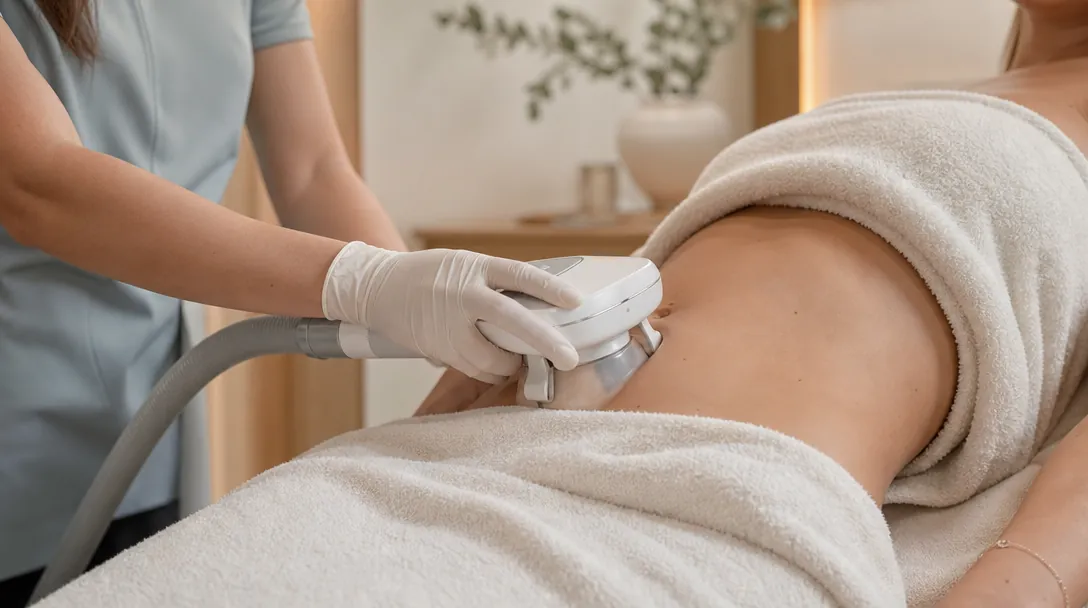
Does fat freezing actually work?
Cryolipolysis reduces a treated fat pocket by about 15 to 28% per cycle in published trials. It is contouring, not weight loss. Here is the honest evidence at CoLaz. Read the article
Book a free consultation at your nearest CoLaz clinic
Time with a qualified clinician: a skin assessment, an honest recommendation and a written plan. No obligation.