Skin · 27 May 2026 · 8 min read
Microneedling vs Dermapen: what is the difference?
By Alaiyka Parvez
Owner, CoLaz Aesthetics Clinic
The short version
- • Microneedling is the whole category of collagen induction therapy; Dermapen is a specific automated pen-style device within that category.
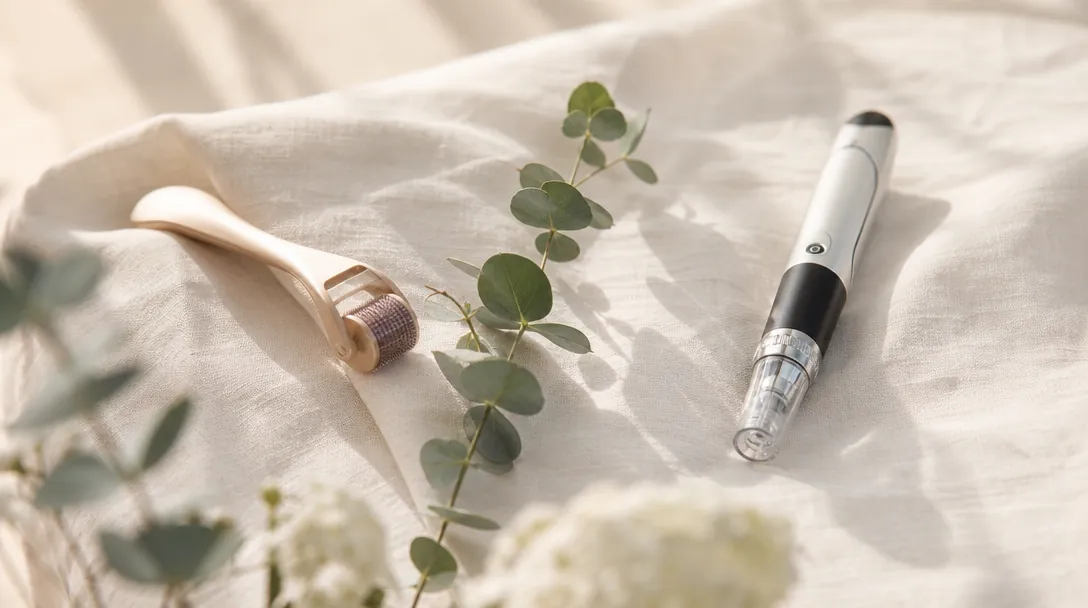
- • Pen devices give adjustable depth (0.2 mm to 2.5 mm) and a vertical stamping motion; manual rollers have a fixed needle length and a rolling action that can drag the skin.
- • Sterile single-use cartridges on a pen reduce infection and cross-contamination risk compared with reusable rollers.
- • Recovery from a pen treatment is typically 24 to 48 hours of redness, against two to three days with a traditional roller.
- • At CoLaz, we use professional automated pen devices for all in-clinic microneedling, not derma rollers, and we discuss home roller risks at every consultation.
The short answer is that microneedling is the whole category of treatment, and Dermapen is a brand of automated pen-style device that does it. Asking which is better is a bit like asking whether driving or driving a Ford is better; the comparison that matters is between the different kinds of microneedling tool, not between the category and one brand inside it.
This matters because the wrong tool, used at the wrong depth on the wrong skin, can give you uneven results, infection risk or pigmentation problems. Below is what actually changes between a derma roller, a pen device and the Dermapen in particular, and how we choose between them at CoLaz microneedling and Dermapen appointments.
What is microneedling, and what does it actually do?
Microneedling is a procedure that uses fine sterile needles to create controlled micro-injuries in the skin, which trigger the body’s natural wound-healing response and stimulate new collagen and elastin.
The clinical name is collagen induction therapy, and the physiological mechanism is well-described in dermatology. The needles puncture the upper dermis, the skin treats it as a small injury, and the repair pathway lays down fresh collagen, elastin and new microvessels over the following weeks. A wider comprehensive review summarises the indications it is used for: acne scarring, fine lines, sun damage, melasma, stretch marks and androgenetic hair loss.
What microneedling is not is a same-day glow facial. The skin can look flushed and a bit brighter immediately after, but the actual remodelling happens over four to six weeks per session, and most patients run a course of three to five sessions four to six weeks apart.
What is a Dermapen, and how is it different from “microneedling”?
A Dermapen is a brand name for a specific family of automated, motorised microneedling pens with adjustable needle depth and sterile single-use cartridges. Microneedling is the broader treatment category; Dermapen is one well-known brand of pen device that does it.
Other pen devices exist (SkinPen, Dermafrac, Mesotherapy pens with microneedling heads), and at the other end of the spectrum sit low-cost home derma rollers. They are not the same tool. The clinical microneedling review sets out the difference plainly: manual rollers are “less effective than professional devices” because of fixed needle length and limited precision, while automated pen devices “use a motorised mechanism to create thousands of microchannels in the skin, reaching depths up to 2.5 mm”.
In practice, that translates to three real differences a patient feels in the clinic.
How does the needle motion change the result?
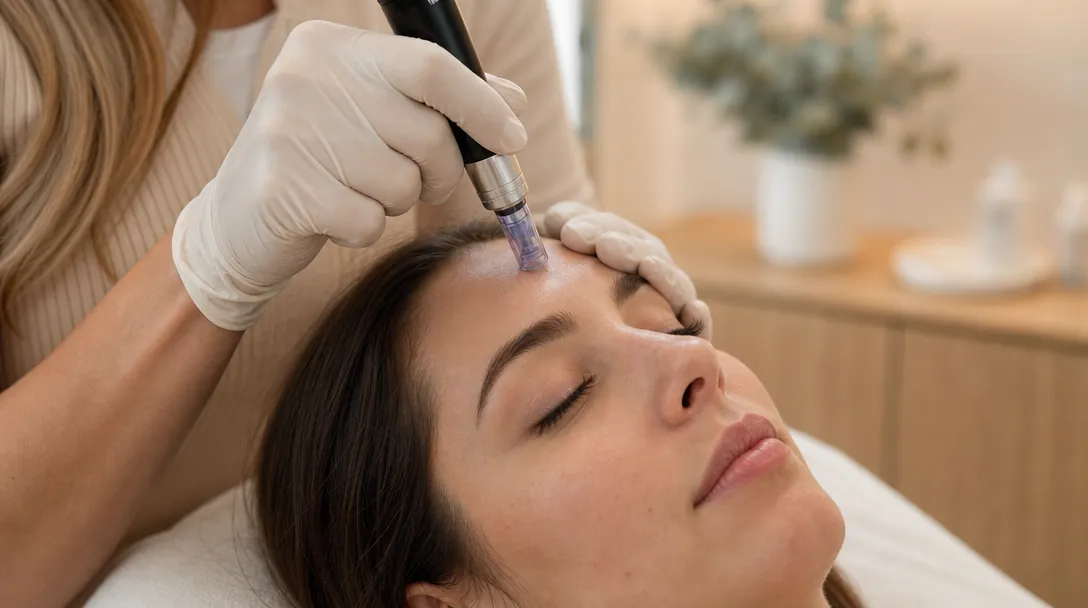
The motion of the needle changes how cleanly the skin is punctured. A pen device fires the needles in and out vertically; a roller drags them across the skin at an angle. Vertical stamping produces cleaner microchannels with less surface tearing.
That is not a marketing distinction. Earlier microneedling review work describes Dermapen-style devices as “spring-loaded” and “electrically powered”, delivering vertical stamp-like motions, in contrast to the cylindrical roller arrays that have to drag through the skin. When a roller goes over a curved surface like the side of the nose or around the eye, the needles enter and exit at slightly different angles, which can cause small tears along the path rather than a clean puncture.
For most patients, vertical motion means less surface trauma at the same depth, shorter recovery (24 to 48 hours of redness rather than two to three days), and better access to curved areas around the eyes, the side of the nose and the hairline. In-clinic, on broken-skin depths, a roller is not the right tool any more.
Why does adjustable depth matter?
Adjustable needle depth lets the clinician match the treatment to the specific layer of skin that needs remodelling, instead of treating everywhere at the same depth. Different concerns need different depths, and a fixed-length roller cannot give that.
The American Academy of Dermatology is clear on this: depth and skill matter, and microneedling done in the hands of a trained clinician with the right device produces “more significant and long-lasting improvement” than DIY or non-medical spa treatments at the same area.
In our clinics, we typically use:
- 0.25 to 0.5 mm for superficial fine lines, mild dullness and product infusion. Recovery is hours, not days.
- 0.5 to 1.0 mm for early ageing, light pigmentation and overall skin quality.
- 1.0 to 1.5 mm for fine to moderate acne scarring and stretch marks on the body.
- 1.5 to 2.5 mm for established atrophic acne scars, where the systematic review of randomised controlled trials supports microneedling as a well-tolerated and effective treatment for atrophic scars.
The same face often needs two or three different depths in the same session: deeper through scarred cheeks, shallower around the eyes and forehead. With a roller, you would have to swap to a different fixed-length roller for each zone; with a pen, the practitioner adjusts a dial.
Are sterile cartridges actually safer?
Yes. Sterile, single-use needle cartridges meaningfully reduce the risk of infection and cross-contamination compared with reusable rollers, because each patient gets a fresh, sealed cartridge that goes into clinical waste at the end of the appointment.
This is one of the reasons the JCCP lists “Skin Rejuvenation, Micro Needling and Peels” as one of the five regulated procedural modalities in the UK. Cross-contamination is a real risk in any treatment that breaks the skin barrier, and a reused roller, even one cleaned between patients, sits below the standard a clinic should be holding itself to.
What this looks like at CoLaz on the day:
- Cartridge opened in front of the patient.
- Single use per patient, full stop.
- Cartridge into clinical waste, never reused.
- Pen device cleaned between patients per the manufacturer protocol.
For home use, the same logic applies in reverse. A home roller that is not regularly replaced is the device most commonly associated with the post-treatment complications the AAD lists, including bacterial infection and the spread of viruses like herpes across the skin.
How long is the recovery from each?
Recovery from an automated pen treatment is typically 24 to 48 hours of redness and a slight tight feeling; a traditional roller at the same effective depth usually takes two to three days. Higher depths extend recovery slightly in both cases.
The reason is the same as the motion difference. A roller pulls across the skin and the trauma is uneven, so the redness takes longer to settle. A pen device makes cleaner, more uniform punctures, and the skin closes them more efficiently.
What patients typically see across a microneedling course:
- Day 0: skin looks like mild sunburn for the rest of the day. No make-up.
- Day 1: pink, a little tight. Mineral SPF only, no actives.
- Day 2 to 3: redness gone or very faint. Skin may feel slightly dry as the surface refreshes.
- Day 4 to 7: skin looks brighter and smoother. New collagen is still being laid down underneath.
- Weeks 2 to 4: cumulative improvement in tone and texture.
- Week 4 to 6: next session in the course, if applicable.
We ask every microneedling patient to use a broad-spectrum factor 30 or higher sunscreen with a four or five-star UVA rating from the day of treatment, and to skip retinoids, AHAs and BHAs for at least seven days. That is the single biggest difference between a course that delivers what it should and one that pigments unevenly.
Microneedling vs Dermapen: which should I book?
If you walk into a reputable UK clinic in 2026 and ask for microneedling, you will almost certainly be treated with an automated pen device, often a Dermapen specifically. The choice between the words is really a question of brand, not of category. The more useful question is whether the clinic is using a professional pen at all, or selling a derma roller treatment that has not been the standard for years.
Practical pointers when choosing:
- Ask which device the clinic uses. A reputable clinic will say the brand and model without hesitation.
- Ask about needle cartridges. Single-use, sealed, opened in front of you is the only acceptable answer.
- Ask about depths. A reputable clinic will explain which depth they plan to use on which area and why.
- Ask about training. The NHS guidance on cosmetic procedures recommends checking that your practitioner is on a Professional Standards Authority-accredited register like the JCCP or Save Face, and holds appropriate insurance.
If your goal is acne scarring or stretch marks, ask whether they combine microneedling with PRP or with a chemical peel. The published network meta-analysis and atrophic scar systematic review both suggest combination protocols often outperform microneedling alone on stubborn scars.

How does CoLaz choose between microneedling, Dermapen and other skin treatments?
At CoLaz we use professional automated pen devices for all in-clinic microneedling, including the Dermapen, and we choose the specific tool by skin type, depth needed and the area being treated. We do not use derma rollers for in-clinic treatment, and we do not sell home roller kits.
Every microneedling patient starts with a free consultation. We will tell you whether microneedling is the right call for your specific concern, or whether something else (a chemical peel, a course of PRP for the face, or a different skin booster) would get you to the result faster. We will not sell you a six-session microneedling course on day one if a three-session course plus a peel is what will actually work.
If you are weighing a microneedling course against a Dermapen course, the answer is almost always that you should not have to choose between them; you should be choosing a clinic that uses the right pen device, at the right depth, with a clean cartridge, and that can tell you why. The free consultation is where we draw that plan together.
Ready to begin
Book a free Microneedling consultation at your nearest CoLaz clinic.
Thirty minutes with a qualified clinician. Skin assessment, candid recommendation, no obligation. Read about Microneedling at CoLaz, from £149 (decolletage, inner thighs or breast, single session).
WhatsApp replies in minutes during opening hours
About the author
Alaiyka Parvez
Owner, CoLaz Aesthetics Clinic
Alaiyka Parvez bought the CoLaz franchise network in 2023, having joined the company as a Slough clinic employee in 2013 and gone on to open the Hounslow and Wembley franchises. She writes here on the treatments CoLaz delivers across its seven UK clinics.
Read more about Alaiyka and CoLaz →More on Skin
Keep reading.

11 August 2026 · 10 min
HIFU treatment results: month by month, what is realistic
HIFU tightens skin gradually rather than instantly. Here is the honest month-by-month results timeline, how long the effect lasts, and who is a good candidate.

28 July 2026 · 10 min
Types of chemical peels: glycolic, salicylic, TCA and Jessner explained
Glycolic for dull and sun-damaged skin, salicylic for oily and acne-prone, lactic for sensitive, mandelic for pigmentation in deeper skin tones, TCA for resurfacing with downtime. A clear decision guide to the main types of chemical peels.

14 July 2026 · 7 min
Microneedling aftercare day by day: the realistic 7-day timeline
What to expect after microneedling, day by day, plus the simple aftercare that protects your skin and your results across the first week.
Begin
Book a free consultation
at your nearest CoLaz clinic.
Thirty minutes with a qualified clinician. Skin assessment, candid recommendation, written plan. No obligation.