
Lemon Bottle for thigh fat: what you need to know
 Owner, CoLaz Aesthetics Clinic
The short version
- Lemon Bottle is marketed as a fat dissolving injection for stubborn areas such as the thighs, but it is a body contouring product, not a weight loss treatment.
- It is not licensed by the MHRA, not CE marked, and not FDA approved. The UK General Pharmaceutical Council issued a public warning about unregulated products like it in 2025.
- Thigh fat is genuinely stubborn for many women because oestrogen directs fat storage to the hips and thighs, so it resists diet and exercise.
- Aqualyx is the regulated fat dissolving option in the UK, and non-invasive routes like fat freeze and ultrasound cavitation suit some patients better.
- At CoLaz, every thigh contouring enquiry starts with a free consultation that covers regulatory status, realistic outcomes and safer alternatives before anything is booked.
TL;DR
- Lemon Bottle is marketed as a fat dissolving injection for stubborn areas such as the thighs, but it is a body contouring product, not a weight loss treatment.
- It is not licensed by the MHRA, not CE marked, and not FDA approved. The UK General Pharmaceutical Council has publicly warned about unregulated products like it.
- Thigh fat is genuinely stubborn for many women because oestrogen directs fat storage to the hips and thighs, so it resists diet and exercise.
- Aqualyx is the regulated fat dissolving option in the UK, and non-invasive routes like fat freeze and ultrasound cavitation suit some patients better.
- At CoLaz, every thigh contouring enquiry starts with a free consultation that covers regulatory status, realistic outcomes and safer alternatives.
Lemon Bottle is one of the most searched-for names when people want to reduce stubborn thigh fat without surgery, and the honest answer is that it deserves real caution. It is sold widely and cheaply online, it is all over social media, and it is also unlicensed in the UK, where regulators have publicly warned about products of this type.
This post explains what Lemon Bottle actually is, why thigh fat is so stubborn in the first place, what the evidence does and does not show, and the safer routes we would talk through with you at CoLaz before anything is booked.
Can Lemon Bottle remove thigh fat?
Lemon Bottle may reduce small, localised pockets of fat, but it is a body contouring product, not a weight loss treatment, and the product itself is not licensed in the UK.
The marketing claim is that the solution is injected into the fat layer under the skin, breaks down fat cells, and lets the body clear them through the lymphatic system over the following weeks. In practice, fat dissolving injections of any kind are designed for stubborn pockets in people who are already close to their target weight, not for shifting large volumes of fat or for general slimming. The MHRA has been clear that unlicensed products should not be promoted with medicinal or weight-management claims, warning that such marketing can mislead patients about what a product can safely do.
So if you are hoping a few injections will replace a healthy weight plan, that expectation is not realistic. If you have a specific, small area of stubborn fat on an otherwise stable frame, an injectable might be part of the conversation, but only after the regulatory picture below.
Why is thigh fat so stubborn?
Thigh fat is stubborn for many women because of how the body is built to store it, not because of a lack of effort.
Fat on the hips, thighs and buttocks is known as gluteofemoral fat, and its distribution is strongly influenced by hormones. Research shows that oestrogen directs fat storage toward the gluteofemoral depot during the reproductive years, and that this fat is metabolically different from fat around the abdomen. It is laid down more readily and released more reluctantly, which is exactly why it can survive diet and exercise that trims other areas first.
That biology matters for expectations. It explains why two people with the same routine can carry weight in completely different places, and why “spot reduction” through exercise alone rarely works on the thighs. It does not mean nothing can be done. It means the realistic goal is contouring a stubborn area, not resculpting your whole body shape.
What is Lemon Bottle, and is it regulated?
Lemon Bottle is a South Korean injectable solution marketed as a fat dissolving treatment, sold as a cosmetic product rather than a licensed medicine, and it is not regulated as a medicine in the UK.

This distinction is the heart of the safety question. Licensed medicines in the UK must pass safety, quality and efficacy testing before they can be sold, and cosmetic products do not face the same bar. The General Pharmaceutical Council made the point directly in its public statement, warning that “non-medicinal, unregulated, unlicensed” products like Lemon Bottle have potentially caused harm and that pharmacies should not supply them as if they were medicines. It followed up by reminding the sector that unregulated products must not carry medicinal claims.
The regulatory concern is broader than one brand. The JCCP, the professional register for the sector, notes that the MHRA regards the phosphatidylcholine used in some fat dissolvers as a medicinal substance that is not authorised for cosmetic use in the UK. In the United States, the FDA has formally warned that fat dissolving injections sold under brand names including Lemon Bottle are not FDA approved and can cause serious harm.
Who is and is not a good candidate?
Fat dissolving injections are only ever considered for a narrow group, and honest screening rules many people out.
An injectable might be discussed for someone who:
- Has a small, defined pocket of stubborn fat rather than a large area to reduce.
- Is already close to a stable, healthy weight.
- Has reasonable skin firmness in the area.
- Understands this is contouring, not weight loss, and wants a non-surgical option.
It is not suitable for:
- Anyone seeking significant weight loss or general slimming.
- Pregnant or breastfeeding patients.
- People with liver, kidney or bleeding disorders, or an active skin infection in the area.
- Anyone who has not had a proper face-to-face assessment first.
That last point is not a formality. The NHS advises that before any cosmetic procedure you should check the practitioner is trained, insured and reputable and qualified, and be wary of treatments pushed hard on social media.
What does the evidence say about injecting thigh fat?
The evidence for injecting fat on the thigh specifically is limited and early, and it does not apply to Lemon Bottle.
The best-studied injectable fat dissolver is deoxycholic acid, and a small phase-one clinical study of deoxycholic acid on upper inner thigh fat reported an average reduction in thigh circumference of around 2 cm over 12 weeks, with no serious adverse events in a group of 15 people. That is a genuine signal, but it is a small early trial of a specific, studied compound, not a green light for every fat dissolving product sold online.
Lemon Bottle is a different formulation with no comparable published trial data. So while the category shows some promise in controlled research, “there is a study on thigh fat” is not the same as “this product is proven to work safely on your thighs”. When a product has no peer-reviewed evidence and no UK licence, that gap is the point.
What are the risks and side effects?
The documented risks of unlicensed fat dissolving injectables include swelling, bruising, tenderness, hard lumps under the skin, infections and, in some cases, tissue damage.
Milder reactions such as swelling, redness and tenderness for a few days are common with any injection into the fat layer. The more serious concerns come from the unregulated end of the market. The FDA has reported serious infections, permanent scarring, deep painful knots and skin deformities in people who received unapproved fat dissolving injections.
Two things make the risk worse with an unlicensed product. First, if the full formulation is not published, a clinician treating a complication cannot always know exactly what was injected. Second, these products are sometimes administered by people without medical training. The UK government has announced a crackdown on unsafe cosmetic procedures precisely because unqualified injectors in unsuitable settings have caused harm.
How does CoLaz approach thigh contouring?
At CoLaz, every thigh contouring enquiry starts with an honest, face-to-face consultation, not a same-day injection.

What that looks like in practice:
- A free consultation first. We take your medical history, look at the area, and talk through what is realistic. We will say so plainly if we do not think a treatment suits you.
- A clear briefing on regulatory status. If you have come in asking for Lemon Bottle by name, we explain where it sits with the MHRA and the GPhC before any decision is made.
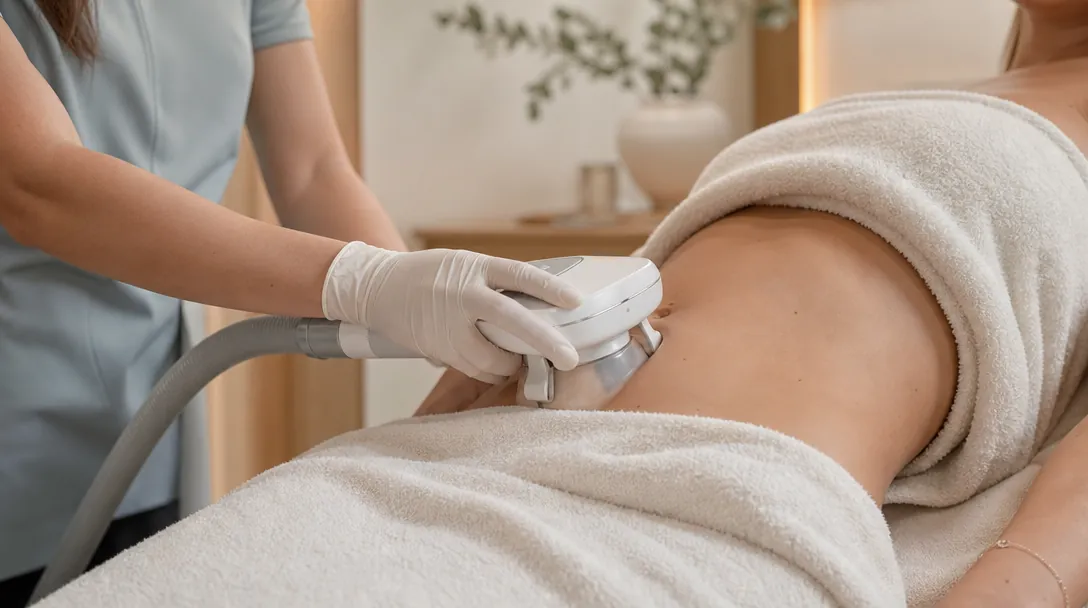
- Licensed and non-invasive alternatives on the table. For many patients the better answer is not an unlicensed injection. Aqualyx is the regulated injectable fat dissolver used in the UK, while fat freeze and ultrasound cavitation are non-invasive options that suit some thigh profiles better.
- A written plan you take away. Number of sessions, spacing and price are set out in writing, and there is no pressure to book on the day.
This mirrors the guidance from the Care Quality Commission, which advises patients to research thoroughly, ask questions and never feel rushed into a cosmetic decision.
Lemon Bottle, Aqualyx, or something else?
For most people asking about their thighs, the honest first answer is “let us look properly before choosing anything”.
If your priority is a clear regulatory paper trail, a licensed injectable like Aqualyx is the sensible comparison. If you would rather avoid injections altogether, non-invasive contouring deserves a serious look. And if the appeal of Lemon Bottle is mainly its low price, the regulators have been clear that the saving comes with real risk, and our reference post on Lemon Bottle fat dissolving explains why in more detail.
We would rather lose a booking than push someone towards a product the GPhC has warned about. If you want to talk through your thighs specifically, book a free consultation at your nearest CoLaz clinic and we will go through your options in person, with no pressure to decide on the day.
Ready to begin
Book a free Lemon Bottle Fat Dissolving Injection consultation at your nearest CoLaz clinic
Time with a qualified clinician: a skin assessment, an honest recommendation and no obligation. Read about Lemon Bottle Fat Dissolving Injection at CoLaz, from £175 (chin, single session).
More on Body
Keep reading
-

Fat freezing for the stomach: what 8 weeks of results actually look like
Stomach fat freezing needs 8 to 12 weeks before the result is visible, because that is how long the body takes to clear the treated fat cells. The honest timeline, the published numbers and the candidacy rules we use at CoLaz. Read the article -

Aqualyx vs Lemon Bottle: the safe and unsafe ends of fat dissolving
Aqualyx and Lemon Bottle are both sold as fat dissolving injections, but only one is regulated. A clinical, honest comparison of safety, evidence and who each suits. Read the article -
Does fat freezing actually work?
Cryolipolysis reduces a treated fat pocket by about 15 to 28% per cycle in published trials. It is contouring, not weight loss. Here is the honest evidence at CoLaz. Read the article
Book a free consultation at your nearest CoLaz clinic
Time with a qualified clinician: a skin assessment, an honest recommendation and a written plan. No obligation.