
What does Hydrafacial actually do for your skin?
 Owner, CoLaz Aesthetics Clinic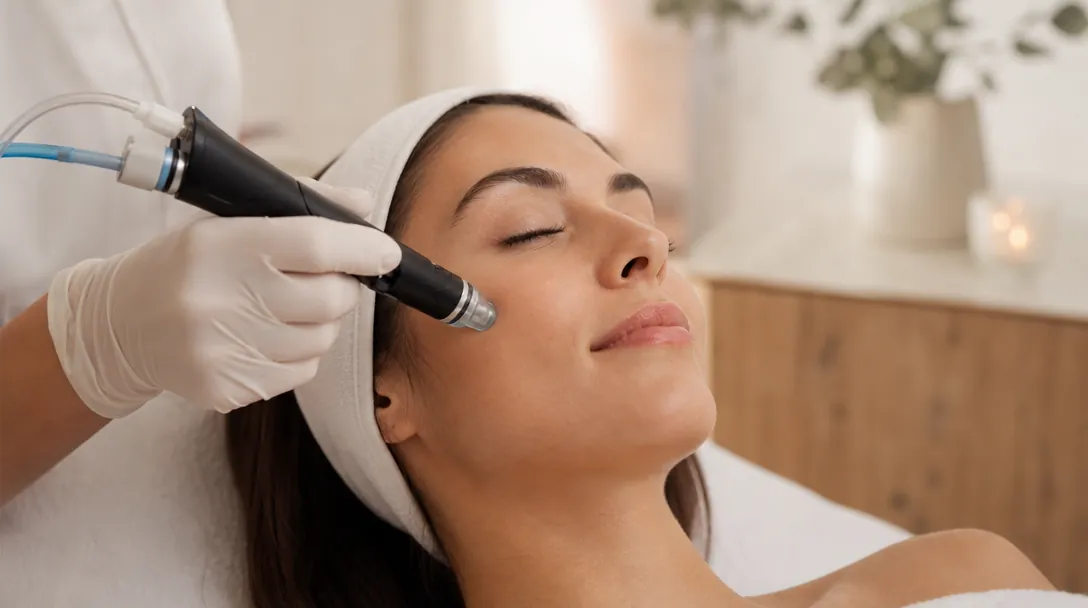
The short version
- Hydrafacial is a three-step device facial that cleanses with mild salicylic and glycolic acids, extracts pore debris with gentle suction, then infuses a hydrating serum.
- A peer-reviewed acne study found 100 per cent of participants saw clearer, less inflamed skin after six clarifying treatments over twelve weeks.
- It is one of the few facial treatments with effectively zero downtime, sitting around 30 minutes, with no recovery period.
- Best results come from a course of four to six sessions, then monthly maintenance, rather than a one-off before an event.
- At CoLaz, we start every patient with a skin assessment and recommend Hydrafacial when the goal is glow, mild congestion or hydration, and a peel or microneedling when the goal sits deeper.
Hydrafacial sits in an unusual category. It is medical-style enough that clinics treat it as a real treatment with a real protocol, and yet most patients walk out and back into the rest of their day with no marks, no peeling and no downtime. It tends to attract two opposite reactions: scepticism that anything is happening at all, and faith that one session will transform the skin. Neither is right.
Below is what the device is actually doing under the bonnet, what the clinical evidence says about results, who it suits and who it does not, and how a Hydrafacial course is planned at CoLaz alongside other skin treatments we offer.
What is a Hydrafacial and what does the device actually do?
A Hydrafacial is a three-step facial delivered with a specific handheld device. It cleanses and exfoliates with mild salicylic and glycolic acids, extracts pore debris using gentle vacuum suction, and then infuses a hydrating serum into the surface of the skin. The whole session typically runs around 30 minutes.
The protocol described by Medical News Today breaks it into three named stages:
- Cleanse. A water-based acid solution lifts away makeup, oil and the top layer of dead skin cells. The acids are at gentle facial-treatment concentrations, not at the medium-depth peel range.
- Extract. A spiral tip on the handpiece applies low suction across the skin, drawing out softened debris from the pores. The suction is calibrated to feel like a firm tug rather than a pinch.
- Hydrate. With the surface cleared, a hyaluronic-acid-based serum is delivered onto the skin so it can absorb into the now-exposed layer rather than sitting on top of dead cells and oil.
That three-step structure is the entire treatment. There is no laser, no needles, no heat. The skin is normally pink for an hour or two and back to baseline within the day.
The interesting part of the device, mechanically, is what makes the extraction gentle. The spiral tip generates a small vortex of fluid at the skin’s surface so the suction is paired with constant moisture rather than dragging across dry skin. That is the difference between a Hydrafacial and traditional microdermabrasion, which uses crystals or a diamond tip to physically scour the surface.
What do the acids in the cleanse step actually do?
The cleanse step uses salicylic acid and glycolic acid at gentle concentrations. Salicylic acid works inside the pore where oil collects, and glycolic acid works on the surface where dead skin sits. Together they soften everything that the extraction step is about to lift away.
Salicylic acid is fat-soluble, which matters because it can dissolve into the oily contents of a pore rather than being repelled by them. A peer-reviewed salicylic acid review describes it as keratolytic (loosening dead skin), comedolytic (clearing blocked pores) and anti-inflammatory, and notes that it can also reduce sebum production where it is used regularly.
Glycolic acid is water-soluble and the smallest of the alpha-hydroxy acids. It works on the surface layer of the skin, loosening the bonds between dead cells so they shed more readily. A clinical evaluation of glycolic acid for acne found significant improvement in inflammatory and non-inflammatory lesions over a course of split-face peels.
The Hydrafacial concentrations are well below the medium-depth peel range that causes visible flaking and three to seven days of downtime. They are doing real chemical work, but at the level where the surface looks brighter rather than peels off in flakes. This is also why someone with active eczema, sunburn or compromised barrier function should not have a Hydrafacial that day; even at gentle concentrations the acids will sting and slow recovery.

What does the clinical evidence show?
The strongest piece of evidence sits in the Journal of Clinical and Aesthetic Dermatology, which published a clinical study on Hydrafacial Clarifying treatments for active mild-to-moderate acne. Twenty adults completed six treatments spaced two weeks apart over twelve weeks. Investigator-graded “no acne or almost clear” rose from 20 per cent at baseline to 65 per cent at the end of the course, and patient-reported “clear skin” rose from 5 per cent to 55 per cent. Side effects were mild and decreased over the course.
A second study used confocal optical coherence tomography, a non-invasive imaging method, to look directly at what happens in the skin after hydradermabrasion (the broader category that includes Hydrafacial). Researchers saw the stratum corneum thin slightly straight after treatment, then return to normal by two weeks. Blood flow at the skin surface roughly doubled in the immediate aftermath and normalised by two weeks. All participants reported improved texture and smoothness; some saw reduced redness and fine lines. The authors did not find lasting structural change at two weeks, which is honest about what the treatment is doing.
The headline summary, written carefully, is:
- Skin clarity and texture improve measurably, with the strongest evidence in mild-to-moderate acne over a course of sessions.
- Hydration and surface smoothness improve in the short term, with the effect waning over weeks if treatments are not maintained.
- Longer-term structural change in the dermis is not well-supported by the current evidence. Hydrafacial is a surface treatment, not a remodelling treatment.
This sets honest expectations. If your goal is glow, hydration, mild congestion or to get clearer skin alongside an acne plan, the evidence is on your side. If your goal is to soften deep static lines, fade significant acne scarring or rebuild collagen, you need a treatment that goes deeper, such as a course of medical microneedling, a Dermapen course, or medium-depth chemical peels.
Who is Hydrafacial best suited to?
Hydrafacial suits patients who want visible improvement in clarity, hydration and texture without downtime, and who are happy to commit to a short course of sessions rather than expect everything from one. It is well-tolerated across most skin types and is one of the few facial treatments most patients with sensitive skin can have without flushing or peeling.
It works particularly well for:
- Pre-event glow. Wedding, big event, work conference. Booked seven to ten days before, the skin is at its smoothest and brightest by the day itself.
- Mild congestion and clogged pores. Especially on the forehead, nose and chin, where the salicylic acid plus suction does measurable work.
- Mild-to-moderate acne, as part of a broader plan that may also include products and a GP review for medical treatment if needed. The NHS acne guidance and NHS acne treatment options are the right starting point for active acne, and Hydrafacial sits alongside, not instead of, prescription routes.
- Dehydrated, dull skin in winter or after long-haul flights. The hydration step puts moisture back into a skin barrier that has run dry.
- Maintenance between deeper treatments. Patients on a microneedling or peel course often use Hydrafacial in the gaps to keep the skin in good shape without compounding downtime.
It is less suited to:
- Active rosacea flares, where suction can worsen flushing.
- Cold sores or active herpes simplex in the treatment area.
- Sunburn, eczema flare, broken skin or recent injectable treatment in the area.
- Patients on isotretinoin (Roaccutane) or those who have recently stopped it.
If any of those apply, we will say so at the consultation and either reschedule or recommend a different treatment.
How does Hydrafacial sit next to peels, microneedling and microdermabrasion?
Hydrafacial sits at the “low intensity, no downtime, course-based” end of facial treatments. A medium-depth peel sits one or two steps in, with three to seven days of visible peeling. Microneedling sits deeper again, with collagen-stimulating effects over months.
In simple terms:
- Microdermabrasion physically abrades the surface. Slightly more aggressive on dead skin, less hydrating, can be drying. Often suits oilier skin.
- Hydrafacial uses fluid-paired suction and mild acids. Gentler on the surface, adds hydration, suits a wider range of skin types.
- Superficial chemical peels (mandelic, lactic, gentle salicylic) sit alongside Hydrafacial in intensity but rely on the acid alone rather than the device. Some patients prefer the simplicity.
- Medium-depth peels (35 per cent TCA, Jessner’s solution, higher-strength salicylic) reach the upper dermis. Real downtime, but more effect on pigment, texture and shallow scarring.
- Microneedling and Dermapen create controlled micro-injuries that drive collagen and elastin remodelling over months. The right choice for acne scarring and ageing texture, not for short-term glow.
A practical pattern we see with patients across our seven UK clinics: Hydrafacial as the regular monthly treatment that keeps the skin clear and hydrated, peels or microneedling layered in over a course when there is a deeper concern. The two are complementary, not competing.

How many Hydrafacial sessions do you need and what does maintenance look like?
A one-off Hydrafacial works well for an event but the meaningful skin changes come from a course of four to six sessions, two to four weeks apart, with monthly maintenance after that.
Why a course rather than a one-off:
- The clarifying study running six treatments over twelve weeks (JCAD study) is the benchmark for the acne data. A single session was not the protocol.
- Hydration tops up but does not bank. A skin barrier that has been dry for a year does not stay corrected after one infusion. Monthly sessions keep the moisture profile steady.
- Acid exposure is incremental. Each gentle exposure to salicylic and glycolic acid contributes to surface turnover. A course builds on itself in a way a single session does not.
Cost varies by clinic. The entry-level Hydrafacial tier at CoLaz starts from £140 per session. Higher tiers add LED light therapy, lymphatic massage or targeted boosters depending on the patient’s concern. We talk you through the tiers at the consultation rather than upselling at the till.
How does CoLaz plan Hydrafacial treatments?
Every Hydrafacial patient at CoLaz starts with a short consultation where we map the actual goal. That sounds obvious, but it is the step most often skipped in this category, and it is the step that decides whether a course of Hydrafacial is the right treatment at all.
If the goal is clarity, hydration, mild congestion or pre-event glow, we plan a course of four to six sessions and the right monthly maintenance pattern for your skin type.
If the goal is deeper, such as visible acne scarring, significant pigmentation, ageing skin or melasma, we will say so on the day and route you to a different treatment. That is usually a chemical peel course for pigmentation and texture, microneedling for shallow scarring and ageing, or a referral conversation if the skin condition needs a medical route first.
UK aesthetics is governed through voluntary accreditation by JCCP and the Save Face register, both Professional Standards Authority-recognised. Every clinician delivering Hydrafacial at CoLaz is trained on the device and on the wider skin treatments menu, so the conversation in the consultation is not just about whether to book a Hydrafacial but whether it is the right treatment for the result you want.
If you want to find out whether Hydrafacial is right for your skin, the free consultation at your nearest CoLaz clinic is included with no obligation. Bring photos of any flare you are managing and any skincare you currently use; we will plan from there.
Ready to begin
Book a free Hydrafacial consultation at your nearest CoLaz clinic
Time with a qualified clinician: a skin assessment, an honest recommendation and no obligation. Read about Hydrafacial at CoLaz, from £99 (Express, 30 minutes).
More on Skin
Keep reading
-

Acnelan treatment: the in-clinic peel for active, inflammatory acne
Acnelan is a professional acne peel system with a daily home routine. Here is what is in it, how the course runs, what results look like and when another route suits you better. Read the article -

Sunekos vs Profhilo: which skin booster is right for your skin?
Sunekos and Profhilo are both injectable skin boosters, but one is pure stabilised hyaluronic acid and the other adds amino acids. Here is how they differ and how to choose. Read the article -

PRP face treatment: what it actually does for your skin
PRP uses a small sample of your own blood to support collagen and skin repair. Here is what the research really shows, how many sessions most people need and what to expect on the day. Read the article
Book a free consultation at your nearest CoLaz clinic
Time with a qualified clinician: a skin assessment, an honest recommendation and a written plan. No obligation.