

Skin · 6 August 2025 · 7 min read
Sun Exposure After LED Light Therapy: 8 Safety Tips
By Alaiyka Parvez
Owner, CoLaz Aesthetics Clinic
The short version
- • LED light therapy does not use UV, so it will not tan or burn your skin during the session.
- • Freshly treated skin is briefly more reactive, so treat the 24 to 48 hours afterwards as your careful window.
- • Wear a broad-spectrum SPF 30 or higher every day, and reapply every two hours if you are outdoors.
- • Skip sunbeds, fake tan and strong actives such as retinoids around your sessions.
- • Timing sessions for the evening or a low-sun day makes aftercare much easier.
TL;DR
- LED light therapy does not use UV, so it will not tan or burn your skin during the session itself.
- Freshly treated skin is briefly more reactive, so treat the 24 to 48 hours afterwards as your careful window.
- Wear a broad-spectrum SPF 30 or higher every day, and reapply every two hours when you are outdoors.
- Skip sunbeds, fake tan and strong actives such as retinoids in the days around each session.
- Planning sessions for the evening or a low-sun day makes aftercare much simpler.
LED light therapy will not burn or tan your skin the way the sun does, because it does not emit UV. What it does do is leave freshly treated skin a little more reactive for a day or two, which is why sensible sun protection afterwards matters. Below is what actually happens to your skin, why the sun deserves respect in the first 48 hours, and eight practical tips to protect both your skin and your results.
This is general guidance. Your clinician will always give you personalised aftercare at your LED light therapy appointment.
Does LED light therapy make your skin sensitive to the sun?
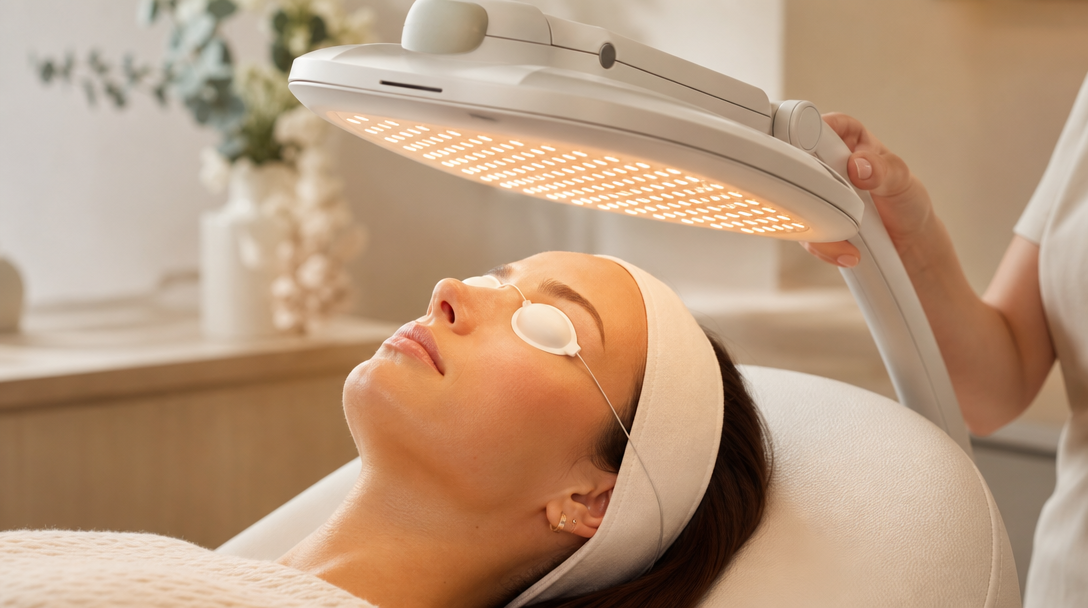
LED light therapy does not make your skin sun-sensitive in the way a chemical peel or laser can, but skin can feel slightly warm and reactive for a short window afterwards. The treatment itself uses visible and near-infrared light, not ultraviolet light, so it is not adding UV damage or triggering a tan.
LED (light-emitting diode) therapy is a non-invasive treatment that sits comfortably alongside the rest of your skincare. Different wavelengths reach different depths: red light is used to calm inflammation and support collagen production, while blue light targets acne-causing bacteria. A dermatology review of LED phototherapy describes it as a gentle, well-tolerated way to treat a broad range of skin conditions, and a separate pilot study found LED light was tolerated even by people with sensitive skin.
Because it is gentle, there is usually no recovery time with LED. You can return to your normal routine straight away. The one thing worth being deliberate about is sun exposure in the hours right after your session, while your skin settles.
Why does sun exposure after LED light therapy need care?
Sun exposure needs care after LED therapy because UV rays add heat, irritation and pigment stimulation to skin that is still calming down, which can undo the very benefits you came in for. LED does not use UV, but the sun does, and the two are best kept apart while your skin recovers.
Here is what unprotected sun can do in that window:
- Extra redness and irritation. Warm, freshly treated skin reacts more readily, so a normal amount of sun can leave it feeling tight or flushed for longer.
- Sunburn on reactive skin. Sunburn is skin damage from UV, and the NHS notes it can happen faster than people expect, even on cloudy days.
- New or darker pigmentation. UV drives melanocytes to make more melanin. The British Association of Dermatologists explains that this raises the risk of dark spots, especially for people with deeper skin tones.
If part of your reason for LED was calmer, more even skin, then protecting against pigmentation afterwards is simply protecting your investment.
What are the 8 sun-safety tips after LED light therapy?
The eight tips below cover the whole picture: the careful window, daily SPF, physical shade, gentle skincare and smart timing. Follow them and your skin gets the quiet recovery it wants.
- Avoid direct sun for the first 24 to 48 hours. This is your careful window. The Cleveland Clinic advises being careful about sun exposure in the 48 hours after treatment, so plan indoor time where you can.
- Wear a broad-spectrum SPF 30 or higher every day. The NHS recommends at least SPF 30 for UVB protection plus a high UVA (star) rating. Broad-spectrum means it covers both.
- Reapply your sunscreen properly. Most people use too little. The AAD suggests roughly a shot glass for the body and a teaspoon for the face, reapplied every two hours outdoors and after sweating or swimming.
- Add physical shade. A wide-brimmed hat, UV sunglasses and light, loose clothing block the sun before it reaches your skin. Shade is the simplest layer of protection there is.
- Keep skin calm and hydrated. A gentle, fragrance-free moisturiser with ingredients such as hyaluronic acid or ceramides helps your skin barrier settle. Apply moisturiser first, then sunscreen on top.
- Pause strong actives for a day or two. Retinoids and exfoliating acids can leave skin more reactive, so it is sensible to skip them for 24 to 48 hours and let LED do its work first.
- Skip sunbeds and fake tan around your sessions. Sunbeds deliver concentrated UV, and self-tan can mask how your skin is really responding. Keep both away from your treatment dates.
- Reschedule if your skin is sunburnt or freshly tanned. If you have caught the sun, give your skin time to recover before your next session rather than treating compromised skin.
How long should you avoid the sun after LED light therapy?
Treat the first 24 to 48 hours as your careful window, then keep up daily sun protection as an ongoing habit. There is no long lay-up with LED, and most people carry on as normal the same day, so this is about being sensible rather than housebound.
During those first two days, favour shade, keep SPF topped up and skip anything that adds heat to the skin, such as a sunbed or a very hot sauna. After that, the biggest gains come from consistent everyday protection. Photobiomodulation research even highlights that LED itself carries a reassuring safety profile because it does not rely on UV, so daily SPF is the part that guards your skin over the long run, not the treatment.
What sunscreen should you use after LED light therapy?
The best sunscreen after LED therapy is a broad-spectrum SPF 30 or higher that you will actually wear every day, applied generously and reapplied through the day. Comfort matters as much as the number on the bottle, because a sunscreen you dislike is one you will skip.
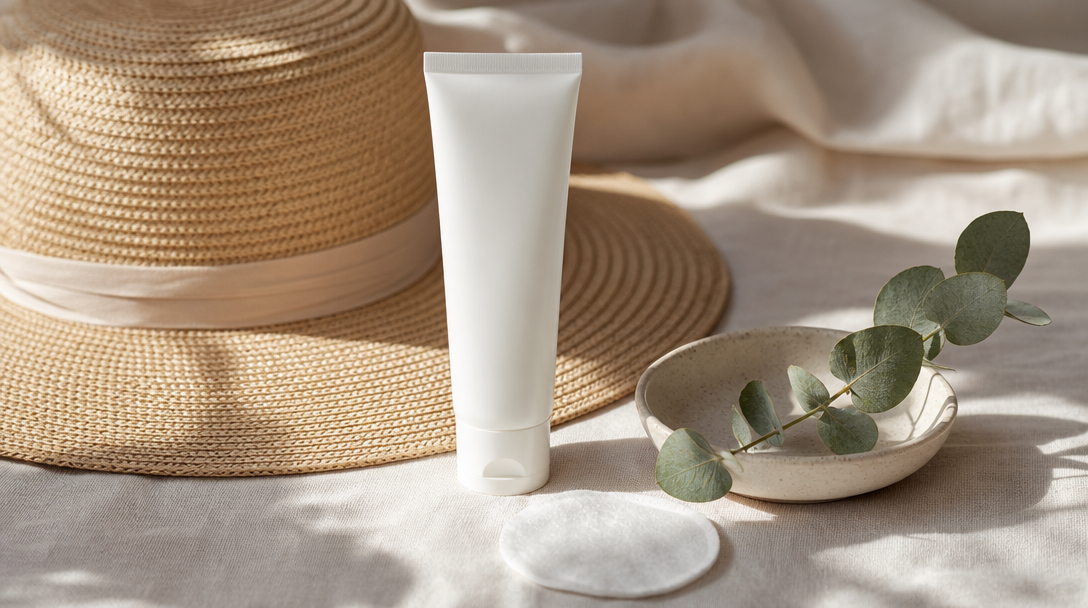
A few pointers when you choose one:
- Broad-spectrum, SPF 30 or higher. This is the baseline the AAD and NHS both point to for daily use.
- A formula that suits your skin. Non-comedogenic options help if you are using LED for acne, and lightweight fluids sit well under makeup.
- A tinted option for deeper skin tones. Research on photoprotection in skin of colour notes that tinted sunscreens add helpful protection against visible light, which plays a role in pigmentation.
Whatever you pick, apply enough of it. Thinly spread sunscreen gives far less protection than the SPF number suggests.
How should you plan LED sessions around sun and holidays?
The easiest way to plan LED around the sun is to book sessions for the evening or a low-sun day, and to leave a buffer around holidays. An evening slot gives your skin the whole night to settle before it meets daylight, which takes the pressure off aftercare.
If a beach holiday is coming up, it is usually better to finish a course of sessions a week or two beforehand, or to pause and pick it back up once you are home and out of strong sun. LED is often used as a complementary part of a wider plan, so a short gap does not undo your progress. Your clinician can map the timing with you so your sessions fit your life rather than fighting it.
How CoLaz supports your LED light therapy aftercare
At CoLaz, every LED light therapy patient gets clear, personalised aftercare, including exactly how to handle sun exposure for your skin type and the concern you are treating. We would rather you leave knowing precisely what to do than guessing from a leaflet.
LED light therapy is available across our UK clinics as a calm, non-invasive way to support skin health, whether you are targeting breakouts, redness or general radiance. If you would like to know whether it suits your skin and how to fit it around your routine, book a free consultation at your nearest CoLaz clinic and we will plan it with you.
Ready to begin
Book a free LED Light Therapy consultation at your nearest CoLaz clinic.
Thirty minutes with a qualified clinician. Skin assessment, candid recommendation, no obligation. Read about LED Light Therapy at CoLaz, from £55 (20 minutes, single session).
WhatsApp replies in minutes during opening hours
About the author
Alaiyka Parvez
Owner, CoLaz Aesthetics Clinic
Alaiyka Parvez bought the CoLaz franchise network in 2023, having joined the company as a Slough clinic employee in 2013 and gone on to open the Hounslow and Wembley franchises. She writes here on the treatments CoLaz delivers across its seven UK clinics.
Read more about Alaiyka and CoLaz →More on Skin
Keep reading.

11 August 2026 · 10 min
HIFU treatment results: month by month, what is realistic
HIFU tightens skin gradually rather than instantly. Here is the honest month-by-month results timeline, how long the effect lasts, and who is a good candidate.
28 July 2026 · 10 min
Types of chemical peels: glycolic, salicylic, TCA and Jessner explained
Glycolic for dull and sun-damaged skin, salicylic for oily and acne-prone, lactic for sensitive, mandelic for pigmentation in deeper skin tones, TCA for resurfacing with downtime. A clear decision guide to the main types of chemical peels.

14 July 2026 · 7 min
Microneedling aftercare day by day: the realistic 7-day timeline
What to expect after microneedling, day by day, plus the simple aftercare that protects your skin and your results across the first week.
Begin
Book a free consultation
at your nearest CoLaz clinic.
Thirty minutes with a qualified clinician. Skin assessment, candid recommendation, written plan. No obligation.