
Does laser hair removal hurt? Laser hair removal pain by body area
 Owner, CoLaz Aesthetics Clinic
The short version
- Laser hair removal is uncomfortable rather than painful. Each pulse feels like an elastic band snapped against the skin, and the area feels warm for a few hours afterwards.
- Discomfort varies a lot by area. Legs and arms barely register. Underarms, bikini line and upper lip give a sharper, brief sting. The first session is the most uncomfortable and each one after it is easier.
- Cooling built into the laser makes the biggest difference. In published studies, skin cooling and pressure techniques cut pain scores by roughly 35 to 45 percent.
- Do not apply numbing cream at home before a session. It removes the feedback that keeps your settings safe, and overuse has caused serious poisonings before laser hair removal.
- At CoLaz we bring discomfort up first, use the cooling on the GentleMAX Pro, patch test 48 hours before the first session, and stop at any point if you want a break.
TL;DR
- Laser hair removal is uncomfortable rather than painful. Each pulse feels like an elastic band snapped against the skin, and the area feels warm for a few hours afterwards.
- Discomfort varies a lot by area. Legs and arms barely register. Underarms, bikini line and upper lip give a sharper, brief sting. The first session is the most uncomfortable and each one after it is easier.
- Cooling built into the laser makes the biggest difference. In published studies, skin cooling and pressure techniques cut pain scores by roughly 35 to 45 percent.
- Do not apply numbing cream at home before a session. It removes the feedback that keeps your settings safe, and overuse has caused serious poisonings before laser hair removal.
- At CoLaz we bring discomfort up first, use the cooling on the GentleMAX Pro, patch test 48 hours before the first session, and stop at any point if you want a break.
The honest answer to “does laser hair removal hurt” is: a bit, briefly, and far less on some areas than others. Laser hair removal pain is real, but it is a series of short snaps rather than a lasting ache, and the level depends far more on where you are being treated than on anything else. A shin is a different experience from an upper lip.
This guide rates each body area honestly, explains why some areas sting more, sets out what the research says about cooling, and covers the one thing we ask patients not to do before a laser hair removal session.
Does laser hair removal hurt?
Yes, a little. Most patients describe laser hair removal as uncomfortable rather than painful, and almost everyone tolerates a full session without any anaesthetic.
The NHS laser centre in Birmingham tells its patients the treatment “can be uncomfortable” but that the discomfort is “greatly reduced” by cooling, and that it feels most like an elastic band being snapped against the skin. Leeds Teaching Hospitals describes each pulse as a brief stinging sensation, followed by the area feeling hot for a while, and says that although it is uncomfortable, most people tolerate it well.
That matches what we see across our seven UK clinics. What you will not hear from us is a promise that it will not hurt. The Advertising Standards Authority has upheld complaints against clinics that claimed their laser treatments were painless without proof, and in our experience the word sets people up for a surprise on the upper lip. “Comfortable enough to chat through on most areas” is the honest version.
What does laser hair removal actually feel like?
Each pulse feels like a hot snap or a quick pinch, over in a fraction of a second, followed by warmth that fades over a few hours.
Here is the sequence on a typical area:
- The pulse. A sharp, hot flick against the skin. On a leg it is a warm tap. On the upper lip it is a proper snap.
- Between pulses. Nothing. The handpiece moves to the next spot and the cooling takes the heat out of the last one.
- The smell. A faint singed smell. That is the hair above the skin being heated, not your skin burning. It surprises people the first time, so we mention it before we start.
- Afterwards. The area looks pink and feels warm, like mild sunburn, and there is often some nettle-rash swelling around the follicles for a few hours. That is normal and settles within a day.
You will wear protective goggles throughout. A full session takes 10 to 45 minutes depending on the area, so even the sharper areas are a few minutes of snaps, not a prolonged ordeal.
Which body areas hurt most? Laser hair removal pain by area
Legs, arms and the back barely register; underarms, bikini line and upper lip sting the most. The table below is our honest rating on a 0 to 10 scale, where 0 is nothing and 10 is the worst pain you can imagine.
These are typical ranges from our treatment rooms, not a promise. Your first session will sit at the top of the range and later ones towards the bottom.
| Body area | Typical sting (0 to 10) | What it feels like |
|---|---|---|
| Lower legs and shins | 2 to 3 | A quick warm flick. Most people chat through it. The bony front of the shin is a touch sharper. |
| Arms and forearms | 2 to 3 | Barely registers for most patients. |
| Back and shoulders | 3 to 4 | Mild. Coarse hair across the upper back stings a little more. |
| Chest and stomach | 3 to 4 | Mild to moderate. The breastbone and the area around the navel are the sharper spots. |
| Chin and jawline | 4 to 5 | A sharp snap on coarse hormonal hair. Brief, then it fades. |
| Underarms | 4 to 6 | Thin skin and dense hair. A hot snap per pulse, finished in a couple of minutes. |
| Bikini line (outer) | 4 to 6 | A sharp snap along the crease. |
| Upper lip | 5 to 7 | The sharpest few seconds of any session. Thin skin close to bone, but the whole area takes under a minute. |
| Brazilian (inner areas) | 6 to 7 | The most sensitive area we treat. Managed with cooling, a lower energy setting and a smaller spot size. |
The published research lines up with the middle of that table. In a trial of alexandrite laser on the underarms, patients rated their first session at under 4 out of 10 and their third session at under 2. In another underarm study using a cryogen-cooled laser without any extra pain control, the average score was 5.4 out of 10. Sensitive, yes. Unbearable, no.
Why do some areas sting more than others?
Four things decide how much an area stings, and none of them is toughness.
How thin the skin is and how many nerve endings it has. The upper lip, the underarm and the inner bikini area have thin skin packed with sensory nerves. The shin and the forearm have thicker skin and fewer of them. Same laser, different amount of signal reaching your brain.
How coarse and dark the hair is. The laser works because energy is taken up by the pigment in the hair and converted into heat. More pigment and thicker hair means more heat in each follicle. That is why hormonal chin hair and dense underarm hair sting more than the fine hair on a forearm, and why the sting drops as hair thins over a course.
How close the bone is. Pulses over bone, such as the shin, the collarbone and the upper lip, feel sharper because there is less soft tissue to spread the heat.
Your skin tone. Deeper skin tones hold more melanin in the skin itself, so more energy is absorbed at the surface. This is exactly why we treat Fitzpatrick V and VI patients with long-pulsed Nd:YAG at 1064 nm rather than alexandrite. The right wavelength for your skin is a safety decision first and a comfort decision second.
Does the type of laser change the pain level?
Yes. At the same settings, alexandrite generally stings less than diode, and both sting less than a high-energy Nd:YAG, which is the trade-off for treating deeper skin tones safely.
A side-by-side underarm study found the 755 nm alexandrite laser significantly less painful than the 800 nm diode, with or without numbing cream. The same study found that, at identical energy settings, a larger spot size hurts more than a smaller one, which is why we drop to a smaller spot on the lip and the inner bikini area.
At the other end, a split-underarm trial comparing a high-energy 1064 nm Nd:YAG with a low-energy “in motion” diode found the Nd:YAG removed more hair but patients reported more pain on that side. Hair removal at the high energy densities needed for a lasting result is associated with acute pain, and Nd:YAG typically runs at higher energy than alexandrite. That is the reason cooling and careful settings matter most for our deeper-skin-tone patients.
The point is not that one laser is “better”. It is that a clinic should choose the wavelength for your skin type, then manage the comfort, rather than pick the most comfortable laser and accept a worse or less safe result.
How much does cooling reduce laser hair removal pain?
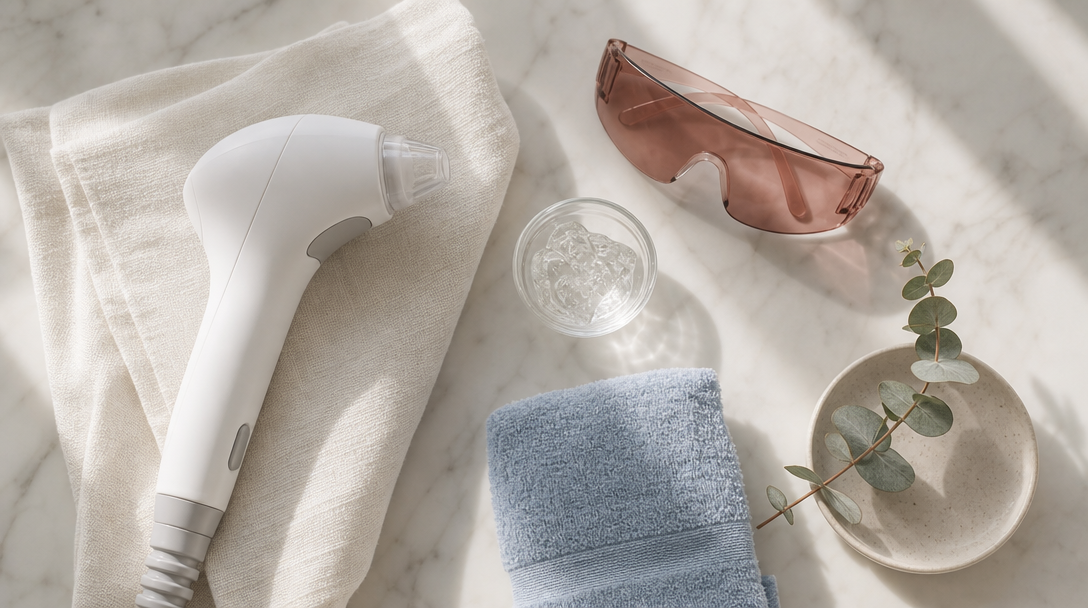
Cooling is the single biggest factor in how a session feels, and in published studies it cuts pain scores by roughly 35 to 45 percent.
Clinic-grade lasers cool the skin in one of three ways: a chilled tip that touches the skin, a burst of cryogen spray around each pulse, or a stream of cold air. All three protect the top layer of skin from the heat as well as blunting the sting, which is what lets a clinician use an effective energy level safely.
The evidence on how much it helps is consistent. When cold-air cooling was first trialled on 166 laser patients, its pain-relieving effect was 37 percent better than the ice gel used before, and 86 percent of patients preferred it. In a study of Nd:YAG hair removal on deeper skin tones, a pressure-based comfort technique used in place of the chiller brought the average pain score down from 4.5 to 2.6 out of 10, a reduction of just over 40 percent, with identical hair reduction. A separate underarm trial found the same technique reduced pain in 95 percent of patients compared with cryogen cooling alone.
At CoLaz the cooling built into the GentleMAX Pro handpiece cools the skin around each pulse, and on the sharper areas we work in short passes so no single spot builds up heat. If a pulse ever feels genuinely painful rather than briefly sharp, tell us. That is a settings conversation, not something to sit through.
Should you use numbing cream before laser hair removal?
Not without your clinic’s say-so, and at CoLaz we do not use it as a default for laser hair removal. The cooling does the job, and home-applied numbing cream carries risks that most people are never told about.
It removes the signal that keeps you safe. Your clinician sets the energy partly on how the skin responds and partly on your feedback. If you cannot feel the pulse, you cannot tell us the setting is too hot for your skin that day, and a burn can develop before anyone notices. This is the reason NHS laser centres ask patients to remove anaesthetic creams before treatment, and why Leeds Teaching Hospitals does not offer local anaesthetic for laser hair reduction at all.
Too much on too large an area is dangerous. The standard lidocaine and prilocaine cream sold in UK pharmacies has a hard limit on freshly shaved skin: no more than 60 g over an area no larger than 600 square centimetres, which is roughly the size of an A4 sheet. A full leg or back is many times that. When French poison-control doctors reviewed three women hospitalised after laser hair removal, every one had exceeded the maximum area, and one had used more than double the maximum dose. The result was heart and nerve toxicity and a blood disorder called methaemoglobinaemia, where the blood stops carrying oxygen properly.
It is no better than cold. A randomised trial in the Journal of the American Academy of Dermatology compared numbing cream on one underarm with a simple ice pack on the other and found the two did not differ in the amount of pain relief. Six in ten participants preferred the ice.
If you have a specific reason to want numbing, for example a very sensitive area or a low pain threshold, raise it at the consultation. We will tell you what is appropriate, in what amount, on what area and for how long. What we will not do is let you guess at home.
How to reduce laser hair removal pain: what helps and what to avoid
Most of what makes a session easier happens before you walk in.
What helps
- Shave the area 24 hours before, not on the day. Hair left long above the skin heats up at the surface and adds sting. NHS guidance is to shave 24 hours before treatment and not on the day itself.
- Arrive untanned. Tanned skin holds extra pigment, so it absorbs more energy, stings more and burns more easily. We will postpone a tanned patient rather than treat and hope.
- Tell us what you feel. A quick “that one was sharp” lets us adjust the setting or slow the pass. Nobody wins a prize for keeping quiet.
- Expect session one to be the worst. In the underarm trial above, pain scores halved between the first and third sessions as the hair thinned. Most patients say session two is a different experience.
- Time it around your cycle if you notice a difference. The same trial found pain tolerance was slightly lower during menstruation, though the difference was not statistically significant. If you know you are more sensitive in that week, book outside it.
- Ask about simple pain relief. If you find a particular area hard going, your practitioner can advise on analgesia. Do not self-prescribe.
What to avoid
- Numbing cream applied at home. For all the reasons above.
- Waxing, plucking, threading or epilating between sessions. The laser needs the hair in the follicle. Removing it from the root also leaves the area more irritable.
- Heat for 24 hours afterwards. No hot baths, saunas, swimming or hard workouts. The skin is already warm and you will prolong the pinkness.
- Perfumed products and make-up on the area on the day. Both increase the risk of blistering when residue is heated.
For how the full course is structured, our guide to session numbers covers spacing and why most areas need 6 to 8 visits.
How we manage discomfort at CoLaz

We bring discomfort up first, because most patients will not.
Over 13 years inside CoLaz clinics the pattern is the same: people worry about the pain, and very few ask. So every consultation covers what the sensation feels like on the area you are having treated, what we use to manage it, and the fact that we will stop at any point if you want a break. You do not need a reason.
The practical side of that:
- A free consultation and a 48-hour patch test before any first session. The patch test is how we confirm the right setting for your skin, which is the setting that is effective without being harsher than it needs to be. We will not deliver a first session without it.
- The right wavelength for your skin type. Alexandrite at 755 nm for lighter skin, long-pulsed Nd:YAG at 1064 nm for Fitzpatrick V and VI. This is a safety decision, and it also keeps the sting to what the area genuinely needs.
- Cooling on every pulse from the GentleMAX Pro, plus a smaller spot size and lower energy on the sensitive areas.
- Qualified practitioners. Every laser, IPL and energy-device treatment at CoLaz is delivered by a practitioner who holds a VTCT / Ofqual Level 4 qualification, and reading your feedback mid-session is part of that training.
- A plan in writing at the end of the consultation, covering the number of sessions, the spacing, the device and the price per session. Laser hair removal at CoLaz starts from £30 for an upper lip single session, and the full price for your area is confirmed in writing before you book a course.
If the honest answer for your area is “this one will sting for a couple of minutes”, we will tell you that, and we will tell you what we are doing about it. Our patch-test and consultation process is set out on the FAQ page if you want the detail before you visit.
Book a free consultation
Laser hair removal is a short series of sharp snaps, not an ordeal, and on most areas it is easy. The sensitive areas are manageable with cooling, the right settings and a clinician who asks how you are doing.
Book a free consultation at any of our seven UK clinics and we will tell you exactly what to expect on the area you have in mind, patch test you 48 hours before your first session, and put the plan in writing. Find your clinic in Derby, Wembley, London Paddington, Slough, Reading, Southall or Hounslow.
Ready to begin
Book a free Laser Hair Removal consultation at your nearest CoLaz clinic
Time with a qualified clinician: a skin assessment, an honest recommendation and no obligation. Read about Laser Hair Removal at CoLaz, from £30 (upper lip, single session).
More on Hair removal
Keep reading
-

Is laser hair removal safe on dark skin? What the evidence says
Laser hair removal on dark skin works, but only when the wavelength matches your skin type. Here is the science behind why melanin matters, which lasers suit Fitzpatrick V and VI, and the questions to ask before you book. Read the article -
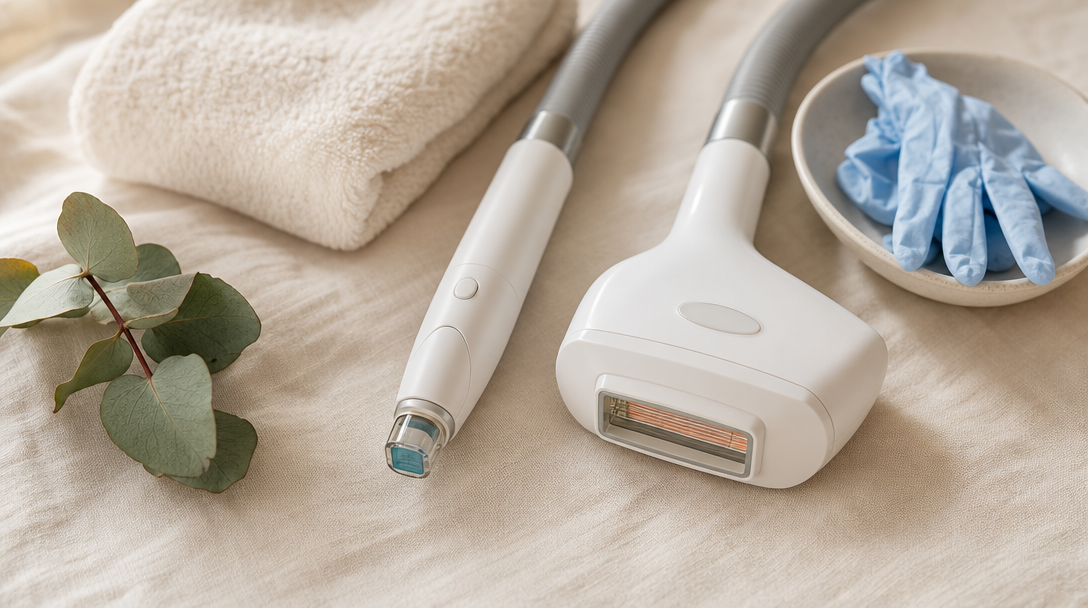
IPL vs laser hair removal: why the device you choose matters
The real difference between IPL and laser hair removal, why it changes your results and safety, and how CoLaz matches the right device to your skin and hair. Read the article -

Laser hair removal on the face: what women should know before booking
What women should know before booking facial laser hair removal: realistic session counts, the hormone link, matching the laser to your skin tone, and sun protection. Read the article
Book a free consultation at your nearest CoLaz clinic
Time with a qualified clinician: a skin assessment, an honest recommendation and a written plan. No obligation.