
Laser hair removal on the face: what women should know before booking
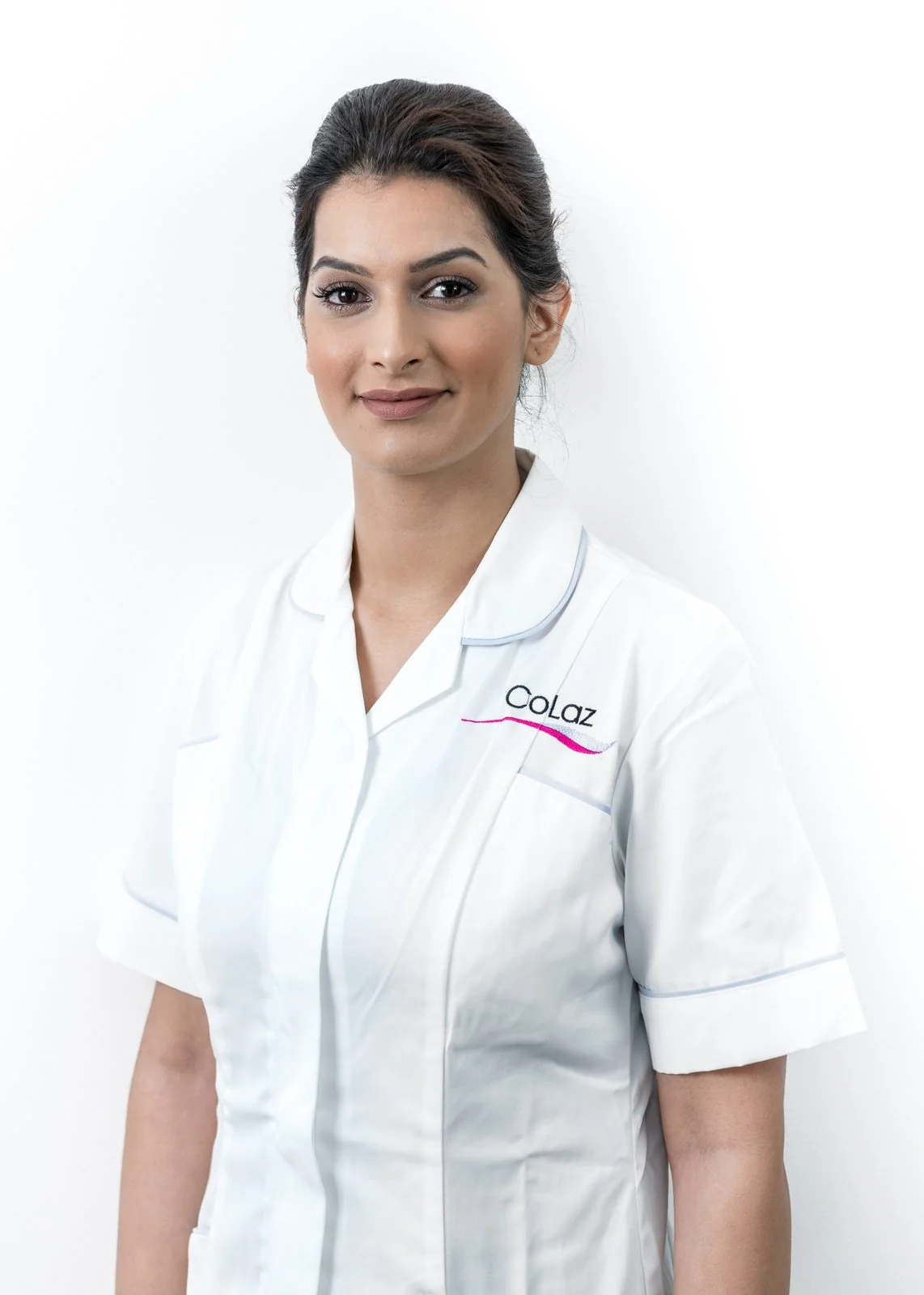 Owner, CoLaz Aesthetics Clinic
The short version
- Facial hair is finer and more hormone-driven than body hair, so the face usually needs 8 to 12 sessions, not the 6 to 8 most body areas take.
- Sessions are spaced 4 to 6 weeks apart, and a top-up once or twice a year is normal for hormonal areas like the chin and upper lip.
- If your facial hair came on quickly or sits alongside irregular periods, we may ask you to see your GP for blood work before we start.
- The right wavelength for your skin tone matters more than anything: Alexandrite 755 nm for lighter skin, long-pulsed Nd:YAG 1064 nm for darker skin.
- No tanning, waxing or plucking before a session, shave 12 to 24 hours ahead, and protect the treated skin with SPF afterwards.
TL;DR
- Facial hair is finer and more hormone-driven than body hair, so the face usually needs 8 to 12 sessions, not the 6 to 8 that most body areas take.
- Sessions are spaced 4 to 6 weeks apart, and a top-up once or twice a year is normal for hormonal areas like the chin and upper lip.
- If your facial hair came on quickly, or sits alongside irregular periods, we may ask you to see your GP for blood work before we start.
- The right wavelength for your skin tone matters more than anything else: Alexandrite 755 nm for lighter skin, long-pulsed Nd:YAG 1064 nm for darker skin.
- No tanning, waxing or plucking before a session, shave 12 to 24 hours ahead, and protect the treated skin with SPF afterwards.
Laser hair removal for the face is one of the most common things women ask us about, and it is also the area where realistic expectations matter most. The face is not the same as the legs. The hair is finer, the skin is more sensitive, and growth is often tied to hormones. That changes how many sessions you need, which settings we use, and sometimes whether you should see your GP before you book at all.
This guide covers what we tell women in the consultation room every week, so you walk in knowing what a fair plan looks like.
How is laser hair removal on the face different from the body?
Facial treatment needs more sessions, gentler settings and a more careful skin assessment than body areas like the legs or underarms. The skin on the face is thinner and sits closer to the eyes, so we work with smaller spot sizes and lower energy in places like the upper lip and chin. The hair itself is also the issue: facial hair is often finer and more hormone-sensitive, which makes it harder to treat than the coarse, dark hair on the body.
That is why a course that clears the legs in six sessions can take longer on the face. It is not a sign that anything has gone wrong. It is the normal pattern for facial hair, and we plan for it from day one rather than acting surprised at session six.
Why does facial hair often need more sessions?
Facial hair needs more sessions because it is finer, lighter and more strongly driven by hormones than body hair. Laser works by targeting the pigment in the hair, so a thick dark hair on the chin absorbs energy well, while a fine pale hair on the cheek gives the laser much less to aim at. Hormonal areas also regrow more readily between sessions.
For women whose growth is linked to a condition like polycystic ovary syndrome, the published clinical picture is honest about this: some patients need more sessions than average, sometimes in the region of 10 to 15, to reach a result they are happy with. Maintenance is part of the result too, with most women returning for a top-up once or twice a year on the chin and upper lip. None of this means laser does not work on the face. It means the plan has to be built around your hair, not a generic package.
Could a hormone issue be driving your facial hair?
Sometimes, yes, and it is worth understanding before you spend money on a course. Excess facial hair in women, known medically as hirsutism, is common and is usually caused by a shift in hormone levels rather than anything you have done. The most frequent underlying cause is PCOS, which can also affect your periods, skin and weight.
Thyroid issues and certain medications can play a role too. Laser will still reduce the hair, but if the hormonal driver is active, regrowth happens faster and the course runs longer. We see this often with patients who have battled chin and upper-lip hair for years, a pattern we go into more in our post on chin hair. Treating the hair and ignoring the hormones is half a plan.
When should you speak to your GP first?
You should see your GP before booking if your facial hair appeared suddenly, is spreading quickly, or comes with irregular periods, acne or other new changes. UK primary-care guidance suggests a blood test to check hormone levels in these cases, and faster-onset growth is taken more seriously because it can occasionally point to something that needs treating in its own right.
If a hormonal cause is found and managed, that work supports your laser results rather than competing with them. Medical treatment of the hormone side can take several months to show its full effect, so starting that conversation early is sensible. We are not a substitute for that assessment. At CoLaz we will happily start a facial laser course, but where the history suggests an underlying cause, we will ask you to involve your GP. That is the honest order of events.
How many laser hair removal sessions does the face need?
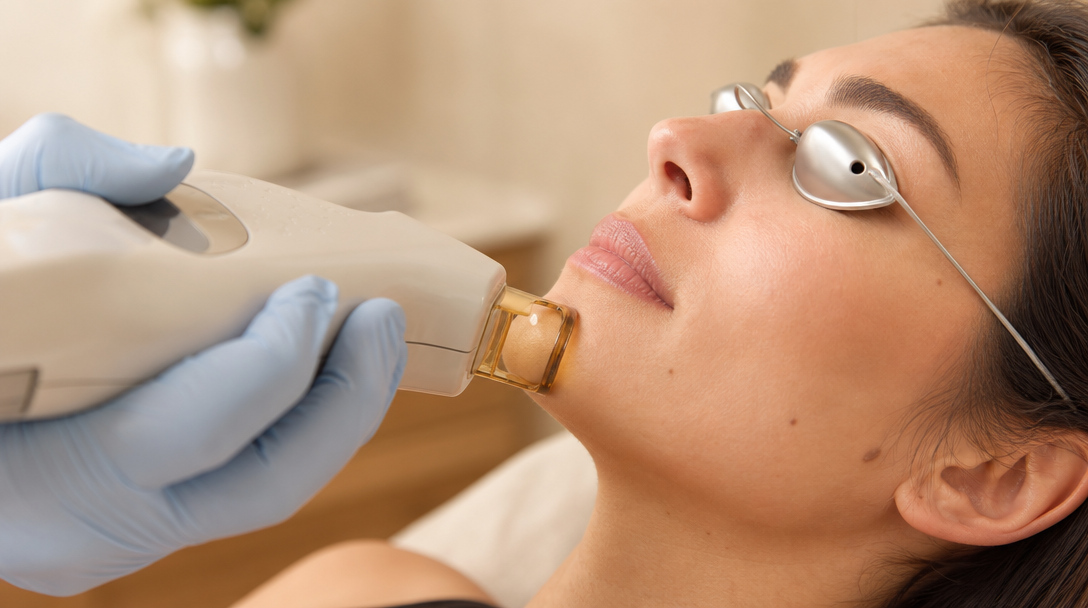
Most women need around 8 to 12 sessions on the face, spaced 4 to 6 weeks apart, with the higher end of that range for hormonal areas. Body areas often clear in six to eight, but the face sits a little longer because of the finer hair and faster regrowth. The spacing matters as much as the number, because the laser can only affect hairs that are in their active growth phase, and treating every 4 to 6 weeks catches the next batch as it cycles through.
You will see gradual change rather than an overnight result. After each session you can expect a meaningful drop in density, and most patients notice the area getting patchier and finer as the course goes on. To be completely clear on the wording: laser gives long-term reduction, not permanent removal. Beyond the visible result, women in clinical studies also report a real lift in quality of life once stubborn facial hair is under control, which matches what we hear in clinic.
Matching the laser to your skin tone
The single biggest decision in facial laser is matching the wavelength to your skin tone, and it is a Level 4 question, not a guess. For lighter skin we use an Alexandrite laser at 755 nm. For darker skin we switch to a long-pulsed Nd:YAG at 1064 nm, which travels past the pigment in the upper skin and targets the follicle more safely. Using the wrong laser on darker skin is the most common reason we see pigmentation problems referred in from elsewhere.
A patient came to our Reading clinic last year with a half-finished facial course from another provider. She had paid up front, had sessions left, and her results had stalled. She is Fitzpatrick skin type V, and her previous practitioner had used a wavelength suited to lighter skin. Once we patch-tested her on long-pulsed Nd:YAG and switched her over, the rest of the course finished the job on her chin and upper lip, and she now comes back for a top-up once a year. The lesson I give every clinician we train is the same: the consultation decides whether the next six months work.
What if your facial hair is grey, white or blonde?
Laser cannot treat grey, white or blonde facial hair, because there is not enough pigment for it to target. This is one of the honest “no” answers we give in the consultation room. If your upper-lip or chin hair has lost its colour, a laser will pass straight over it without effect, however many sessions you book.
The right tool for that hair is electrolysis, which treats each hair individually with a fine probe and a brief current. It works on any hair colour because it does not rely on pigment. It is slower, but for pale facial hair it is the option that actually delivers, and we would rather point you there than sell you a laser course that cannot work.
Preparing your skin and protecting it from the sun
Good preparation is what keeps facial laser safe and effective, and most of it comes down to your skin’s pigment. In the run-up to a session you should not tan, use fake tan, wax, pluck or thread the area, because all of those either raise the pigment in your skin or remove the hair root the laser needs. The clear advice is to avoid the sun and any tanning for around two weeks beforehand.
Shaving is the exception, and it is encouraged. Shave the area 12 to 24 hours before your appointment so the follicle stays intact below the surface while the visible hair is gone. Afterwards the treated skin may look pink and feel a little like a sunburn for a few hours, so keep it cool, skip heavy actives for a day or two, and use a daily SPF on the face between sessions to protect the result.

What is paradoxical hypertrichosis, and should you worry?
Paradoxical hypertrichosis is a rare effect where laser triggers a little extra fine hair instead of reducing it, and it shows up almost entirely on the face and neck. It is uncommon, but it is more relevant to women treating facial areas than to anyone treating the legs, so we would rather you hear about it from us than read it somewhere alarming. The research links it most strongly to the face and neck, and to women with irregular cycles or a family history of heavier hair growth.
Reassuringly, it tends to settle with continued treatment rather than getting worse, and consistent daily sun protection is associated with a lower chance of it happening. This is another reason we take a full history at the consultation. If your profile carries a slightly higher risk, we factor that into how we plan and pace your course, and we tell you what we are watching for.
How we plan a facial laser course at CoLaz
We do not sell a fixed package on day one. Every new patient and every new treatment starts with a free consultation, where we take your medical history, check your current skincare and medication, and assess your Fitzpatrick skin type so we can choose the right laser. For laser and energy-device treatments we patch test 48 hours before your first session, and we write the recommended plan down before you commit to anything.
That written plan covers the number of sessions, the spacing, the device we will use and the price per session, so you can take it away and decide in your own time. When I took over the CoLaz network, the first thing I standardised across our seven UK clinics was that consultation, because a good consultation is a good treatment. For facial hair in particular, it is the half hour that decides whether your money is well spent.
Booking your free consultation
If you are weighing up laser hair removal for your upper lip, chin, sideburns or jaw, the next step is a proper assessment of your skin and hair, not a quick sale. We will tell you honestly how many sessions your face is likely to need, whether your hair colour suits laser, and whether a quick word with your GP should come first.
Book a free consultation at your nearest CoLaz clinic and we will build the plan around your skin, in writing, before you decide.
Ready to begin
Book a free Laser Hair Removal consultation at your nearest CoLaz clinic
Time with a qualified clinician: a skin assessment, an honest recommendation and no obligation. Read about Laser Hair Removal at CoLaz, from £30 (upper lip, single session).
More on Hair removal
Keep reading
-

Does laser hair removal hurt? Laser hair removal pain by body area
Laser hair removal is uncomfortable, not painful, and the level depends almost entirely on the area. Here is our honest area-by-area rating, what the evidence says about cooling, and the one thing not to do before a session. Read the article -

Is laser hair removal safe on dark skin? What the evidence says
Laser hair removal on dark skin works, but only when the wavelength matches your skin type. Here is the science behind why melanin matters, which lasers suit Fitzpatrick V and VI, and the questions to ask before you book. Read the article -
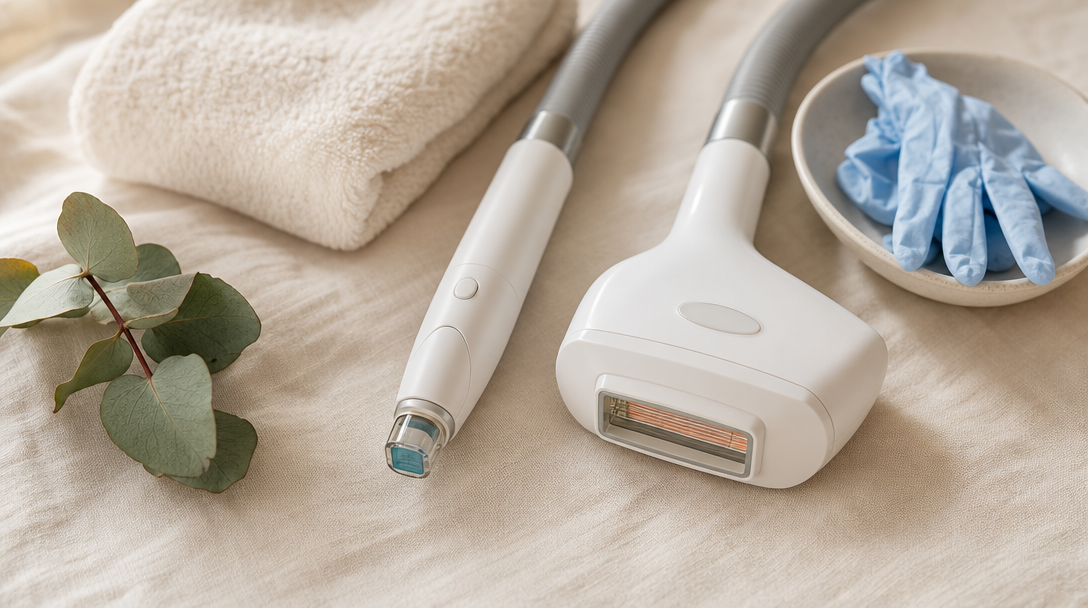
IPL vs laser hair removal: why the device you choose matters
The real difference between IPL and laser hair removal, why it changes your results and safety, and how CoLaz matches the right device to your skin and hair. Read the article
Book a free consultation at your nearest CoLaz clinic
Time with a qualified clinician: a skin assessment, an honest recommendation and a written plan. No obligation.