Laser hair removal vs electrolysis: which one is right for you?
 Owner, CoLaz Aesthetics Clinic
The short version
- Laser hair removal targets the pigment in the hair, so it is fast for large areas but only works on dark hair on most skin tones.
- Electrolysis treats one hair at a time with a fine probe and works on any hair colour, including grey, white, red and blonde.
- Regulators class electrolysis as the only permanent hair removal; laser is cleared for long-term hair reduction, not permanent removal.
- Laser usually needs 6 to 8 sessions spaced 4 to 6 weeks apart; electrolysis needs many short timed sessions over months.
- At CoLaz, a free consultation and a 48-hour patch test decide which one fits your hair and skin before anything is booked.
TL;DR
- Laser hair removal targets the pigment in the hair, so it is fast for large areas but only works on dark hair on most skin tones.
- Electrolysis treats one hair at a time with a fine probe and works on any hair colour, including grey, white, red and blonde.
- Regulators class electrolysis as the only permanent hair removal; laser is cleared for long-term hair reduction, not permanent removal.
- Laser usually needs 6 to 8 sessions spaced 4 to 6 weeks apart; electrolysis needs many short timed sessions over months.
- At CoLaz, a free consultation and a 48-hour patch test decide which one fits your hair and skin before anything is booked.
The laser hair removal vs electrolysis question comes up in almost every hair-removal consultation we run. They are the two treatments that actually reduce hair for the long term, rather than cutting it back for a week or two, but they work in completely different ways and they suit different people. The honest answer is that one is not simply better than the other. The right choice depends on your hair colour, your skin tone, the size of the area and how much time you want to spend. This guide compares them side by side, using guidance from the NHS, the American Academy of Dermatology and published clinical research, so you can walk into your consultation already knowing the right questions to ask.
What is the real difference between laser hair removal and electrolysis?
The core difference is that laser works by light and pigment, while electrolysis works by an electrical current in each individual follicle. That single distinction explains almost every other difference in this guide.
Laser hair removal sends a beam of light into the skin, and the pigment (melanin) in the hair absorbs that light and turns it into heat, which damages the follicle. This is called selective photothermolysis, an idea first tested in early research in the 1990s. Because the laser can treat many follicles in one pass, it is quick over larger areas like legs, backs and underarms. At CoLaz we use Alexandrite (755 nm) and long-pulsed Nd:YAG (1064 nm) laser systems, matched to your skin type at the consultation.
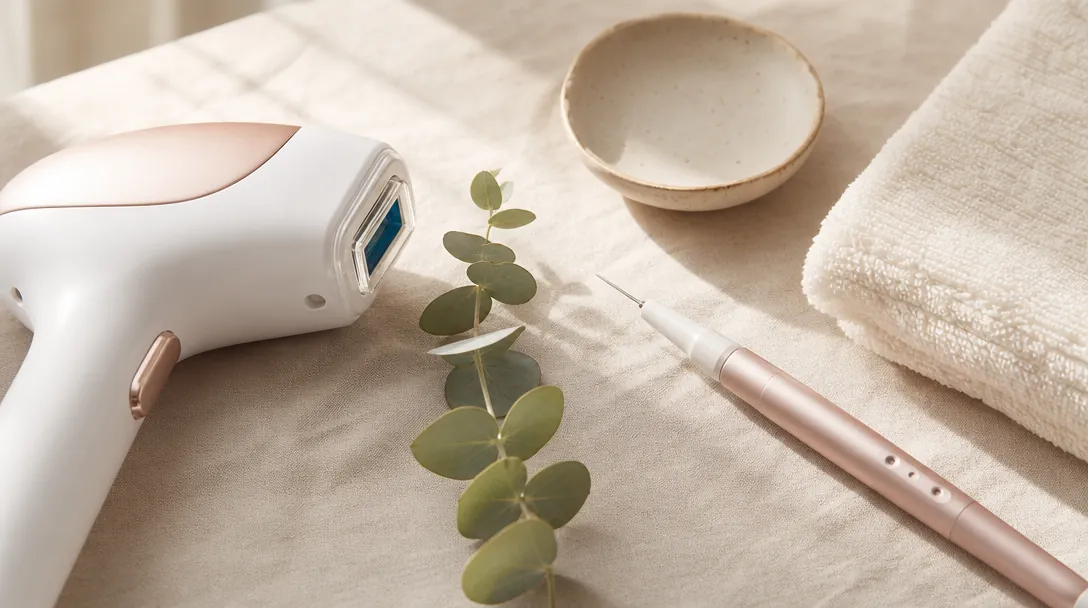
Electrolysis is slower but more precise. A very fine probe is slid alongside each hair into the follicle, and a small electrical current damages the root so it cannot grow another hair. It treats one hair at a time, so it suits small, defined areas and stray hairs rather than a whole back or both legs.
Does either one give permanent hair removal?
Electrolysis is the only treatment regulators class as permanent hair removal; laser is cleared for long-term hair reduction, which is a deliberately different claim. This is the single most misunderstood point in the whole comparison.
In the United States, laser devices are cleared for “permanent hair reduction”, defined by the FDA as a stable reduction in the number of regrowing hairs measured at 6, 9 and 12 months after a course. The American Academy of Dermatology is just as plain: after laser, most patients stay hair-free for months or years, and when hair does return it tends to be finer and lighter. That is an excellent result, and it is why laser is so popular, but it is reduction, not removal. This is why we always describe laser as long-term hair reduction, never as permanent.
Electrolysis destroys each treated follicle outright, which is why it carries the permanent classification. The trade-off is time: clearing an area hair by hair takes far longer than a few laser passes.
Which hair colours and skin tones does laser work on?
Laser works best on dark hair and is most reliable when there is a clear contrast between the hair and the skin. Because the laser needs pigment to work, the colour of your hair matters more than anything else.
The NHS notes that laser works better on dark hair and is not as effective on hair that has little pigment. Modern systems have widened who can be treated safely. Skin tone used to be a barrier, but advances in technology mean most people can now have laser, provided the device is matched to their skin.
Matching the wavelength to the skin type is the part that goes wrong most often elsewhere. A patient came to our Reading clinic last year with a half-finished course from another provider that had stalled. She is Fitzpatrick skin type V, and her previous practitioner had used a wavelength suited to lighter skin. Once we patch-tested her on long-pulsed Nd:YAG at 1064 nm and switched her over, the rest of her course completed the result. The wrong laser on darker skin is the most common cause of pigmentation problems we see referred in, which is why we Fitzpatrick-type every patient before we start.
Why electrolysis is the only choice for grey, white and blonde hair
If your hair has little or no pigment, laser has nothing to aim at, and electrolysis becomes the sensible option. Grey, white, red and blonde hairs simply do not absorb enough laser light for the follicle to be heated reliably, which is supported by both NHS guidance and the way the technology works.
I tell this story to every clinician we train at CoLaz. A regular at our Southall clinic asked about laser for fine, pale-blonde hair on her chin. There was no real pigment in the hair, so laser would not have targeted it. We told her that honestly and suggested electrolysis instead. She started with short, regular sessions, and a few months later the area was almost clear. Electrolysis worked because it uses heat through the probe in each follicle, not pigment, so hair colour is irrelevant to it.
This is also why electrolysis is still widely used for finishing work: clearing the last few stubborn or lighter hairs after a laser course has done the heavy lifting on the darker hair. We offer electrolysis at all seven of our UK clinics for exactly these situations.
How many sessions does each treatment take?
Laser is a course of a handful of sessions spread over months; electrolysis is many short sessions spread over a longer period. Neither one is a single visit, because both have to work with the natural hair growth cycle.
Laser only damages hairs that are in their active growth phase at the time of treatment, so it takes several visits to catch each follicle at the right moment. The American Academy of Dermatology puts most courses at 2 to 6 treatments spaced around 4 to 6 weeks apart, and many patients then need occasional maintenance. In our clinics, most body areas need 6 to 8 sessions, and hormonal facial hair often needs 8 to 10. We explain more about course length in our guide to laser sessions.

Electrolysis is booked in short timed slots, often 5, 15 or 30 minutes, every 2 to 4 weeks, sometimes over many months for a larger or denser area. It is methodical work, and the timeline is longer, but for the right hair type it is the only thing that gives a lasting result.
Does laser or electrolysis hurt, and what are the risks?
Both are well tolerated by most patients, but electrolysis tends to feel more intense because each hair is treated individually. Neither one is pain-free, and any clinic that promises that is overselling.
Laser usually feels like a warm snap or a flick of an elastic band against the skin, and a chilled handpiece makes it more comfortable. The NHS lists short-lived side effects such as redness and irritation, with burns or pigment changes possible if the device is set wrong, which is why a patch test matters. Electrolysis can feel sharper, and a clinical review found it tends to be more painful and slower than laser, with a higher overall cost for a large area because of the time involved.
For both treatments, the biggest single safety factor is the person holding the device. All our laser, IPL and energy-device practitioners hold a VTCT or Ofqual Level 4 qualification, and every laser course starts with a free consultation and a patch test 48 hours before the first session.
What does each option cost at CoLaz?
We price both by the lowest single-session entry point, so you can see where each starts before you commit to anything. There are no fixed packages sold on day one.
Laser hair removal starts from £30 for a single session on a small area such as the upper lip. Electrolysis starts from £10 for a short timed session of up to five minutes. Those are starting points, not the price of a full result. Because electrolysis is charged by time and clears hair more slowly, a large or dense area can add up over a course, while laser spreads the cost across a set number of sessions. We write the recommended plan, the number of sessions and the price per session down for you at the consultation, so the full cost is clear and agreed before you decide.
Laser hair removal vs electrolysis: how to choose
The short version is simple. If your hair is dark and you want to treat a larger area quickly, laser is usually the better fit. If your hair is grey, white, red or blonde, or you only have a few stray hairs in a small, defined spot, electrolysis is the treatment that will actually work. Many patients end up using both: laser for the bulk of the dark hair, electrolysis to finish.
The only way to be sure is to have your hair and skin assessed in person. We Fitzpatrick-type your skin, look closely at your hair colour and density, and patch-test the laser before any course is confirmed in writing. If you are choosing a clinic elsewhere, check that your practitioner is on a recognised register such as the JCCP or Save Face first. It is also worth knowing that the NHS does not routinely fund cosmetic hair removal, so this is almost always a private treatment.
If you are not sure which one suits you, that is exactly what the consultation is for. Book a free consultation at your nearest CoLaz clinic, and we will tell you honestly which treatment fits your hair, your skin and your goals before you book a single session.
Ready to begin
Book a free Laser Hair Removal consultation at your nearest CoLaz clinic
Time with a qualified clinician: a skin assessment, an honest recommendation and no obligation. Read about Laser Hair Removal at CoLaz, from £30 (upper lip, single session).
More on Hair removal
Keep reading
-

Does laser hair removal hurt? Laser hair removal pain by body area
Laser hair removal is uncomfortable, not painful, and the level depends almost entirely on the area. Here is our honest area-by-area rating, what the evidence says about cooling, and the one thing not to do before a session. Read the article -

Is laser hair removal safe on dark skin? What the evidence says
Laser hair removal on dark skin works, but only when the wavelength matches your skin type. Here is the science behind why melanin matters, which lasers suit Fitzpatrick V and VI, and the questions to ask before you book. Read the article -
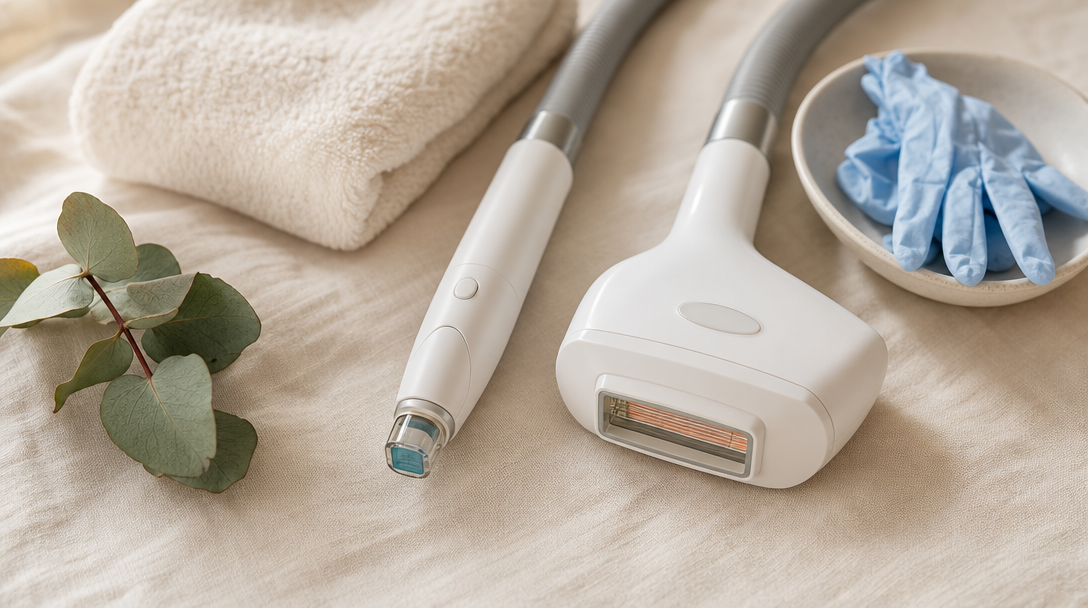
IPL vs laser hair removal: why the device you choose matters
The real difference between IPL and laser hair removal, why it changes your results and safety, and how CoLaz matches the right device to your skin and hair. Read the article
Book a free consultation at your nearest CoLaz clinic
Time with a qualified clinician: a skin assessment, an honest recommendation and a written plan. No obligation.