
IPL vs laser hair removal: why the device you choose matters
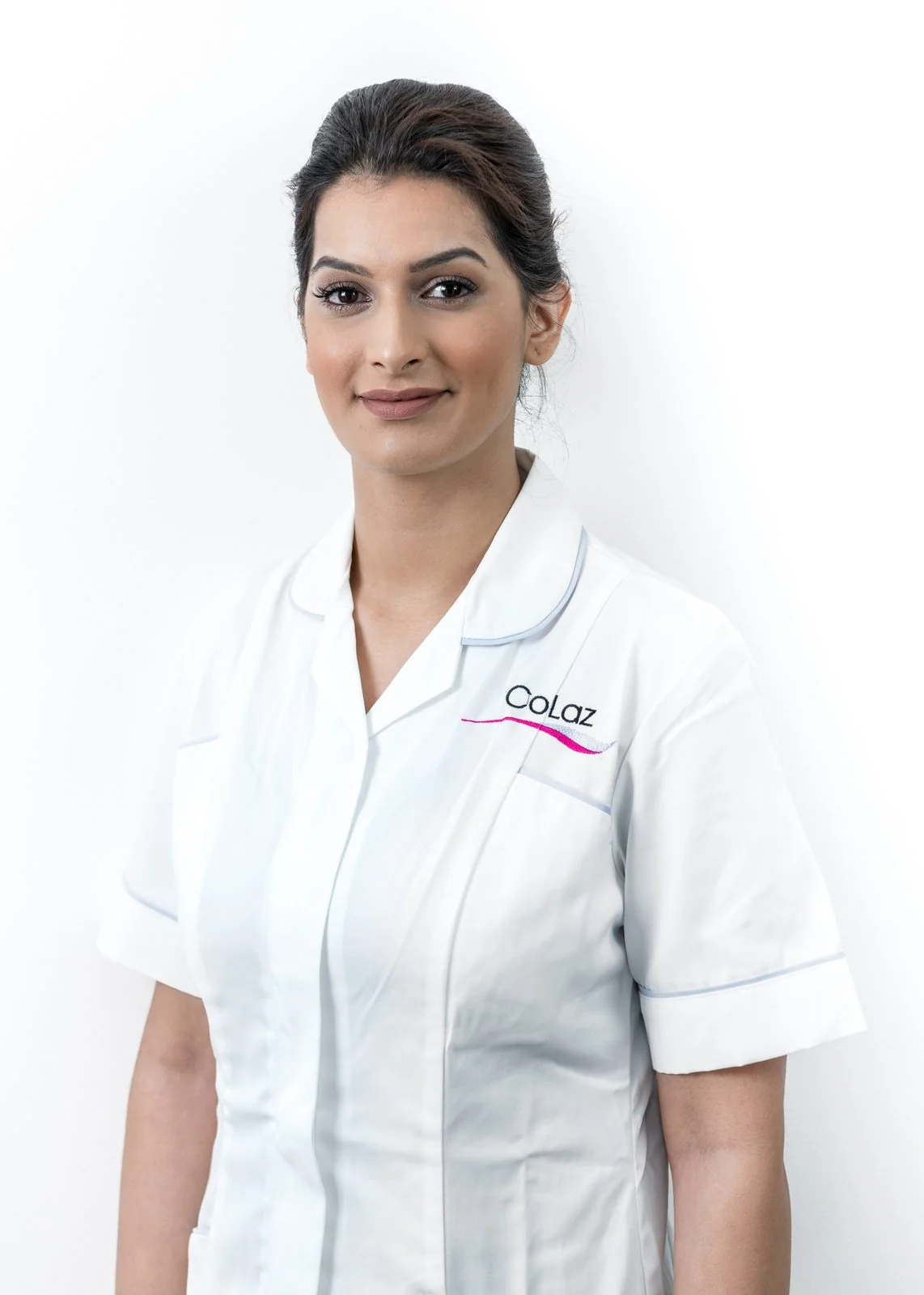 Owner, CoLaz Aesthetics Clinic
The short version
- IPL and laser are both light-based, but a laser fires one precise wavelength while IPL fires a broad band of light from a flashlamp.
- For hair removal, a targeted laser is usually more effective; IPL is more often used for skin tone and rejuvenation.
- On darker skin, the right laser (long-pulsed Nd:YAG at 1064 nm) is the safer choice, because IPL carries a higher risk of burns and pigmentation change.
- Neither device works on grey, white, blonde or red hair. That needs electrolysis.
- At CoLaz, laser is our primary hair-removal device, and we match the wavelength to your skin and hair at a free consultation and patch test.
TL;DR
- IPL and laser are both light-based, but a laser fires one precise wavelength while IPL fires a broad band of light from a flashlamp.
- For hair removal, a targeted laser is usually more effective. IPL is more often used for skin tone and rejuvenation.
- On darker skin, the right laser (long-pulsed Nd:YAG at 1064 nm) is the safer choice, because IPL carries a higher risk of burns and pigmentation change.
- Neither device works on grey, white, blonde or red hair. That needs electrolysis.
- At CoLaz, laser is our primary hair-removal device, and we match the wavelength to your skin and hair at a free consultation and patch test.
IPL vs laser hair removal is one of the most common questions we hear at the front desk, and the answer matters more than most people expect. Both treatments use light to reduce hair, so the two often get treated as the same thing. They are not the same technology, and they do not give the same results.
The device you sit under changes how effective your course is, how comfortable it feels, and how safe it is for your skin tone. This guide explains the real difference between IPL and laser, what the evidence says, and how we decide which one is right for you.
What is the difference between IPL and laser hair removal?
The main difference is focus. A laser produces one single, concentrated wavelength of light, while IPL produces a broad band of many wavelengths from a flashlamp.
That is not a small technical detail. A laser is monochromatic and coherent, which means all of its light is one colour and travels in step, so it can be aimed precisely at the pigment in the hair. IPL, or intense pulsed light, is polychromatic light spread across roughly 400 to 1400 nanometres, shaped by cut-off filters rather than tuned to one exact target.
Both work through the same underlying principle, called selective photothermolysis. Light is absorbed by the melanin (the pigment) in the hair, the light turns to heat, and the heat damages the follicle so it grows back finer or not at all. The difference is that a laser delivers that energy in a far more targeted way, which is the difference between IPL and laser that matters most for your result.
How does laser hair removal work?
Laser hair removal damages hair follicles that are in their active growth phase, which is why it always needs a course rather than a single visit.
Each hair on your body is on its own cycle, and the laser can only affect the follicles that are actively growing on the day you are treated. That is why the AAD notes that results build across a series of treatments, with the colour and thickness of your hair, the area treated, the type of laser and your skin colour all shaping the outcome. Most body areas need six to eight sessions spaced four to six weeks apart, and hormonal facial hair often needs more.

Laser has a well-earned reputation because the light is so specific. The NHS points out that it works best on pale skin with dark hair, and is less effective on tanned skin or hair bleached by the sun. At CoLaz we use GentleMAX Pro platforms with an Alexandrite laser at 755 nm and a long-pulsed Nd:YAG laser at 1064 nm, so we can match the wavelength to the skin in front of us. This is long-term hair reduction, not the removal of every hair forever, and a top-up once a year or two on hormonal areas is normal.
How does IPL work, and is IPL as good as laser?
IPL works on the same heat-and-pigment principle, but because its light is spread across many wavelengths it is less precise, so for hair removal it is generally less powerful than a targeted laser.
That broad output is also what makes IPL versatile. The same flashlamp can be filtered to address sun damage, redness, broken veins and uneven tone, which is why IPL is used across a wide range of skin concerns. For hair specifically, comparative research helps put the two side by side. A split-body trial found both IPL and diode laser reduced underarm hair counts significantly, while other controlled studies and a direct comparison found lasers tended to achieve higher reduction in the settings tested. So the honest answer to whether IPL is as good as laser for hair is: it can help, but a laser is usually the stronger tool.
This is why, at CoLaz, we treat the two as different jobs. Our IPL skin rejuvenation is aimed at tone, sun damage and broken capillaries, and laser hair removal is our primary device for reducing hair. IPL hair removal effectiveness is real but modest, and it often costs less per session precisely because it is a gentler, less targeted treatment.
Does the device matter for your skin tone?
Yes, and this is where the choice matters most. On darker skin, the wrong device can cause burns or pigmentation change, so the right laser is safer than IPL.
The reason is competition for the light. Your hair holds melanin, but so does your skin, and on deeper skin tones the device can absorb into the surrounding skin as well as the hair. Because IPL uses shorter wavelengths in its broad output, more of that energy is taken up by skin melanin, and a randomised controlled trial confirmed that darker pigmentation and higher energy settings are the main drivers of IPL side effects such as blistering and pigment change.

A longer wavelength changes the picture. The long-pulsed Nd:YAG laser at 1064 nm reaches past most of the surface melanin to target the follicle, and studies in Fitzpatrick skin types IV to VI show it can be used safely and effectively on brown and black skin. This is the single most important reason we Fitzpatrick-type every patient at the consultation before we choose a device.
IPL or laser for hair removal: which should you choose?
For most people wanting a real reduction in unwanted hair, a laser is the better choice, and the right laser is essential if your skin is medium to deep in tone.
As a rough guide: if you have dark hair on fair-to-medium skin and you want the strongest result, laser is usually the answer. If your skin is darker, you want a long-pulsed Nd:YAG laser rather than IPL. IPL can suit lighter skin with dark hair when you also want a general tone and sun-damage improvement, but it is not the tool I would pick for stubborn or coarse hair.
I saw why this matters at our Reading clinic. A patient came in halfway through a course she had paid for elsewhere, and her results had stalled. She is Fitzpatrick V, and her previous provider had used a wavelength suited to lighter skin. Once we patch-tested her on long-pulsed Nd:YAG at 1064 nm and switched her over, the next four sessions finished the job. The lesson I give every clinician we train is that the biggest predictor of a good outcome is whether the device is matched to the skin, not the brand name on the machine.
What about grey, white or blonde hair?
Neither IPL nor laser works on grey, white, blonde or red hair, because both rely on pigment in the hair to absorb the light, and those hairs have too little.
This catches a lot of people out, and it is worth knowing before you book. If a treatment depends on melanin and the melanin is not there, adding more energy will not fix it. The reliable option for those hair types is electrolysis, which treats each hair individually with a fine probe and a brief current, so it works regardless of colour.
A regular at our Southall clinic asked about laser on her chin, but her hair was fine and pale-blonde with almost no pigment. We told her honestly that laser would not work on that hair, and started her on short electrolysis sessions instead. Six months later the area was almost clear. Saying no to the wrong treatment is part of doing right by the patient.
How CoLaz helps you choose the right device
The device is a clinical decision, so we make it with you rather than selling you a machine.
Every treatment starts with a free consultation where we take your medical history, assess your hair, and Fitzpatrick-type your skin. For any laser or IPL treatment we patch test 48 hours before your first session, and we write your plan down (the device, the number of sessions, the spacing and the price) before you decide anything. There is no fixed package sold on day one.
If you want to understand how a course is built once the device is chosen, our guide on how many sessions laser hair removal takes walks through the timeline. And if you are weighing IPL versus laser for your own skin and hair, the quickest way to a clear answer is to book a free consultation at your nearest CoLaz clinic, where we will tell you which device we would recommend and why.
Ready to begin
Book a free Laser Hair Removal consultation at your nearest CoLaz clinic
Time with a qualified clinician: a skin assessment, an honest recommendation and no obligation. Read about Laser Hair Removal at CoLaz, from £30 (upper lip, single session).
More on Hair removal
Keep reading
-

Does laser hair removal hurt? Laser hair removal pain by body area
Laser hair removal is uncomfortable, not painful, and the level depends almost entirely on the area. Here is our honest area-by-area rating, what the evidence says about cooling, and the one thing not to do before a session. Read the article -

Is laser hair removal safe on dark skin? What the evidence says
Laser hair removal on dark skin works, but only when the wavelength matches your skin type. Here is the science behind why melanin matters, which lasers suit Fitzpatrick V and VI, and the questions to ask before you book. Read the article -

Laser hair removal on the face: what women should know before booking
What women should know before booking facial laser hair removal: realistic session counts, the hormone link, matching the laser to your skin tone, and sun protection. Read the article
Book a free consultation at your nearest CoLaz clinic
Time with a qualified clinician: a skin assessment, an honest recommendation and a written plan. No obligation.