Aesthetics · 3 June 2025 · 8 min read
How to Prepare Platelet-Rich Plasma Safely at Home: 6 Warnings
By Alaiyka Parvez
Owner, CoLaz Aesthetics Clinic
The short version
- • PRP (platelet-rich plasma) is made by drawing your own blood and spinning it in a centrifuge to concentrate the platelets that carry your healing growth factors.
- • Preparing PRP safely at home is not realistic: it needs sterile blood draw, a validated centrifuge, aseptic handling and a trained clinician, none of which a home setup provides.
- • The real risks of a DIY attempt are infection, blood-borne viruses from non-sterile kit, vein and nerve injury, a contaminated or weak product, and serious harm from self-injection.
- • In the UK, blood is treated as regulated human material and injecting a blood product is a medical procedure, so professional bodies class PRP as high risk.
- • If you want the benefits of PRP, book a consultation with a qualified clinician who prepares and injects it under clinical conditions.
The honest answer is that you cannot prepare platelet-rich plasma safely at home, and no serious clinician would tell you otherwise. PRP is made from your own blood, so it sounds simple, but the steps between the vein and the syringe are exactly the steps that go wrong without sterile equipment, a validated centrifuge and clinical training.
This guide explains what PRP actually is, how it is prepared properly, and the six warnings you should read before you ever consider a DIY version. It also covers the safer route: getting the same treatment done under clinical conditions at a CoLaz PRP face or PRP hair loss appointment.
What is platelet-rich plasma (PRP)?
Platelet-rich plasma is a concentrated part of your own blood that is rich in platelets and the growth factors they release. When it is separated out and returned to the skin or scalp, those growth factors are used to support the body’s natural repair signals.
A clinical narrative review describes PRP as an autologous product, meaning it comes from you, prepared by concentrating platelets from a small sample of your own blood. Because it is your own blood, the risk of an allergic reaction is low, but that single benefit is often used to imply the whole process is risk-free. It is not. The risk is not in the plasma itself, it is in how the blood is drawn, spun, handled and injected.
Can you prepare platelet-rich plasma safely at home?
No, you cannot realistically prepare platelet-rich plasma safely at home. Safe PRP needs a sterile blood draw, a centrifuge validated to the right speed and time, aseptic handling that never exposes the sample to the air or dirty surfaces, and a trained clinician who can manage a complication. A kitchen or bathroom provides none of those.
The gap between a home attempt and a clinic is not fussiness, it is where the harm happens. Older online guides walk through buying a syringe, a tube and a small centrifuge and doing the whole thing yourself. What they leave out is that every single step in that list is a controlled clinical skill, and the consequences of getting one wrong range from a nasty bruise to a blood-borne infection. The rest of this article is the part those guides skip.
How is PRP actually prepared in a clinic?
In a clinic, PRP is prepared by drawing a small amount of your blood into a sterile tube, spinning it in a centrifuge to separate the layers, then carefully collecting the platelet-rich layer for treatment. It is done in one continuous, sterile session by a trained clinician.
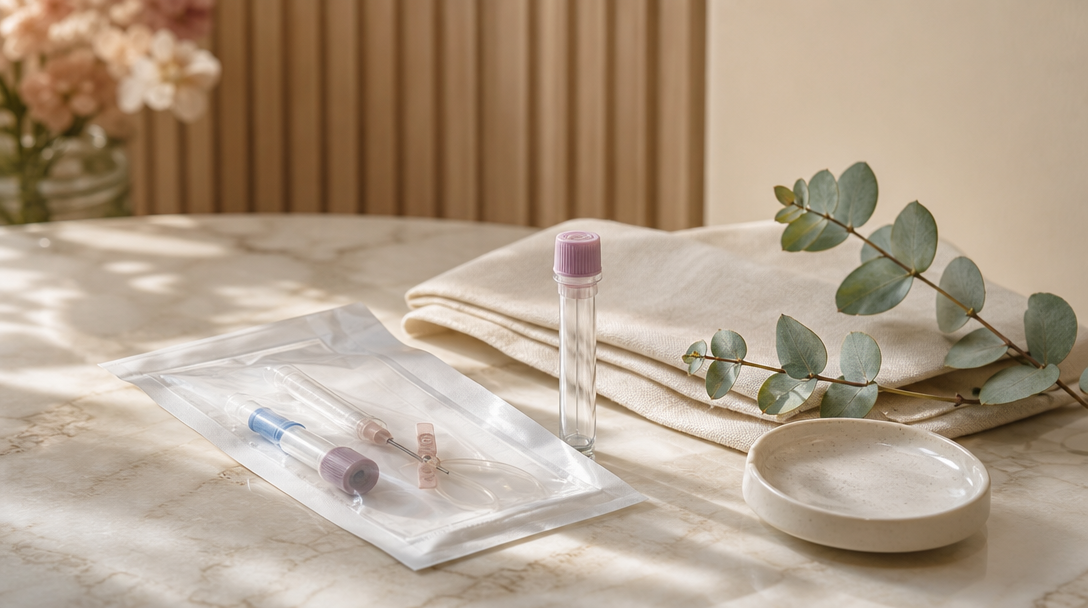
The separation itself is more technical than it looks. A widely cited preparation review describes a two-step method: a first spin to separate the red blood cells, then a second spin to concentrate the platelets into the smallest possible volume of plasma. Get the speed or timing wrong and you either shred the platelets or fail to concentrate them, so you end up with a sample that does very little.
There is also no single universal recipe. A scoping review of PRP preparation and administration found wide variation in spin speeds, spin times and final platelet concentrations across published protocols. Clinics manage that variability with validated devices and trained operators. A home setup has no way to know whether the sample it produced is usable, contaminated, or both.
At CoLaz, this is done by qualified clinicians using the same aseptic technique an NHS clinic uses. An NHS patient PRP leaflet from Wrightington, Wigan and Leigh NHS Foundation Trust describes the same sequence of a clean blood draw, centrifugation and careful reinjection, all performed by a clinician in a clinical room.
6 warnings before you try to make PRP at home
If you take one thing from this article, take these six warnings. Each one is a real, documented risk, not a scare story.
1. Drawing your own blood is a clinical skill, not a life hack. Taking blood from a vein (venepuncture) has well-recognised complications. A clinical reference on venepuncture complications lists haematoma (a painful pool of blood under the skin), nerve injury, arterial puncture and fainting among them. Nerves at the inner elbow sit close to the veins, so a misplaced needle can cause lasting pain or numbness. Clinicians train for months to avoid this.
2. PRP cannot be sterilised, so contamination is a serious risk. Unlike a pharmacy medicine, PRP cannot be heat-treated or filtered to kill germs, because that would destroy the platelets. A paper on PRP infection prevention stresses that because the product cannot be sterilised, every step must prevent microbial contamination, and it flags bloodborne pathogen exposure and unsafe injection practice as key risks. A home surface, a reused tube or air exposure can introduce bacteria that you then inject into your skin.
3. Shared or reused kit can transmit blood-borne viruses. Blood carries the risk of hepatitis B, hepatitis C and HIV. UK guidance on bloodborne viruses and Health and Safety Executive advice on how to prevent exposure explain that these viruses pass through needlestick injuries and contaminated sharps. Any needle, tube or centrifuge that is reused, shared or not disposed of correctly becomes a route for infection, both to you and to anyone else in the home.
4. A home centrifuge is unlikely to give you usable PRP. As the preparation research above shows, platelet yield depends on precise spin speed and duration. A low-cost machine bought online has no clinical validation, so even if everything else goes right, you may inject a sample that is too dilute to do anything, or one damaged by the wrong forces. You have taken all the risk of a blood draw for a product that does not work.
5. Injecting it yourself can cause serious, sometimes lasting harm. This is the step no home guide should ever encourage. A review of adverse events linked to PRP therapy reports infection as the most common problem, but also documents inflammation, allergic-type reactions, nodules, and in rare facial cases even vision loss from injection into a blood vessel. Facial injection depth and vessel mapping are advanced clinical skills. There is no safe way to guess them at home.
6. In the UK, this is a regulated medical procedure, not a home craft. Blood is treated as regulated human material by the Human Tissue Authority, and professional standards bodies treat PRP as a medical procedure. Recent JCCP guidance from the Joint Council for Cosmetic Practitioners calls for PRP to be classed as a high-risk procedure and raises direct concerns about treatments carried out without proper training, clinical oversight or infection control. Handling and injecting a blood product at home sits well outside those standards.
Why is PRP a clinic treatment, not a DIY one?
PRP is a clinic treatment because every stage, the blood draw, the centrifugation, the handling and the injection, needs sterile equipment, trained hands and a plan for when something goes wrong. A clinic is built around exactly those requirements.
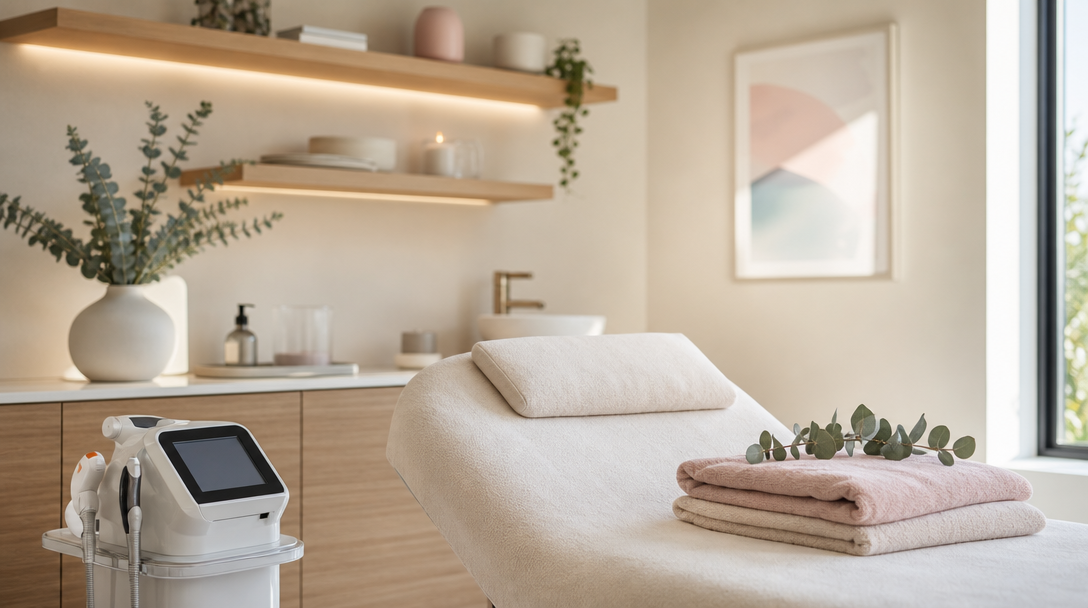
There is also the question of judgement. A good clinician screens whether PRP is right for you at all, checks for conditions and medicines that make it unsuitable, and manages the small risks that do exist. None of that is possible alone at a kitchen table. If you are weighing up any blood-based or injectable treatment, our guide on choosing a clinic explains what qualifications and registrations to look for first.
What does PRP treat at CoLaz?
At CoLaz, PRP is used in two main ways: as a facial treatment to support skin quality and tone, and as a scalp treatment to support early hair thinning. Both use the same principle of concentrating your own platelets, prepared and injected under clinical conditions.
The PRP face treatment focuses on skin texture, tone and a fresher, healthier look, drawing on the growth factors in your own blood. The PRP hair loss treatment targets early-stage female and male pattern thinning, and typically runs as a planned course rather than a one-off. Your clinician screens your suitability and, where relevant, may suggest checking blood work first, which is another safeguard a home attempt skips.
The safe way to get PRP
If PRP appeals to you, the sensible route is simple: have it done by a qualified clinician who draws, prepares and injects it under sterile, clinical conditions. You get the same principle the home guides are chasing, without the infection, injury and virus risks that make a DIY attempt a genuinely bad idea.
Every CoLaz clinic assesses your suitability before any treatment, so nothing is rushed and nothing is guessed. If you would like to know whether PRP is right for your skin or your hair, book a free consultation at your nearest CoLaz clinic and we will talk you through it honestly.
Ready to begin
Book a free PRP Face consultation at your nearest CoLaz clinic.
Thirty minutes with a qualified clinician. Skin assessment, candid recommendation, no obligation. Read about PRP Face at CoLaz, from £375 (face only, therapist single session).
WhatsApp replies in minutes during opening hours
About the author
Alaiyka Parvez
Owner, CoLaz Aesthetics Clinic
Alaiyka Parvez bought the CoLaz franchise network in 2023, having joined the company as a Slough clinic employee in 2013 and gone on to open the Hounslow and Wembley franchises. She writes here on the treatments CoLaz delivers across its seven UK clinics.
Read more about Alaiyka and CoLaz →More on Aesthetics
Keep reading.

20 August 2026 · 8 min
JCCP, Save Face and CQC: what each register actually checks
Three names come up when you try to check an aesthetic clinic, and they do three different jobs. A plain-English guide to what JCCP, Save Face and CQC each look at, what they leave out, and how to run the checks yourself.
13 August 2026 · 9 min
How much do dermal fillers cost in the UK? An honest 2026 price guide
Filler pricing in the UK swings from £150 to £600 per ml, and the gap is not random. Here is what you are actually paying for, which quotes should make you walk away, and how to price-check a clinic properly.

21 July 2026 · 8 min
10 aesthetic clinic red flags: when to walk out of the consultation
Non-surgical treatments are still largely unregulated in England. These are the ten warning signs worth knowing before you book, and the ones that should make you leave.
Begin
Book a free consultation
at your nearest CoLaz clinic.
Thirty minutes with a qualified clinician. Skin assessment, candid recommendation, written plan. No obligation.