Skin · 28 July 2026 · 10 min read
Types of chemical peels: glycolic, salicylic, TCA and Jessner explained
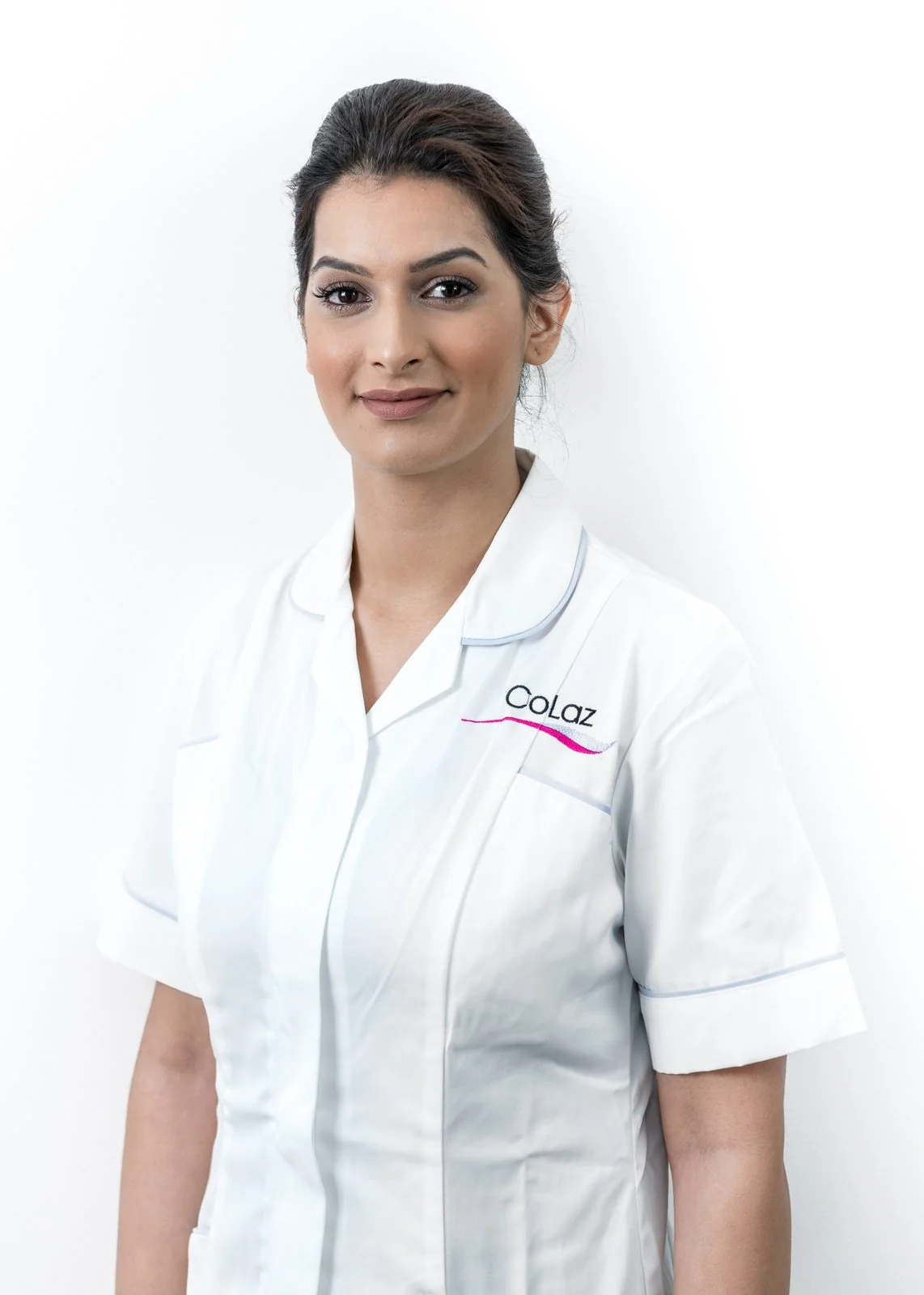
By Alaiyka Parvez
Owner, CoLaz Aesthetics Clinic
The short version
- • Peels are grouped two ways: by the acid used, and by how deep that acid goes. Depth is what decides your downtime and your risk, not the name on the bottle.
- • Glycolic acid (an AHA) suits dull, dry and sun-damaged skin. Salicylic acid (a BHA) is oil-soluble, so it works inside the pore and suits oily, congested and acne-prone skin.
- • Lactic acid is the gentlest starting point for sensitive skin. Mandelic acid has the largest molecule of the common AHAs, penetrates slowly and is usually the safer pigmentation choice for deeper skin tones.
- • TCA is the classic medium-depth agent and gives the biggest change, but it also carries the highest risk of pigmentation problems in Fitzpatrick IV to VI skin. Jessner solution is a blend used either alone or to deepen a TCA peel.
- • At CoLaz, we Fitzpatrick-type your skin, patch test, and sometimes change the peel you asked for. Chemical peels start from £99 for a single BHA salicylic session across our seven UK clinics.
TL;DR
- Peels are grouped two ways: by the acid used, and by how deep that acid goes. Depth is what decides your downtime and your risk, not the name on the bottle.
- Glycolic acid (an AHA) suits dull, dry and sun-damaged skin. Salicylic acid (a BHA) is oil-soluble, so it works inside the pore and suits oily, congested and acne-prone skin.
- Lactic acid is the gentlest starting point for sensitive skin. Mandelic acid has the largest molecule of the common AHAs, penetrates slowly and is usually the safer pigmentation choice for deeper skin tones.
- TCA is the classic medium-depth agent and gives the biggest change, but it also carries the highest risk of pigmentation problems in Fitzpatrick IV to VI skin. Jessner solution is a blend used either alone or to deepen a TCA peel.
- At CoLaz, we Fitzpatrick-type your skin, patch test, and sometimes change the peel you asked for. Chemical peels start from £99 for a single BHA salicylic session across our seven UK clinics.
Patients rarely walk in asking for a peel. They walk in asking for a specific acid, usually because a friend had it, or because they read about it. Glycolic, salicylic, mandelic, lactic, TCA, Jessner: the different types of chemical peels are not six versions of the same treatment. They are different chemistries that work at different depths and solve different problems.
This guide sets out what each acid is genuinely good at and how deep it goes. Reading it should make the conversation at your consultation easier, because you will know which questions matter.
What are the main types of chemical peels?
Chemical peels are grouped in two ways at once: by the acid used, and by how deep that acid penetrates the skin. The acid tells you what the peel is targeting, and the depth tells you what your recovery and risk will look like.
By acid family, the common groups are:
- AHAs (alpha hydroxy acids): glycolic, lactic and mandelic. Water-soluble, work on the skin surface, best for tone, texture and dryness.
- BHA (beta hydroxy acid): salicylic. Oil-soluble, so it can get into an oil-filled pore. Best for congestion and acne.
- TCA (trichloroacetic acid): the workhorse medium-depth agent for resurfacing.
- Blends: Jessner solution and branded combination systems that stack more than one acid.
By depth, the StatPearls dermatology reference sets out four rough bands: very light peels using 10 to 20% TCA or low-strength glycolic and salicylic acid, light peels using 20 to 30% TCA, Jessner solution or 30 to 50% glycolic acid, medium peels using 35% TCA with Jessner or 70% glycolic acid, and deep peels using TCA above 50% or phenol and croton oil combinations. Deep phenol peels are a hospital-grade procedure and are not offered at CoLaz.
The three peel depths, in plain English
Depth is the single most useful thing to understand before you book, because it predicts your downtime.
A superficial peel works within the epidermis, the outer layer. The American Academy of Dermatology puts light peel healing at 1 to 7 days, with the skin red first and then flaking for a few days after. Most people go back to work the same afternoon.
A medium peel reaches the upper dermis. Healing runs to 7 to 14 days, the skin swells for the first 48 hours, and blistering can happen. This is a peel you book around your diary, not one you slot into a lunch break.
A deep peel goes into the mid-dermis and needs cardiac monitoring because of how phenol is absorbed. It sits outside non-surgical clinic practice.
The NHS guidance is blunt about the trade-off: deeper peels are more risky. Swelling can last up to 2 weeks, redness can last up to 3 months, and your skin will be more sun-sensitive as it heals, so sunscreen for at least a month afterwards is not optional. Depth is the dial we turn most carefully.
What does a glycolic acid peel do?
A glycolic acid peel exfoliates the surface of the skin to improve dullness, dryness, rough texture and sun damage. Glycolic has the smallest molecule of the alpha hydroxy acids, so it penetrates quickly and evenly, which is exactly why strength and contact time have to be controlled.
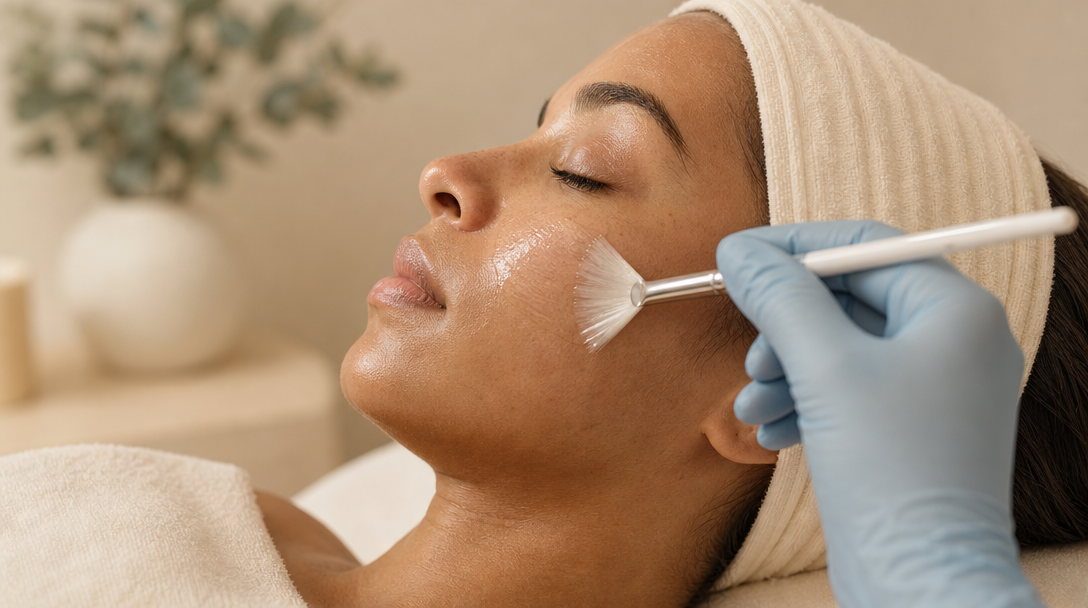
At 30 to 50% it behaves as a light peel. At 70% it becomes a medium-depth agent. That range is why “a glycolic peel” tells you almost nothing on its own. In a split-face study comparing 70% glycolic acid with 30% TCA on facial atrophic acne scars, both sides improved, with TCA edging ahead on scar depth and glycolic being the better tolerated of the two.
Glycolic is our usual starting acid for a patient whose main complaint is that their skin looks tired, flat and a bit weathered, with no active breakouts and no significant pigmentation risk.
What does a salicylic acid peel do?
A salicylic acid peel clears congestion and active breakouts, because salicylic acid is oil-soluble and can travel down into a blocked, oil-filled pore where a water-soluble AHA cannot follow. That single property is why it is the default acne peel.
The evidence backs the tolerability as well as the effect. A comparative study in mild-to-moderate acne put 30% salicylic acid against 25% TCA over 12 weeks and found the two equally effective at reducing lesion counts, but the salicylic group had far less burning and stinging (10 of 25 patients versus 20 of 25) and less post-inflammatory hyperpigmentation afterwards. Equal result, gentler route.
This is the peel behind our entry price. Chemical skin peels at CoLaz start from £99 for a single BHA salicylic session, and a typical course is 3 to 6 peels spaced 2 to 4 weeks apart. For patients with more established inflammatory acne, we would usually talk about the Acnelan protocol instead, which pairs in-clinic peels with a prescribed home routine.
Which peel suits sensitive skin or deeper skin tones?
Lactic acid is the gentlest starting point for sensitive skin, and mandelic acid is usually the safer choice for pigmentation in Fitzpatrick IV to VI skin. Both are AHAs, but they behave very differently from glycolic.
Lactic acid is humectant as well as exfoliating, so it draws water into the skin while it works. It suits dry, reactive, easily flushed skin that would find glycolic too brisk.
Mandelic acid has the largest molecule of the commonly used AHAs. Bigger molecule, slower penetration, more even result, less inflammation. Since inflammation is what triggers post-inflammatory hyperpigmentation in deeper skin tones, that slowness is a feature rather than a compromise. In a three-arm melasma trial published in Dermatologic Surgery, salicylic-mandelic peels produced a 60.98% reduction in melasma severity at 12 weeks against 62.36% for glycolic acid, statistically no different, but the salicylic-mandelic combination was better tolerated in patients with skin of colour. A broader melasma peeling review reaches a similar conclusion: the gentler agents are not the weaker option, they are the more predictable one.
Deeper or hormonally driven pigmentation is a different conversation again. For melasma that has not responded to gentler peels, we look at the Cosmelan protocol, which is a two-step in-clinic mask plus months of supervised home maintenance, from £1,250 for the full protocol. Our pigmentation concern page sets out the full range.
What is a TCA peel and who is it for?
A TCA peel is the classic medium-depth resurfacing treatment, used for fine lines, blotchy pigmentation, sun damage and atrophic acne scarring where a surface peel is not going to move the needle. Concentration decides everything: 10 to 20% is very light, 20 to 35% is light to medium, and 35% combined with Jessner or 70% glycolic is a true medium peel.
TCA earns its reputation on results. It also earns the most caution. The same study that found 30% salicylic acid equally effective in acne recorded more burning, more lasting redness and more post-inflammatory hyperpigmentation in the TCA arm. Dermatology reviews of medium-depth peeling make the same point about patient selection.
In practice, this is the peel we most often decline on the day. On Fitzpatrick IV to VI skin, or on any skin with a history of post-inflammatory hyperpigmentation, an unprepared medium-depth TCA peel can leave the pigmentation darker than it started. Our acne-scarring guide goes further into where TCA does and does not belong in a scar plan.
What is a Jessner peel?
A Jessner peel is a blended solution rather than a single acid, traditionally combining 14 g of resorcinol, 14 g of salicylic acid and 14 ml of lactic acid in an ethanol base. It is used either on its own as a light peel or layered underneath TCA to drive that peel deeper in a controlled way.
The blend is the point. Three agents at modest strengths do the work that one agent would need a higher concentration to achieve, which tends to give a more even result. Jessner solution has been studied on its own in melasma, and it is used across the Fitzpatrick range.
One caveat worth knowing. Classical Jessner contains resorcinol, which can cause allergic reaction and, in some patients, its own rebound pigmentation. Many clinics now use a modified formulation that drops resorcinol and substitutes citric acid. If a clinic offers you a Jessner peel, asking which formulation they use is a reasonable question.
Matching the types of chemical peels to your skin
Here is the short version we use in the consultation room as a starting point, not a prescription.
| Main concern | Usual first-choice acid | Depth |
|---|---|---|
| Dull, dry, sun-damaged skin | Glycolic (AHA) | Superficial |
| Oily, congested, active breakouts | Salicylic (BHA) | Superficial |
| Sensitive, reactive, easily flushed skin | Lactic (AHA) | Superficial |
| Pigmentation in Fitzpatrick IV to VI skin | Mandelic, or salicylic-mandelic blend | Superficial |
| Fine lines, texture, atrophic scarring | TCA | Medium |
| Mixed concerns needing an even, layered result | Jessner, alone or under TCA | Superficial to medium |
Two things that table cannot capture. The first is that skin changes: the peel that suits you in February may not be the one that suits you in July, when there is more sun on your face. The second is that peels are almost always better as a course than as a one-off. Our standard plan is 3 to 6 sessions, 2 to 4 weeks apart, sometimes with several weeks of home preparation before the first one.
Who should not have a chemical peel?
Peels are not suitable during pregnancy or breastfeeding, on skin with an active infection or open wound, in patients with a history of keloid scarring or poor wound healing, or where recent isotretinoin use makes healing unpredictable.
Isotretinoin deserves a note of its own, because the advice has moved. The traditional rule was a 6-month wait after finishing treatment before any peel. A systematic review with consensus recommendations in JAMA Dermatology found the evidence for that blanket delay was thin for superficial procedures, while still supporting caution for medium and deep peels. We take the cautious line and ask about isotretinoin at every consultation.
Sun exposure is the other common reason we postpone. Treating recently tanned skin raises the risk of uneven pigmentation, so we would rather move your appointment than treat skin that is not ready.
What a peel consultation looks like at CoLaz

Every peel at CoLaz starts with a free consultation. We take your medical history, current skincare, allergies and medication, we Fitzpatrick-type your skin, and we set out realistic expectations. We patch test. At the end, you get the recommended plan in writing, covering the number of sessions, the spacing, the acid we intend to use and the price per session, and you take that away and decide.
Sometimes the plan we write is not the plan you walked in asking for. A new patient at our Slough clinic once asked for a TCA peel because a friend had had one. She was Fitzpatrick IV with a history of post-inflammatory hyperpigmentation, which is close to the worst combination for an unprepared medium-depth peel. We declined the TCA and built something different: six weeks of preparation cream at home, then a course of three salicylic acid peels at four-week intervals, then a proper reassessment. By month four her pigmentation was lighter and the texture underneath was smoother.
The lesson I take from that, and the one I teach every clinician we train, is that the peel that works for your friend may be the peel that hurts you. Fitzpatrick type, pigmentation history and what your skin has been through recently matter more than the name of the acid.
If you are choosing a clinic rather than a peel, the JCCP register and the NHS advice on checking your practitioner are both worth ten minutes of your time before you book anything anywhere.
Where to start
If you already know your skin well, you probably know which family you belong in: oily and congested points to salicylic, dull and weathered points to glycolic, reactive points to lactic, pigmentation in deeper skin tones points to mandelic. If you do not know, that is exactly what the consultation is for.
Our chemical peels page sets out the full range and current pricing, and you can book a free consultation at any of our seven UK clinics to have your skin typed properly before anything touches it.
Ready to begin
Book a free Chemical Skin Peels consultation at your nearest CoLaz clinic.
Thirty minutes with a qualified clinician. Skin assessment, candid recommendation, no obligation. Read about Chemical Skin Peels at CoLaz, from £99 (BHA salicylic peel, single session).
WhatsApp replies in minutes during opening hours
About the author
Alaiyka Parvez
Owner, CoLaz Aesthetics Clinic
Alaiyka Parvez bought the CoLaz franchise network in 2023, having joined the company as a Slough clinic employee in 2013 and gone on to open the Hounslow and Wembley franchises. She writes here on the treatments CoLaz delivers across its seven UK clinics.
Read more about Alaiyka and CoLaz →More on Skin
Keep reading.

15 September 2026 · 8 min
Salmon DNA polynucleotides: what they are and why aesthetics is hooked
Purified fragments of salmon DNA, known as polynucleotides or PDRN, are one of the fastest-growing skin boosters in UK clinics. Here is what the research says about how they work and what to realistically expect.

11 August 2026 · 10 min
HIFU treatment results: month by month, what is realistic
HIFU tightens skin gradually rather than instantly. Here is the honest month-by-month results timeline, how long the effect lasts, and who is a good candidate.

14 July 2026 · 7 min
Microneedling aftercare day by day: the realistic 7-day timeline
What to expect after microneedling, day by day, plus the simple aftercare that protects your skin and your results across the first week.
Begin
Book a free consultation
at your nearest CoLaz clinic.
Thirty minutes with a qualified clinician. Skin assessment, candid recommendation, written plan. No obligation.