
Skin · 12 August 2025 · 8 min read
Can LED light therapy cause cancer? What the evidence says
By Alaiyka Parvez
Owner, CoLaz Aesthetics Clinic
The short version
- • LED light therapy uses non-ionising visible light (red, blue and near-infrared), which does not carry enough energy to damage the DNA in your skin cells.
- • It contains no ultraviolet (UV) radiation, and UV is the type of light linked to skin cancer from the sun and sunbeds.
- • Systematic reviews of LED photobiomodulation have found no evidence that it causes or accelerates cancer at the doses used for skin treatments.
- • Overusing LED can cause temporary redness, dryness or mild irritation, but not cancer; eye protection is still sensible during a session.
- • If you have a current or past cancer diagnosis, or take light-sensitive medication, speak to your doctor before starting, and choose a qualified clinician.
TL;DR
- LED light therapy uses non-ionising visible light (red, blue and near-infrared), which does not carry enough energy to damage the DNA in your skin cells.
- It contains no ultraviolet (UV) radiation, and UV is the type of light linked to skin cancer from the sun and sunbeds.
- Systematic reviews of LED photobiomodulation have found no evidence that it causes or accelerates cancer at the doses used for skin treatments.
- Overusing LED can cause temporary redness, dryness or mild irritation, but not cancer, and eye protection is still sensible during a session.
- If you have a current or past cancer diagnosis, or take light-sensitive medication, speak to your doctor before starting, and choose a qualified clinician.
LED light therapy does not cause cancer. It uses low-level, non-ionising visible light that does not damage DNA the way ultraviolet radiation does, and the research on it so far has not linked it to skin cancer. Below is the honest, evidence-based version of why, along with the safety limits worth knowing before you book a course of LED light therapy.
Can LED light therapy cause cancer?
No. Current evidence does not show that LED light therapy causes cancer, because it uses non-ionising light that cannot break the chemical bonds in DNA. The American Academy of Dermatology is clear on this point: unlike ultraviolet light, which can cause skin cancer, research has not found that red light can cause any type of cancer.
Cancer starts when DNA inside a cell is damaged and the cell begins to grow in an uncontrolled way. The light used in LED therapy sits in the visible and near-infrared part of the spectrum, which does not carry enough energy to cause that kind of DNA damage. That is the core reason it sits in a very different safety category from the sun or a sunbed.
It is worth being honest about the one real limitation. LED therapy is a relatively young treatment, so we have strong short-term safety data but limited long-term data. The AAD notes that while red-light devices are considered safe, the long-term effects on skin over many years are still being studied.
How is LED light different from UV light?
The key difference is that LED therapy contains no UV radiation, and UV is the wavelength linked to skin cancer. LED devices for the skin emit visible light (usually red and blue) plus near-infrared, all of which are longer, lower-energy wavelengths than UV.
UV is a genuine hazard, and it helps to see the contrast. According to the NHS, ultraviolet light is the most common cause of melanoma, coming from the sun and from sunbeds. Cancer Research UK explains the mechanism plainly: too much UV from the sun or sunbeds can damage the DNA in skin cells, and if enough damage builds up over time it can lead to skin cancer.
Sunbeds are the clearest example of why UV and LED should never be lumped together. Sunbeds emit UV specifically to tan the skin, and they cause around 440 melanomas and roughly 100 deaths each year in the UK. The public-health concern about sunbeds, reflected in GOV.UK guidance, is entirely about UV exposure. LED light therapy does not use UV at all, so it does not carry that mechanism of harm.
What does the research say about LED light and cancer risk?
The published evidence to date has not found a link between LED light therapy and cancer, and some of it was designed specifically to look for one. A systematic review in the Aesthetic Surgery Journal examined 57 studies on the oncologic safety of low-level light therapy for skin rejuvenation and concluded that photobiomodulation is oncologically safe, with no evidence to support avoiding it, even in patients who have previously been treated for cancer.
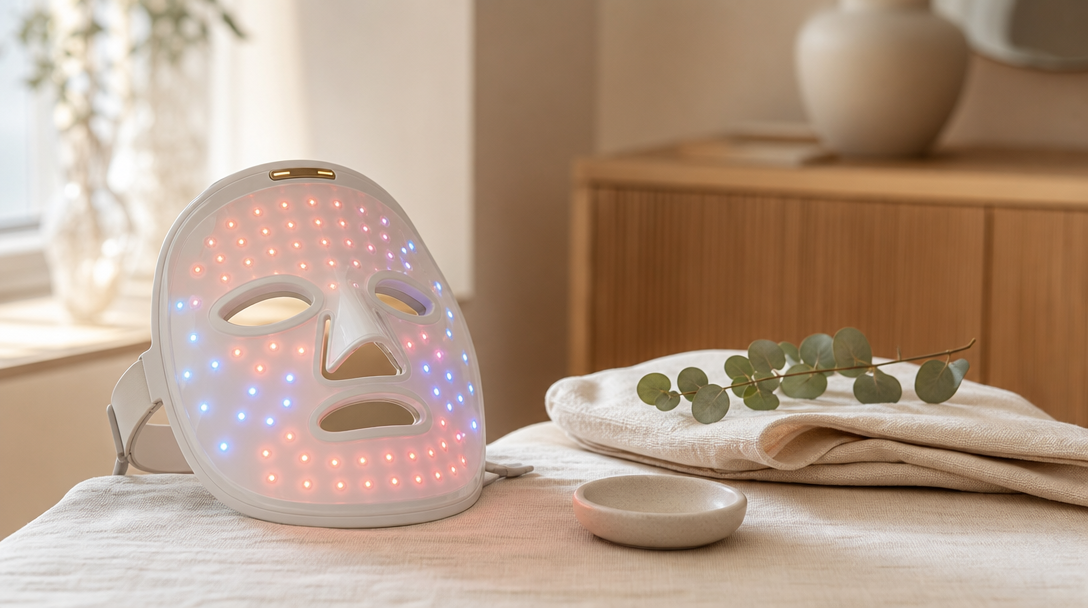
A wider systematic review of photobiomodulation in oncology reached a similar conclusion: clinical studies with follow-up found the therapy safe with regard to tumour growth at recommended treatment settings, with no clinical trial data linking it to a new or recurrent malignancy. Two randomised controlled trials of LED red light on human skin also reported it to be safe and well tolerated at the doses tested.
The scientific picture is not the same as saying nothing is left to learn. Some laboratory (in vitro) studies on isolated cancer cells have shown mixed results depending on the dose and settings used, which is exactly why clinics use established, controlled parameters and why anyone with a cancer history should have a conversation with their doctor first.
How does LED light therapy work on the skin?
LED light therapy works by using specific colours of light that skin cells absorb, which gently influences how those cells behave. It sits on the surface and in the upper layers of the skin, and it does not cut, burn or use heat to change deeper tissue.
Different wavelengths do different jobs:
- Red light penetrates a little deeper and is used to support collagen-producing cells (fibroblasts) and to calm inflammation, which is why it features in anti-ageing and healing protocols.
- Blue light stays nearer the surface and targets the bacteria involved in acne, which can help reduce breakouts as part of a wider plan such as acne treatment.
- Near-infrared light reaches deeper still and is used to support recovery and reduce swelling in the skin.
Because the effect is a gentle biological signal rather than DNA-altering energy, LED is often used alongside other treatments. At CoLaz we frequently pair it with facials or collagen-boosting treatments rather than relying on it alone.
Can you overuse LED light therapy?
You can overdo LED, but the result is temporary skin irritation, not cancer. Using it too often or for too long can leave the skin slightly red, dry or sensitive for a short time, and these effects usually settle on their own.
The randomised controlled trials on LED red light noted that at high intensities some people can experience effects such as redness, and that people with more melanin in their skin can be more photosensitive, so professional settings and doses matter. The AAD lists the most common side effects as mild and temporary, such as short-lived warmth, redness or dryness of the treated area.
A few sensible habits keep it comfortable:
- Follow the recommended session length and frequency rather than assuming more is better.
- Use eye protection during a session, since bright light close to the eyes is best avoided.
- Tell your clinician about any light-sensitive medication or skin condition before you start.
Should people with a history of cancer avoid LED light therapy?
If you have a current or past cancer diagnosis, the safe answer is to check with your doctor before starting LED light therapy, even though the evidence to date is reassuring. This is a precaution, not a red flag, and it lets your medical team make the call with your full history in front of them.

There are two practical reasons to have that conversation. First, some cancer treatments and medications make the skin more sensitive to light, so timing matters. Second, red and near-infrared light support cell activity and repair, and while systematic review evidence has not shown this to promote tumour growth in clinical use, your oncology team is the right group to sign it off around active treatment. A good clinic will always ask about your medical history at consultation and will happily wait for that clearance.
Is at-home LED as safe as in-clinic LED?
At-home LED masks and panels are generally low-risk, but they are usually less powerful and less consistent than professional devices, and it is easy to use them incorrectly. The AAD advises looking for a device that is regulator-cleared, using eye protection, and checking with a professional first if you have darker skin or a light-sensitive condition.
The trade-off is straightforward. Home devices are convenient and gentle, but they deliver a lower dose, so results tend to be slower and more modest. A professional session uses a stronger, calibrated device and a clinician who sets the right protocol for your skin, which is particularly worth it if you are treating something specific like active acne or want the LED combined with other treatments.
How CoLaz keeps LED light therapy safe
Every LED course at CoLaz starts with a consultation where we review your skin, your medical history and any medication before we plan a single session. That is where we would flag a cancer history, a light-sensitive condition or anything else that means we should adjust the plan or ask you to check with your GP first.
The wider point is about who is holding the device. LED is low-risk, but any aesthetic treatment is only as safe as the person and the setting. The NHS recommends checking that your practitioner is suitably qualified and on an accredited register, and the JCCP exists to help the public find practitioners who meet recognised standards. If you would like to talk through whether LED light therapy suits your skin, our free consultation is the place to start.
Ready to begin
Book a free LED Light Therapy consultation at your nearest CoLaz clinic.
Thirty minutes with a qualified clinician. Skin assessment, candid recommendation, no obligation. Read about LED Light Therapy at CoLaz, from £55 (20 minutes, single session).
WhatsApp replies in minutes during opening hours
About the author
Alaiyka Parvez
Owner, CoLaz Aesthetics Clinic
Alaiyka Parvez bought the CoLaz franchise network in 2023, having joined the company as a Slough clinic employee in 2013 and gone on to open the Hounslow and Wembley franchises. She writes here on the treatments CoLaz delivers across its seven UK clinics.
Read more about Alaiyka and CoLaz →More on Skin
Keep reading.

11 August 2026 · 10 min
HIFU treatment results: month by month, what is realistic
HIFU tightens skin gradually rather than instantly. Here is the honest month-by-month results timeline, how long the effect lasts, and who is a good candidate.

28 July 2026 · 10 min
Types of chemical peels: glycolic, salicylic, TCA and Jessner explained
Glycolic for dull and sun-damaged skin, salicylic for oily and acne-prone, lactic for sensitive, mandelic for pigmentation in deeper skin tones, TCA for resurfacing with downtime. A clear decision guide to the main types of chemical peels.

14 July 2026 · 7 min
Microneedling aftercare day by day: the realistic 7-day timeline
What to expect after microneedling, day by day, plus the simple aftercare that protects your skin and your results across the first week.
Begin
Book a free consultation
at your nearest CoLaz clinic.
Thirty minutes with a qualified clinician. Skin assessment, candid recommendation, written plan. No obligation.