
Skin · 28 October 2025 · 8 min read
AHA Peel Side Effects and Risks: What You Should Know
By Alaiyka Parvez
Owner, CoLaz Aesthetics Clinic
The short version
- • AHA peels (glycolic, lactic, mandelic acids) are generally safe when performed by a trained clinician on suitable skin, but no peel is risk-free.
- • Mild redness, tingling, dryness and light flaking are normal and usually settle within one to three days after a superficial peel.
- • The main risks worth understanding are post-inflammatory hyperpigmentation, prolonged redness, and, rarely, scarring or infection, mostly with stronger peels or poor aftercare.
- • AHAs make skin more sensitive to the sun for about a week, so daily broad-spectrum SPF is the single most important step in avoiding pigmentation problems.
- • A patch test, an honest medical history and matching the peel to your Fitzpatrick skin type are what keep the risk low, which is why CoLaz starts every peel with a free consultation.
AHA peels are generally safe when carried out by a trained clinician on suitable skin, but they are not risk-free, and the honest answer is more useful than a reassuring one. The common side effects are mild and short-lived, the moderate ones are usually down to a peel that was too strong or aftercare that was skipped, and the serious ones are rare but real. Knowing which is which is what lets you make a calm, informed choice.
An AHA peel uses alpha hydroxy acids, most often glycolic, lactic or mandelic acid, to exfoliate the surface of the skin and encourage smoother, brighter, more even-looking skin. Below are the side effects and risks worth understanding before you book, who is most likely to run into trouble, and how a good clinic keeps the odds in your favour.
Are AHA peels safe?
Yes, AHA peels are considered safe for most people when performed by a trained professional using the right acid, strength and aftercare for your skin. The catch is that safety depends heavily on the depth of the peel, your skin type and how closely the aftercare is followed.
AHAs have been used in dermatology for decades, and superficial glycolic and lactic peels have a well-documented safety record in the clinical literature. A current review of glycolic acid peel therapy describes it as an effective, well-tolerated treatment for a range of concerns, with side effects that are usually mild and temporary. A separate side-effects assessment of glycolic acid peels in patients with mild acne found the reactions were minor and self-limiting.
The important word is superficial. Most AHA peels offered in clinic are surface-level treatments, which is exactly why they carry a lower risk than medium or deep peels. According to StatPearls, the reference used by clinicians, deeper peels bring greater results but also more significant risks, so the sensible plan is the lightest peel that will do the job, stepped up gradually only if needed.
What are the common short-term side effects of an AHA peel?
The most common side effects are mild redness, a warm tingling or stinging during the peel, some dryness, and light flaking over the following days. These are expected reactions as the skin sheds its outer layer, not signs that something has gone wrong.
For a typical superficial AHA peel you can expect:
- Redness or a flushed look for a few hours to a day or two.
- Tingling or a mild sting while the acid is on the skin, which eases the moment it is neutralised or washed off.
- Dryness and light flaking starting a day or two later as the surface renews.
- A feeling of tightness for a short while afterwards.
Most of these settle within one to three days for a light peel. The FDA notes that mild stinging, irritation and redness are the reactions most often linked to AHA products. Gentle, fragrance-free moisturiser, no harsh actives for a few days, and strict sun protection will help the skin recover comfortably.
What moderate reactions can happen after an AHA peel?
Some people have stronger reactions that last longer than the usual recovery window, such as redness or peeling that carries on for several days, temporary rough or patchy texture, or a short bout of breakouts as the skin clears. These are more common when a peel is too strong for the skin or when the aftercare is not followed.
Moderate reactions usually trace back to a handful of avoidable causes:
- Over-exfoliating, by stacking peels too close together or scrubbing between sessions.
- Layering strong actives too soon, such as retinoids, vitamin C or other acids in the days either side of a peel.
- Skipping sun protection, which is the single biggest driver of pigmentation trouble on freshly peeled skin.
Most moderate reactions calm down with rest, hydration and time. Prolonged or worsening redness is the one to watch, because research on preventing peel complications describes persistent redness as an early warning sign that needs prompt clinical attention rather than a wait-and-see approach. If irritation is getting worse rather than better, contact the clinic that treated you.
What are the rare but serious risks of AHA peels?
The serious risks are uncommon but genuine: post-inflammatory hyperpigmentation, hypopigmentation, scarring and infection. These are far more likely with stronger peels, on higher-risk skin, or when a peel is done without proper assessment and aftercare.
The risks worth understanding are:
- Post-inflammatory hyperpigmentation (PIH): dark patches that appear after inflammation or sun exposure on healing skin. It is the most common of the significant complications, especially in deeper skin tones.
- Hypopigmentation: lighter patches from a loss of pigment, seen mainly with stronger or deeper peels.
- Scarring: rare with superficial AHA peels, and usually linked to picking at the skin, infection or a peel taken too deep.
- Infection: uncommon, but possible if the skin barrier is broken and aftercare hygiene is poor.
StatPearls groups the delayed complications of chemical peels as pigment changes, scarring, abnormal wound healing, infection and milia, and stresses that careful patient selection and counselling are what keep these to a minimum. The reassuring part is that these outcomes cluster around deeper peels and poor practice, not the light AHA peels most patients actually have.
Who is most at risk of AHA peel side effects?
The people most likely to have problems are those with deeper skin tones, anyone with a history of hyperpigmentation or keloid scarring, people who have recently used the acne medicine isotretinoin, and anyone who cannot commit to sun protection. Recognising these factors in advance is how a clinic decides whether, and how, to treat.
Higher-risk factors include:
- Fitzpatrick skin types IV to VI. A journal study on superficial peels in darker skin found superficial peels can be used safely in deeper skin tones, but the pigmentation risk is higher, so lower strengths and careful priming matter more.
- A history of PIH or keloid scarring, which raises the chance of pigment changes and abnormal healing.
- Recent isotretinoin use. A published case report documented severe erythema, erosions and lasting pigmentation and scarring in a patient who had a glycolic acid peel while on low-dose isotretinoin, which is why clinics screen for it.
- Active skin infection, cold sores, recent sunburn or a fresh tan, all of which mean the peel should be rescheduled.
- Pregnancy or breastfeeding, where we do not perform peels and are happy to book a consultation for afterwards.
- Combining strong actives such as retinoids or vitamin C too close to the peel.
If any of these apply to you, they are exactly the things to raise at a consultation. Being open about your skin history and medication is what lets a clinician plan a peel that suits you, or advise a gentler option such as a Hydrafacial instead.
Why does sun exposure matter so much after an AHA peel?
Sun exposure matters because AHAs make your skin more sensitive to ultraviolet light, so unprotected sun after a peel is the fastest route to pigmentation problems. This is the risk factor most within your own control, and it is the one most often ignored.
The FDA reports that topically applied AHAs increase the skin’s sensitivity to the sun while in use and for up to a week after stopping, which raises the chance of sunburn. On freshly peeled skin, that extra UV sensitivity is what tips vulnerable skin into hyperpigmentation.
The fix is simple and non-negotiable: daily broad-spectrum sun protection. The NHS advises a sunscreen of at least SPF 30 with good UVA protection, reapplied regularly, alongside shade and clothing. The British Association of Dermatologists recommends SPF 30 or higher as a sensible everyday choice and reminds patients that sunscreen works best combined with shade and cover-up. Wear it every day during and after a peel course, including in winter and on cloudy days.
How can you minimise and manage AHA peel side effects?
You lower the risk by preparing the skin properly before the peel and treating it gently afterwards. Good preparation and aftercare are what turn a peel from a gamble into a predictable, low-risk treatment.
Before the peel:
- Follow any priming routine your clinician recommends, which may include a gentle exfoliant or a pigment-calming cream in the weeks beforehand.
- Stop retinoids, scrubs and strong acids for a few days before treatment, or longer if advised.
- Keep the skin well hydrated so its barrier is in good shape.
- Reschedule if you have active acne in the area, a cold sore, sunburn or a fresh tan.
After the peel:
- Use gentle, hydrating skincare and avoid acids, retinoids and heavily fragranced products for several days.
- Apply broad-spectrum SPF every day, since peeled skin is highly sensitive to light.
- Skip hot showers, saunas, steam rooms and intense workouts for around 48 hours.
- Do not pick, peel or scrub the flaking skin, as lifting it early is what causes marks and, rarely, scarring.
- If irritation worsens rather than settles, contact your clinic for advice.
These steps mirror the prevention principles set out in the complications review: good patient selection, priming, careful technique and disciplined aftercare.
Professional versus at-home AHA peels: which is safer?
A professional peel is the safer choice because a trained clinician assesses your skin, controls the strength and neutralisation, and manages any reaction. At-home kits remove that safety net, which is where most avoidable damage happens.
In a clinic setting:
- Your skin type, history and medication are assessed before any acid touches the skin.
- The acid, concentration and contact time are matched to your skin rather than guessed.
- The peel is neutralised and monitored, and there is someone to call if a reaction develops.
At home, it is easy to leave a peel on too long, use a strength that is wrong for your skin, or stack it with other actives, and there is no one watching for the early warning signs of a problem. If you do want a treatment you can look after yourself, a lower-strength maintenance option discussed with a clinician is far safer than a strong DIY peel. For any peel aimed at a specific concern such as pigmentation, an in-clinic chemical peel planned around your skin is the sensible route.
How does CoLaz keep AHA peels safe?
Every peel at CoLaz starts with a free consultation and a patch test, because matching the peel to your skin is what keeps the risk low. We would rather turn a treatment down or step it back than push a peel that your skin is not ready for.
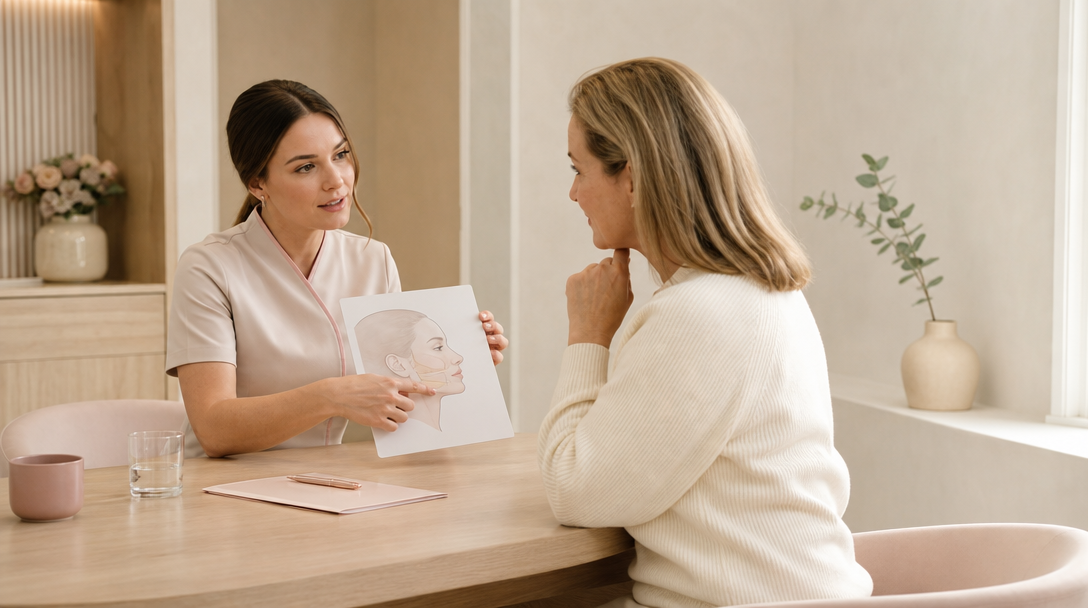
At the consultation we take your medical history, current skincare, allergies and medication, and your Fitzpatrick skin type, and we talk through realistic expectations. For deeper skin tones or a history of pigmentation, we start gentler and build up, and we prime the skin where it helps. We patch test before the first full session, we give written aftercare, and we check in on how your skin is recovering. If a peel is not right for you, we will say so and suggest a better-suited option, whether that is a milder peel, a Hydrafacial, or a targeted plan for pigmentation.
Choosing where to have a peel is part of staying safe. UK aesthetics is supported by voluntary registers such as the JCCP and Save Face, both recognised by the Professional Standards Authority, and our guide on choosing a clinic walks through what to look for. If you would like to know which peel suits your skin, a free consultation at your nearest CoLaz clinic is the place to start, with no obligation to book.
Ready to begin
Book a free Chemical Skin Peels consultation at your nearest CoLaz clinic.
Thirty minutes with a qualified clinician. Skin assessment, candid recommendation, no obligation. Read about Chemical Skin Peels at CoLaz, from £99 (BHA salicylic peel, single session).
WhatsApp replies in minutes during opening hours
About the author
Alaiyka Parvez
Owner, CoLaz Aesthetics Clinic
Alaiyka Parvez bought the CoLaz franchise network in 2023, having joined the company as a Slough clinic employee in 2013 and gone on to open the Hounslow and Wembley franchises. She writes here on the treatments CoLaz delivers across its seven UK clinics.
Read more about Alaiyka and CoLaz →More on Skin
Keep reading.
11 August 2026 · 10 min
HIFU treatment results: month by month, what is realistic
HIFU tightens skin gradually rather than instantly. Here is the honest month-by-month results timeline, how long the effect lasts, and who is a good candidate.
28 July 2026 · 10 min
Types of chemical peels: glycolic, salicylic, TCA and Jessner explained
Glycolic for dull and sun-damaged skin, salicylic for oily and acne-prone, lactic for sensitive, mandelic for pigmentation in deeper skin tones, TCA for resurfacing with downtime. A clear decision guide to the main types of chemical peels.

14 July 2026 · 7 min
Microneedling aftercare day by day: the realistic 7-day timeline
What to expect after microneedling, day by day, plus the simple aftercare that protects your skin and your results across the first week.
Begin
Book a free consultation
at your nearest CoLaz clinic.
Thirty minutes with a qualified clinician. Skin assessment, candid recommendation, written plan. No obligation.