
Skin · 29 November 2025 · 7 min read
Why sebaceous filaments always come back after a Hydrafacial
By Alayika Parvez
Owner, CoLaz Aesthetics Clinic
The short version
- • Sebaceous filaments are normal structures that line your pores and channel sebum to the surface, so every person has them, mostly on the nose and central face.
- • A Hydrafacial empties the pore for a short time, but it cannot stop your sebaceous glands producing oil, so the pore simply refills within days.
- • They are not blackheads: filaments are pale grey or beige and free-flowing, while blackheads are oxidised plugs that block the pore.
- • They cannot be removed for good, and trying to strip them out can disrupt the skin barrier and prompt more oil, so the goal is management, not removal.
- • Salicylic acid, retinoids, non-comedogenic products and regular in-clinic facials keep them looking refined over time.
If you have ever admired how clear your nose looks straight after a Hydrafacial, then watched tiny dots creep back a few days later, you have not done anything wrong and the treatment has not failed. Sebaceous filaments come back after a Hydrafacial because they are part of your skin’s normal structure. A Hydrafacial clears the pore for a short time, but it cannot stop your skin producing oil, so as long as your glands make sebum, which they must, the filaments refill within days.
Below is what sebaceous filaments actually are, why they return so quickly, why no treatment removes them for good, and how to keep them looking refined between visits with the right routine and the right in-clinic support.
What are sebaceous filaments, and why does everyone have them?
Sebaceous filaments are natural structures that line the inside of your pores and channel sebum from the sebaceous gland up to the skin surface. They are not a blemish or a sign of poor hygiene. A dermatology case report describes them as uniform, off-white to yellowish deposits of sebum and dead cells encircling normal hair follicles, found predominantly on the nose and central face. As Cleveland Clinic puts it, every person has sebaceous filaments and they are a normal, healthy element of skin.
They exist because sebum has a job to do. A review of sebum function notes that this oil helps protect the barrier, limit water loss and guard against environmental damage. The filament is simply the visible channel that delivers that oil where it is needed. In other words, they are anatomy, not a condition, which is the single most useful thing to understand about them.
Sebaceous filaments or blackheads: what is the difference?
The quick answer: filaments are a normal, free-flowing part of the pore, while blackheads are an oxidised plug that blocks it. They look similar to the eye but behave very differently.
Sebaceous filaments are thin, pale grey, beige or off-white, sit fairly flush with the skin and let oil travel freely to the surface. Blackheads are a form of mild acne: trapped oil and dead skin form a plug that widens the pore, and the surface of that plug turns dark when it meets the air. The practical difference is that a blackhead is a blockage that benefits from active treatment, whereas a filament is doing exactly what it is meant to do. Reaching for aggressive extraction on filaments, thinking they are blackheads, is one of the most common reasons pores end up looking worse rather than better.
Why do sebaceous filaments come back so quickly after a Hydrafacial?
They come back because the treatment empties the pore, but your sebaceous glands keep producing oil at their normal rate, so the pore refills. A Hydrafacial does not switch off oil production, and it is not designed to.
Cleveland Clinic notes that even if you manage to clear a pore, it will typically fill again within around 30 days, and for oilier skin it can be far sooner, often within a few days. Think of it like a clean sink drain: it looks spotless for a while, but it still carries what it is built to carry. The filament was never truly removed, only briefly cleared, so it rebuilds itself as fresh sebum flows up through the follicle. This is normal and expected, not a sign the treatment did nothing.
What does a Hydrafacial actually do to your pores?
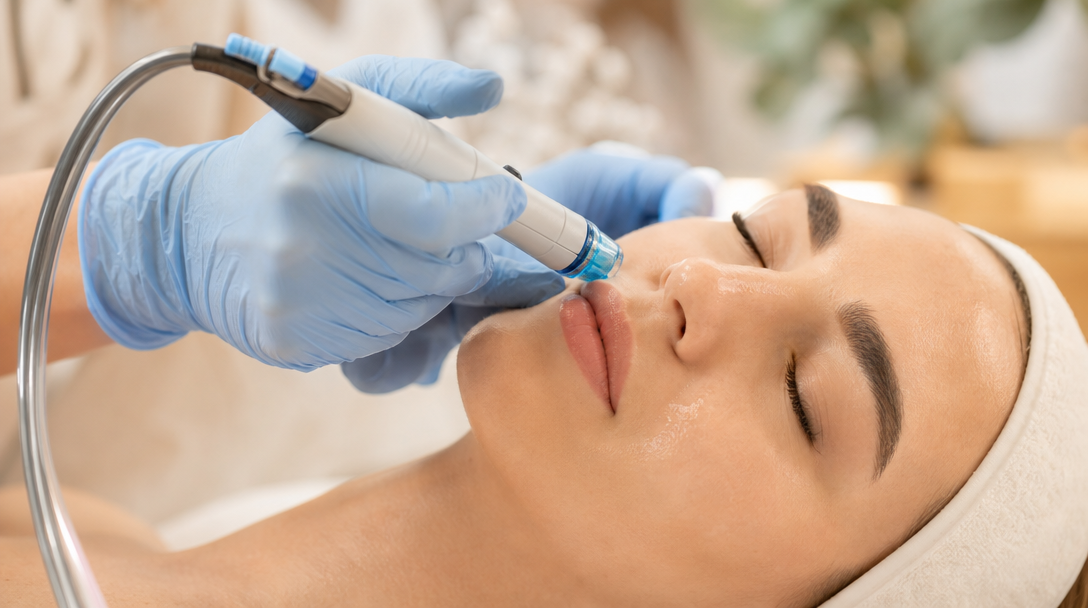
A Hydrafacial gives a deep cleanse that temporarily changes how your pores look, loosening surface oil and debris and lifting it away with gentle vortex suction. Right after treatment the pores read smoother and clearer because they have been briefly emptied, which is the “glass skin” effect people love.
The important word is briefly. Imaging research using advanced skin scanning found that hydradermabrasion produces visible short-term improvement in texture and surface smoothness, but the measured changes largely return to baseline by around two weeks. The suction works on what sits at and near the surface. It does not, and cannot, alter the natural structure deeper in the pore where the filament forms. That is why a single Hydrafacial is wonderful before an event but is not a permanent fix for the appearance of filaments. The benefit is real, it is just designed to be topped up rather than banked.
Which skin types see sebaceous filaments return fastest?
Oilier skin refills pores fastest, so filaments tend to reappear soonest on skin that naturally produces more sebum. A few factors speed up the cycle.
- Naturally oily skin produces more sebum through the day, so pores refill sooner and filaments read more prominent.
- Hormonal shifts raise oil output. Androgens are the hormones most linked to sebum production, which is why filaments can look more obvious around the menstrual cycle, in pregnancy or during periods of stress.
- Larger pore openings make filaments easier to see even when the skin is clean, because there is simply more of the channel on show.
This is why two people can have the same Hydrafacial and see filaments return on very different timelines. It is skin type and physiology, not a difference in how well the treatment was performed.
Can sebaceous filaments be permanently removed?
No, and it is worth being clear about why you would not want them gone even if you could. Cleveland Clinic states plainly that you cannot get rid of sebaceous filaments, though you can make them smaller and less noticeable.
Filaments are part of the system that keeps the skin barrier lubricated and protected. Stripping them out completely, with harsh squeezing or repeated pore strips, tends to disrupt the barrier, increase dryness and irritation, and can prompt the skin to produce more oil to compensate. The realistic and healthy goal is management: keeping the filaments emptied enough that they stay fine and even, while leaving the barrier intact. Anyone promising to remove them for good is describing something that is neither possible nor desirable.
Habits that make sebaceous filaments look more obvious after a facial
Certain everyday habits can make filaments look darker or more pronounced in the days after a Hydrafacial, even when the treatment itself went perfectly.
- Over-washing. Cleansing too often or with very hot water strips the barrier, and the skin can respond by making more oil. Twice a day with a gentle cleanser is plenty.
- Heavy, occlusive products. Rich balms and comedogenic oils can sit in the pore opening and make filaments look congested. Look for products labelled non-comedogenic.
- Skipping gentle exfoliation. Without regular, mild exfoliation, dead skin builds up around the pore and makes the filament more visible.
- An on-off routine. Filaments respond to consistency. A product used for three days then abandoned will not shift how they look.

Building a routine that keeps sebaceous filaments refined
You cannot stop filaments forming, but a steady routine keeps them fine and far less visible over time. The building blocks are well supported by dermatology guidance.
- Salicylic acid. Because it is oil-soluble, salicylic acid can move into the sebum inside the pore where water-based acids cannot, loosening the material that makes filaments visible. The American Academy of Dermatology lists it among the ingredients that help unclog pores.
- Retinoids. These support balanced cell turnover so pores clog less easily, and a review of oily skin treatment notes topical retinoids can also reduce sebum output over a course of weeks. Introduce them slowly, a few nights a week, alongside moisturiser.
- Non-comedogenic products and daily SPF. Products that do not sit in the pore keep filaments from looking congested, and sun protection keeps the surrounding skin even.
- Regular in-clinic support. A course of Hydrafacials, spaced sensibly, or gentle chemical peels keep the pore clear on a rolling basis. For large pores and texture, a course of microneedling can refine the overall surface so filaments are less obvious against smoother skin.
Consistency, not intensity, is what smooths their appearance. Doing a little regularly beats an occasional aggressive clear-out that upsets the barrier.
How CoLaz approaches pores and sebaceous filaments
At CoLaz, we start every skin patient with a short assessment because the honest conversation matters here. If the goal is glow, a clearer central face and a refined look before an event, a Hydrafacial course paired with the right home routine is a sensible plan, and we will set realistic expectations about how quickly filaments return between sessions.
If filaments are being confused with blackheads, or the real concern is oiliness, texture or enlarged pores, we will say so and match you to the treatment that fits, rather than selling a repeat Hydrafacial that will not change the underlying picture. UK aesthetics is governed through voluntary accreditation by bodies such as the JCCP register, and every clinician across our seven UK clinics is trained to plan skin, not just perform a single facial.
If you want a clear, no-obligation plan for your skin, book a free consultation at your nearest CoLaz clinic and we will map the right routine and treatment spacing for your skin type.
Ready to begin
Book a free Hydrafacial consultation at your nearest CoLaz clinic.
Thirty minutes with a qualified clinician. Skin assessment, candid recommendation, no obligation. Read about Hydrafacial at CoLaz, from £99 (Express, 30 minutes).
WhatsApp replies in minutes during opening hours
About the author
Alayika Parvez
Owner, CoLaz Aesthetics Clinic
Alaiyka Parvez bought the CoLaz franchise network in 2023, having joined the company as a Slough clinic employee in 2013 and gone on to open the Hounslow and Wembley franchises. She writes here on the treatments CoLaz delivers across its seven UK clinics.
Read more about Alaiyka and CoLaz →More on Skin
Keep reading.

11 August 2026 · 10 min
HIFU treatment results: month by month, what is realistic
HIFU tightens skin gradually rather than instantly. Here is the honest month-by-month results timeline, how long the effect lasts, and who is a good candidate.

28 July 2026 · 10 min
Types of chemical peels: glycolic, salicylic, TCA and Jessner explained
Glycolic for dull and sun-damaged skin, salicylic for oily and acne-prone, lactic for sensitive, mandelic for pigmentation in deeper skin tones, TCA for resurfacing with downtime. A clear decision guide to the main types of chemical peels.

14 July 2026 · 7 min
Microneedling aftercare day by day: the realistic 7-day timeline
What to expect after microneedling, day by day, plus the simple aftercare that protects your skin and your results across the first week.
Begin
Book a free consultation
at your nearest CoLaz clinic.
Thirty minutes with a qualified clinician. Skin assessment, candid recommendation, written plan. No obligation.