How to tell a qualified aesthetic clinician from a great one
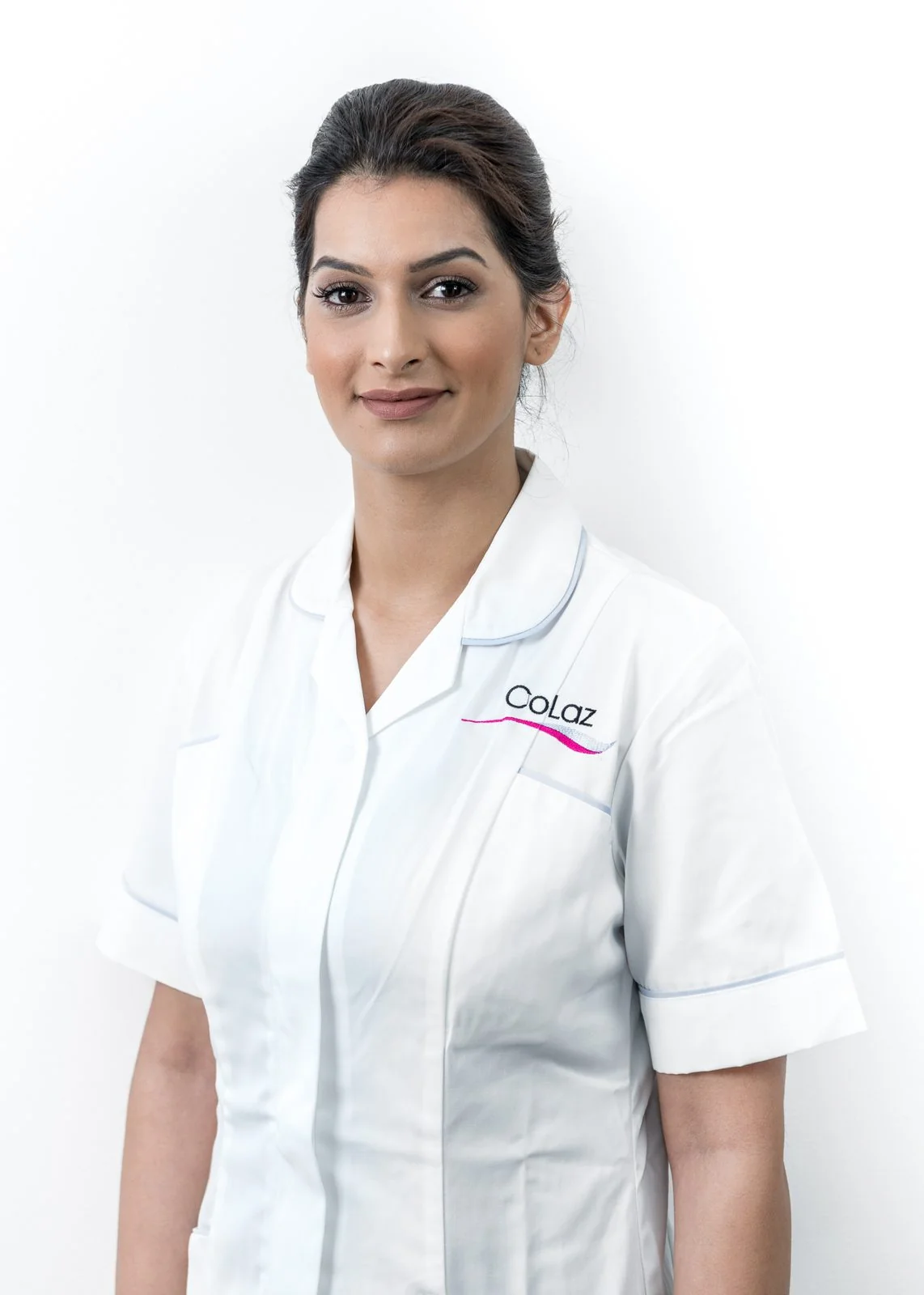 Owner, CoLaz Aesthetics Clinic

The short version
- The UK aesthetic industry is largely unregulated, so the responsibility for checking a practitioner's qualifications falls on the patient, not a government body.
- Six checks take about 60 seconds: regulator registration, JCCP or Save Face listing, Level 4 or Level 7 training, indemnity insurance, years of aesthetic-specific practice, and a named person you can reach afterwards.
- Six more things only show up in the consultation itself, including whether they Fitzpatrick-type your skin, whether they will say no, and how honestly they talk about maintenance.
- A great clinician is not the one who uses the most product or the strongest peel. It is the one who matches the treatment to what you actually want to change.
- Every CoLaz laser and IPL practitioner holds a Level 4 qualification, and every prescriber sees patients in person before any script is written.
TL;DR
- The UK aesthetic industry is largely unregulated, so checking a qualified aesthetic clinician’s credentials is down to the patient, not a government body.
- Six checks take about 60 seconds: regulator registration, JCCP or Save Face listing, Level 4 or Level 7 training, indemnity insurance, years of aesthetic-specific practice, and a named person you can reach afterwards.
- Six more things only show up in the consultation itself: skin typing, honesty about who is not a candidate, and how they talk about maintenance.
- A great clinician is not the one who uses the most product. It is the one who matches the treatment to what you actually want to change.
- Every CoLaz laser and IPL practitioner holds a Level 4 qualification, and every prescriber sees patients in person before any script is written.
Anyone can call themselves an aesthetic practitioner in the UK. There is no single licence you have to hold before you inject someone’s face or fire a laser at their skin, which means the gap between a good aesthetic clinician and a great one is not always visible from the outside. A licensing scheme has been promised for England since 2013 and is still working through implementation as of 2026.
Until it arrives, the difference between a qualified aesthetic clinician and someone who has done a weekend course sits in details most patients never think to ask about. Below is the checklist I give my own friends and family: six things you can check before you ever sit down, and six things you can only find out once you are in the room.
What makes an aesthetic clinician qualified in the UK?
A qualified aesthetic clinician holds a recognised qualification for the specific treatment they deliver, is registered with the relevant regulator, and carries current indemnity insurance for that treatment. This sounds obvious, but the three do not always come together. A nurse can be fully registered with the NMC and still hold no formal aesthetics training. A beauty therapist can hold a Level 3 qualification and still be firing a Class 4 laser that Level 3 never covered.
The JCCP splits its register into two categories: regulated healthcare practitioners with a recognised aesthetics qualification plus three years’ experience, and non-regulated practitioners with relevant training plus two years’ experience. Both routes exist, but they are not the same thing, and a patient is entitled to ask which one applies to the person about to treat them.
What can you check about a clinician in 60 seconds?
You can check six things about any clinician before you book, all from your phone. None of them need a phone call.
- Regulator status. Search their name on the NMC, GMC, GDC or GPhC register if they are a nurse, doctor, dentist or pharmacist prescriber. A non-medical practitioner should be able to name their regulator, if they have one, such as the HCPC.
- JCCP or Save Face listing. Search their name on the practitioner search or on the Save Face directory. Neither register is compulsory, so being on one is a signal the practitioner has chosen to be checked.
- The specific qualification for the treatment. A Level 4 qualification for laser and IPL, or a Level 7 diploma for injectables, not a general beauty therapy certificate.
- Current indemnity insurance for that exact treatment. Ask the question directly. A real practitioner has the policy number to hand.
- Years of aesthetic-specific practice, not years since qualifying in an unrelated field. A dentist with two years of injecting is not the same as a dentist with two years in general practice who added injectables last month.
- A named person to contact afterwards. Not a generic clinic phone line. Someone whose name is on your consultation notes.
Which regulator applies to your aesthetic clinician?
Different clinicians answer to different regulators, and knowing which one applies tells you where to complain if something goes wrong. Doctors sit with the GMC, nurses and midwives with the NMC, dentists with the GDC, and prescribing pharmacists with the GPhC. Non-prescribing practitioners such as some laser therapists may sit with the HCPC or hold no statutory regulator at all, which is exactly why the voluntary JCCP and Save Face registers exist to fill that gap. Save Face applies a 116-point assessment to the premises a clinician works from, not just a form the practitioner filled in about themselves, and it is renewed every year rather than awarded once.
This matters most for injectables. Botulinum toxin and dermal fillers are prescription medicines, and only a registered prescriber can lawfully prescribe them after seeing you in person. If a clinic offers a remote consultation where a prescriber signs off your treatment without ever examining you, that is not a minor shortcut. It fails the standard every UK medical regulator has set since 2016. Higher-risk procedures performed under general anaesthetic sit outside any clinician-training route entirely and fall under direct CQC oversight instead.

What can only a consultation reveal?
A consultation shows you six things no register or certificate can prove on paper. Documents tell you a clinician is allowed to treat you. The consultation tells you whether they should.
- Do they assess your skin type before recommending a device or wavelength? A clinician who skips Fitzpatrick typing on laser or IPL is guessing at settings that should be measured.
- Do they ask what you are actually trying to change, or do they sell what they already booked in for you? The goal comes first, then the treatment, never the other way round.
- Will they say no? A good clinician tells you when you are not a candidate, whether that is active acne under a peel, a recent filler under HIFU, or pregnancy under almost everything on our list.
- Do they give you a written plan, not a verbal quote? The JCCP Code of Practice requires registered practitioners to document sessions, spacing, product, price and maintenance on paper before you commit, not to quote it verbally at the till.
- Do they explain realistic timelines honestly? Long-term hair reduction takes six to eight sessions, dermal fillers typically last 6 to 18 months, and nobody should promise you a permanent result from a non-surgical treatment.
- Do they tell you what happens if something goes wrong? A named contact, an aftercare sheet, and a follow-up appointment built into the price, not an afterthought.
Why does aesthetic-specific training matter more than years in the industry?
Years in a related field do not automatically transfer into aesthetic skill, because the failure modes in aesthetics are specific and unforgiving. A dermatologist-reported survey found that more than half of responding dermatologists had seen patients with complications from non-surgical cosmetic procedures, with laser and light treatments and dermal fillers behind most of the cases.
The single biggest predictor of a safe laser outcome is whether the practitioner matched the wavelength to the patient’s actual skin type, not their years of general beauty experience. That is a Level 4 training question, not a length-of-career question. We see this most often with Fitzpatrick V and VI patients who were treated on the wrong wavelength elsewhere and arrive with pigment injury that never needed to happen.
How do you tell a good injector from a great one?
A good injector follows the dose chart. A great injector reads the muscle in front of them and adjusts. Most patients who ask for anti-wrinkle injections do not actually want a frozen face. They want the deep lines softened while their eyebrows still move naturally when they are surprised or annoyed. Getting that balance right is a skill question, not a units-counted question.
One patient came to us wanting the strongest possible dose after seeing a result she liked online. We slowed the consultation down, talked through how the treatment temporarily relaxes the targeted muscle rather than removing movement altogether, and agreed a moderate dose across one area. At her two-week review she was pleased that she could still raise her eyebrows. She has since settled into a three to four month cycle, and we adjust the dose slightly as her muscles respond over time. The lesson we repeat to every new anti-wrinkle injections client: more product is never the same as a better result.
How does CoLaz train its clinicians?

When I took over the CoLaz franchise network in 2023, the first change I made was rewriting the consultation script every clinic uses. Across seven locations, that consistency is what makes CoLaz a group rather than seven separate businesses. The script covers medical history, current skincare, allergies and medication, Fitzpatrick skin type, treatment goals, contraindications, the patch test requirement and pricing in plain language.
Every clinician joining CoLaz shadows a senior colleague through twenty consultations before running one alone, and every laser and IPL practitioner holds a Level 4 qualification before they touch a device on a patient. I read a sample of consultation notes every month. It is the same standard Manroop, who founded CoLaz in Slough in 2005, set for me on my first week on reception back in 2013: a good consultation is a good treatment. You can read more about that history on our about page.
What should you ask before you book?
Bring these questions to your first consultation, whichever clinic you choose:
- What qualification do you hold for this specific treatment, and how long have you been delivering it?
- Are you on the JCCP register, the Save Face register, or your statutory regulator’s register?
- What is your indemnity policy, and does it cover this treatment?
- What happens if I have a reaction or complication after I leave?
- Can I have the treatment plan in writing before I decide?
If a clinician answers all five without hesitation, that is a strong sign. If any answer is vague, ask again, or find someone else. Our companion piece on choosing a clinic covers the clinic-level checks (registers, premises, CQC status) that sit alongside the clinician-level ones above.
Every CoLaz consultation is free, and it is the same standard across all seven UK clinics, whether you are asking about laser hair removal, skin boosters or injectables. If you want to see how a qualified aesthetic clinician runs a consultation before you commit to anything, book a free consultation and bring your questions with you.
Ready to begin
Book a free Anti-Wrinkle Injections consultation at your nearest CoLaz clinic
Time with a qualified clinician: a skin assessment, an honest recommendation and no obligation. Read about Anti-Wrinkle Injections at CoLaz, from £199 (one area, qualified therapist tier).
More on Aesthetics
Keep reading
-

Aesthetic treatments in your 20s: what's worth it and what to wait on
Most of what helps your skin in your 20s costs little and happens at home. Here is an honest list of the treatments worth doing now, and the ones most people are better off waiting on. Read the article -

JCCP, Save Face and CQC: what each register actually checks
Three names come up when you try to check an aesthetic clinic, and they do three different jobs. A plain-English guide to what JCCP, Save Face and CQC each look at, what they leave out, and how to run the checks yourself. Read the article -

How much do dermal fillers cost in the UK? An honest 2026 price guide
Filler pricing in the UK swings from £150 to £600 per ml, and the gap is not random. Here is what you are actually paying for, which quotes should make you walk away, and how to price-check a clinic properly. Read the article
Book a free consultation at your nearest CoLaz clinic
Time with a qualified clinician: a skin assessment, an honest recommendation and a written plan. No obligation.