

Skin · 18 December 2025 · 8 min read
Do Smoking and Vaping Cause Premature Face Wrinkles?

By Alaiyka Parvez
Owner, CoLaz Aesthetics Clinic
The short version
- • Smoking is one of the strongest lifestyle causes of premature facial wrinkles, second only to sun exposure.
- • It works by cutting collagen production, triggering enzymes that break down existing collagen, and starving skin of oxygen through nicotine-driven blood-vessel narrowing.
- • Vaping is not a clean alternative for skin: it delivers the same nicotine that narrows blood vessels, so the ageing mechanism carries across even though long-term data is still emerging.
- • The mouth and eye areas show it first, as fine lines around the lips and crow's feet appearing earlier than expected.
- • Quitting lets blood flow and collagen recover, and in-clinic treatments can support tone, firmness and texture once you have stopped.
TL;DR
- Smoking is one of the strongest lifestyle causes of premature facial wrinkles, second only to sun exposure.
- It damages skin three ways at once: less new collagen, more of the enzymes that break existing collagen down, and less oxygen reaching the skin because nicotine narrows blood vessels.
- Vaping is not a skin-safe swap. It delivers the same nicotine that narrows blood vessels, so the ageing mechanism carries across, even though long-term skin data is still building.
- The mouth and eyes show it first, with fine lines around the lips and crow’s feet appearing earlier than expected.
- Quitting lets blood flow and collagen recover, and clinic treatments can support firmness, tone and texture once you have stopped.
If you have noticed deeper lines around your lips or crow’s feet arriving earlier than they did for your parents, smoking or vaping may be part of the reason. The short answer is yes: cigarette smoking is a well-documented, independent cause of premature facial wrinkles, and vaping shares the same nicotine mechanism that drives much of the damage. Below is how it happens at skin level, which areas show it first, and what genuinely helps once you decide to stop.
Does smoking really cause facial wrinkles?
Yes, smoking is an established, independent cause of premature facial wrinkling, separate from age and sun exposure. Large epidemiological studies have shown that tobacco smoking is a strong independent predictor of facial wrinkle formation and other signs of early skin ageing, and that the effect stacks on top of sun damage rather than replacing it.
This is why dermatologists describe a recognisable pattern sometimes called smoker’s face. The American Academy of Dermatology lists smoking among the everyday habits that speed up how quickly skin ages, producing a dull, uneven complexion, loss of firmness and early lines. A cross-sectional study found that active smokers had measurably worse skin quality, with more wrinkles, spots and pigmentation, and that skin quality declined further as the number of cigarettes and years of smoking rose.
The damage is not only cosmetic. Smoking also slows wound healing and makes several skin conditions harder to manage, which matters if you are considering any in-clinic treatment.
How does smoking break down collagen and elastin?
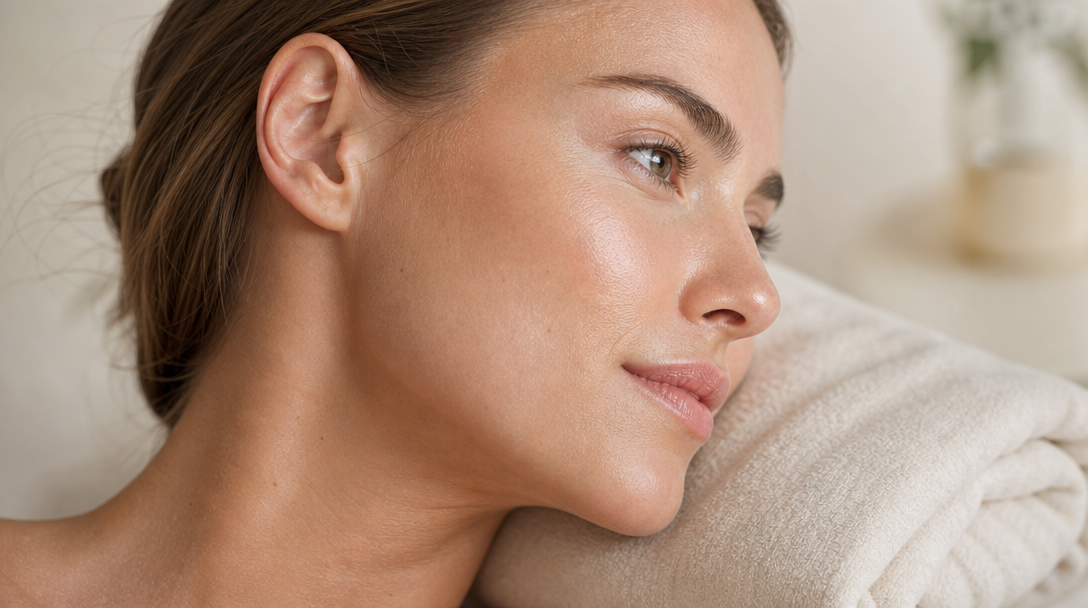
Smoking attacks the skin’s support structure on two fronts at once: it slows the production of new collagen while speeding up the breakdown of the collagen you already have. Collagen is the protein framework that keeps skin firm, and elastin is the fibre that lets it spring back, so losing both is what turns smooth skin lined.
Research on human skin has shown that smoking reduces the synthesis of type I and type III collagen and shifts the whole balance of the skin’s connective-tissue turnover. At the same time, smokers’ skin contains more of an enzyme called matrix metalloproteinase-1 (MMP-1). A study in The Lancet found significantly more MMP-1 activity in the skin of smokers, and MMP-1 is the enzyme that actively cuts collagen fibres apart.
Elastin suffers too. Laboratory work on tobacco smoke extract shows it drives abnormal production of elastin material and raises MMP levels that degrade the dermal matrix, leaving the skin’s stretch-and-recoil fibres disorganised. As elastin quality falls, lines that once moved only when you made an expression start to sit in the skin even at rest. If early lines and laxity are already your main concern, our ageing skin guide sets out the treatment options in more detail.
Does vaping age your skin too?
Vaping is not a clean alternative for your skin, because the ingredient most responsible for the ageing effect, nicotine, is still present. The aerosol from an e-cigarette is not the same chemical mix as cigarette smoke, but the nicotine that narrows blood vessels and reduces oxygen delivery to skin is common to both.
It is worth being honest about the state of the evidence. The strongest, longest-running data on wrinkles comes from studies of cigarette smokers, because vaping is far newer. What researchers can say now is that the mechanism carries across: a cross-sectional study that looked at tobacco and other nicotine-product users found poorer self-reported skin quality among users, and early laboratory signals point to increased inflammation and reduced moisture retention in the skin of vape users.
So the fair conclusion is this: swapping cigarettes for a vape may reduce some exposures, but it does not give you skin that behaves like a non-user’s. If your goal is to protect your face from early ageing, nicotine in any form works against you.
Why does nicotine starve your skin of oxygen?
Nicotine narrows the small blood vessels that feed your skin, so less oxygen and fewer nutrients reach the cells that build and repair collagen. This is called vasoconstriction, and it is the reason a heavy smoker’s skin can look pale, grey or dull.
Direct studies of human skin vessels confirm the effect. Work measuring nicotine’s effect on the skin’s blood supply found it amplifies vessel narrowing and impairs the skin’s ability to relax those vessels again, which chokes off healthy blood flow at the surface. Your dermis, the living layer that holds collagen and elastin, depends on that steady supply. When it drops, the skin’s natural repair slows, wounds heal more slowly, and delivery of the nutrients collagen production needs falls with it.
Over years, this quiet oxygen shortage compounds. A study of skin elasticity in smokers linked poorer skin elasticity to markers of inflammation and to the same enzyme activity that breaks matrix proteins down, tying the vascular damage and the structural damage together.
Which areas of the face show it first?

The mouth and eyes usually show smoking-related ageing first, because those areas combine thin skin with repeated muscle movement. Fine lines around the lips, from the pursing action of drawing on a cigarette or vape, and crow’s feet at the outer eyes tend to appear earlier and set deeper than expected.
The American Academy of Dermatology notes that this pattern of early lines, dullness and loss of firmness is a recognised consequence of smoking. Two things drive the mouth and eye pattern specifically:
- Repeated movement. The lips and outer eyes crease with the same expressions thousands of times. Where the underlying collagen and elastin are already weakened, those creases become fixed sooner.
- Thin skin, poor supply. These areas have some of the thinnest facial skin and rely heavily on good microcirculation, which nicotine reduces first.
Because so much of the change is about lost volume, laxity and etched lines rather than surface texture alone, the treatments that help are the ones that rebuild support in the deeper layers.
What happens to your skin when you quit?
When you stop, blood flow to the skin recovers within days, which is the first visible improvement most people notice. The NHS points out that after quitting, more oxygen reaches your skin, making it brighter, and that stopping halts the ongoing damage rather than just slowing it.
Over the following weeks and months, the deeper repair begins. As the constant chemical load lifts, the skin’s collagen machinery is no longer being actively suppressed and degraded, so the balance can start to tip back toward building rather than breaking down. The NHS describes how stopping smoking supports better overall health that shows in your appearance, and your GP or pharmacist can help with a free quit plan, patches or other support.
Quitting will not erase lines that are already set, and it is fair to be realistic about that. What it does is stop the clock speeding up, give your skin back its oxygen supply, and create the conditions in which any treatment you choose can actually work.
How CoLaz supports smoke-affected, ageing skin
Once you have stopped, or are on the way, the right in-clinic treatments can help rebuild firmness and smooth early lines that lifestyle changes alone cannot reach. At CoLaz we plan this around your skin, not a fixed package, starting with a proper look at what is texture, what is volume loss and what is set lines.
For overall quality, hydration and elasticity in skin that has lost its bounce, injectable skin remodellers such as Profhilo work in the deeper layers to support the skin’s own collagen and elastin. For texture, tone and stimulating fresh collagen across the face, microneedling is a mainstay. For the specific mouth and eye lines that smoking sets early, anti-wrinkle injections soften the repeated muscle movement that deepens them. Many patients do best with a combination, sequenced over time.
Every plan at CoLaz starts with a free consultation across our seven UK clinics, where a qualified clinician assesses your skin honestly and tells you what will and will not help. If you are ready to see what a realistic plan looks like for your skin, book a free consultation at your nearest clinic and we will build it with you.
Ready to begin
Book a free Profhilo consultation at your nearest CoLaz clinic.
Thirty minutes with a qualified clinician. Skin assessment, candid recommendation, no obligation.
Reply within one working day
About the author
Alaiyka Parvez
Owner, CoLaz Aesthetics Clinic
Alaiyka Parvez bought the CoLaz franchise network in 2023, having joined the company as a Slough clinic employee in 2013 and gone on to open the Hounslow and Wembley franchises. She writes here on the treatments CoLaz delivers across its seven UK clinics.
Read more about Alaiyka and CoLaz →More on Skin
Keep reading.

11 August 2026 · 10 min
HIFU treatment results: month by month, what is realistic
HIFU tightens skin gradually rather than instantly. Here is the honest month-by-month results timeline, how long the effect lasts, and who is a good candidate.

28 July 2026 · 10 min
Types of chemical peels: glycolic, salicylic, TCA and Jessner explained
Glycolic for dull and sun-damaged skin, salicylic for oily and acne-prone, lactic for sensitive, mandelic for pigmentation in deeper skin tones, TCA for resurfacing with downtime. A clear decision guide to the main types of chemical peels.

14 July 2026 · 7 min
Microneedling aftercare day by day: the realistic 7-day timeline
What to expect after microneedling, day by day, plus the simple aftercare that protects your skin and your results across the first week.
Begin
Book a free consultation
at your nearest CoLaz clinic.
Thirty minutes with a qualified clinician. Skin assessment, candid recommendation, written plan. No obligation.
Book a free consultation