
Hair removal · 15 November 2025 · 8 min read
Laser Hair Removal Paradoxical Hypertrichosis: 5 Factors
By Alayika Parvez
Owner, CoLaz Aesthetics Clinic
The short version
- • Paradoxical hypertrichosis is a rare reaction where hair grows thicker or darker near a treated area instead of reducing after laser hair removal.
- • Pooled research puts it at roughly 3 in 100 cases overall, and it clusters on the face and neck rather than the body.
- • The five main factors are hormones (such as PCOS), skin tone, the wavelength and settings used, treating fine or borderline hair, and skipping sun protection.
- • It is usually manageable: careful reassessment, correct laser choice and settings, sun protection, and in some cases a GP-prescribed cream for facial hair.
- • At CoLaz, every laser course starts with a free consultation and a patch test, delivered by Level 4 qualified clinicians who match the device to your skin and hair.
Laser hair removal is one of the most reliable ways to get long-term hair reduction, so it can be unsettling to hear that, on rare occasions, it does the opposite. Paradoxical hypertrichosis is that rare reaction: instead of thinning the hair, the laser appears to stimulate new growth, usually as finer or darker hairs near the treated area on the face or neck. It is uncommon, it is manageable, and understanding why it happens is the best way to avoid it.
Below is a plain, evidence-led look at what paradoxical hypertrichosis is, the five factors that drive it, who is most at risk, and how a careful laser hair removal plan keeps the odds low.
What is paradoxical hypertrichosis?
Paradoxical hypertrichosis is an increase in hair growth in or around an area that has been treated with laser or intense pulsed light for hair removal. Rather than reducing the hair, the treatment seems to trigger new or thicker growth, often described by patients as darker, coarser hairs appearing near the treated zone.
The effect is well recognised in dermatology, even though it is rare. A systematic review and meta-analysis found the reaction is strongly associated with the face and neck, and far less common on the body. The exact biology is still debated. One research review describes the two leading theories: laser energy may wake up dormant follicles, and it may push a batch of follicles into their active growth phase at the same time. A more recent clinical study suggests that laser energy below the level needed to destroy a follicle can instead cause low-grade inflammation, which may release growth signals that encourage fine hair to develop.
Two points matter here. First, this is not the treatment failing to work in the normal sense. It is a specific, named reaction. Second, it is not a sign that something has gone badly wrong: it is a known possibility that a trained clinician screens for and plans around.
How common is paradoxical hypertrichosis after laser?
It is rare. Pooled data across studies puts the overall rate at roughly 3 in 100 cases, and lower still on the body.
The numbers vary because the studies measure different groups. The meta-analysis reported a pooled prevalence of about 3 percent, with the face and neck carrying nearly all of the risk and non-facial areas affected in well under 1 percent of cases. An early alexandrite study found the reaction in only 3 of 489 patients, about 0.6 percent, with a trend towards darker skin phototypes and black hair. A large 2024 clinic review of 7,381 patients recorded it in just 0.34 percent.
So the honest headline is that most people will never experience this. The point of talking about it openly is not to alarm you: it is to explain why device choice, settings and a proper consultation genuinely matter.
What causes it? The 5 factors
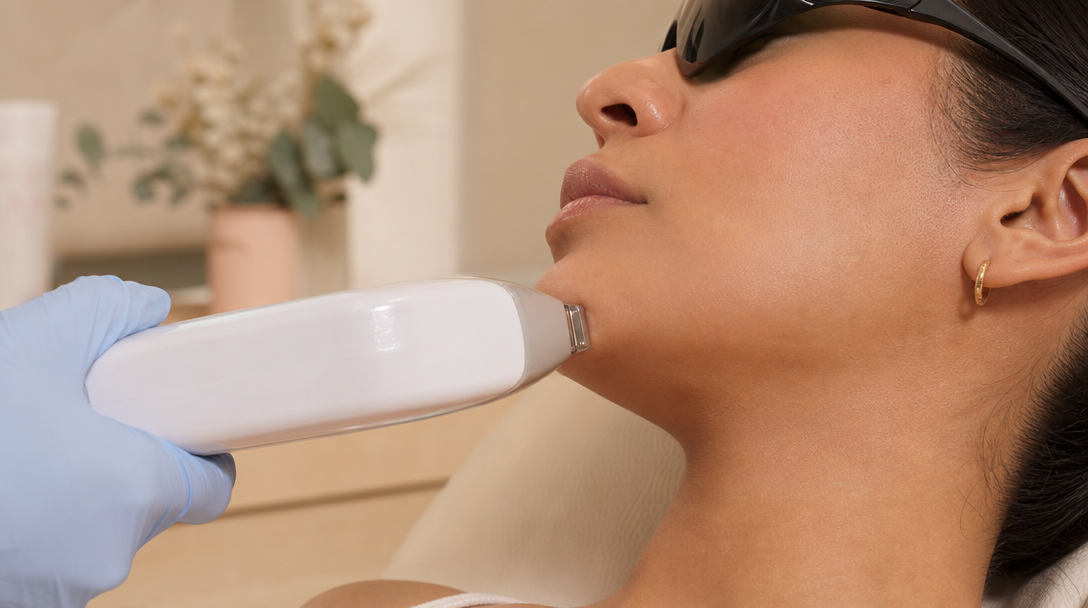
Paradoxical hypertrichosis is driven by a small set of overlapping factors, and most of them can be assessed before your first session. Here are the five that the research keeps pointing to.
1. Hormones. Conditions that already push the body towards extra hair growth raise the risk. A 2025 predictors study of facial laser found that polycystic ovary syndrome (PCOS) and menstrual irregularities were among the strongest links. If hormones are driving hair growth on the chin, jaw or upper lip, the underlying condition needs to be part of the plan. Our guide to chin hair after waxing explains that hormonal pattern in more detail.
2. Skin tone. Some studies report a higher rate in medium to darker skin tones (Fitzpatrick III to VI), where more pigment in the skin absorbs laser energy. This is not consistent across every study, and the large 2024 clinic review found no significant link with skin type once other factors were accounted for. What it does mean is that darker skin needs the right wavelength, which is a settings question, not a reason to avoid treatment.
3. Wavelength and settings. The device and energy level used appear to matter a great deal. In the 2024 review, 24 of 25 cases occurred with an alexandrite laser rather than a diode laser used in a gradual-heating mode. The likely reason is that energy set too low warms a follicle without destroying it, which is exactly the sub-threshold effect thought to trigger fine new growth.
4. Treating fine or borderline hair. Laser targets the pigment in a hair. Fine, light or downy hairs hold little pigment, so they may be warmed rather than cleared, which can stimulate rather than reduce them. For genuinely fine, white, grey or blonde hair, electrolysis is the more suitable route because it does not rely on pigment at all.
5. Sun exposure. Skipping sun protection is a recurring risk factor. In the 2024 clinic review, daily sun protection had the single strongest protective effect, roughly halving the odds independently of skin colour. A fresh tan also changes how the skin absorbs laser energy, which is why any reputable clinic reschedules tanned skin.
Who is most at risk?
The highest-risk profile is someone treating hormonal facial hair, on the face or neck, with a device or settings that are not well matched to their skin and hair.
Beyond hormones and location, a couple of patterns are worth knowing. A 2025 study on gender disparities found that men appeared to be at higher risk than women in their sample, which is a reminder that this is not only a concern for female patients. The American Academy of Dermatology also stresses that outcomes depend heavily on the training of the person holding the device and on matching the laser to the individual.
None of these factors is a hard stop on its own. They are the things a clinician weighs up at consultation to decide whether laser is right for you, which device to use, and where to start conservatively.
How is it managed and reversed?
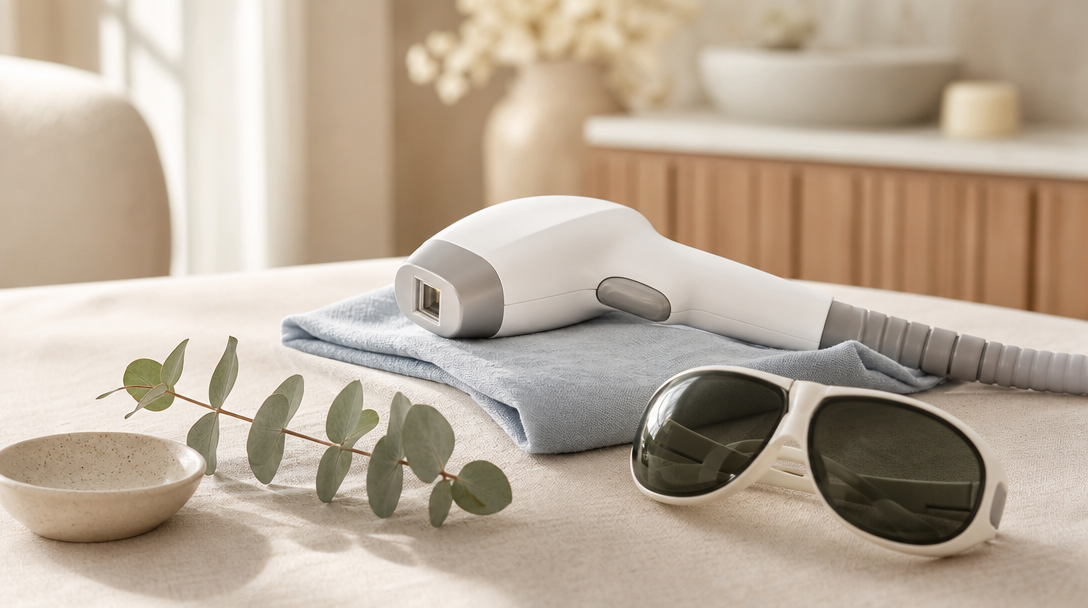
Paradoxical hypertrichosis is usually manageable, and in many cases it settles rather than getting steadily worse. The response is tailored to the person, not applied from a template.
Management typically involves several steps. The clinician reassesses the device, wavelength and energy, since under-powered settings are a common thread. Where laser continues, it is delivered with correctly matched parameters aimed at properly treating the newly stimulated hair. Sun protection is reinforced, given how consistently it shows up as protective in the data. Any hormonal driver is investigated: for facial hair linked to PCOS, the NHS lists options including a GP-prescribed cream (eflornithine) that slows facial hair growth, and medicines such as spironolactone, used alongside hair-removal methods.
There is also reassurance in the longer view. A long-term follow-up of an affected patient found that, a decade on, the paradoxical growth was noticeably sparser than it had been immediately after treatment, though still denser than before. In other words, this is generally a temporary and improvable reaction, not a permanent change, especially when it is spotted early and handled by someone who understands the mechanism.
How does CoLaz reduce the risk?
At CoLaz, the whole point of our two-step start is to catch the factors above before they become a problem. Every new laser patient begins with a free consultation and a patch test 48 hours before the first session, and we confirm the plan in writing only after that patch test.
Here is how that maps onto the risk factors:
- Screening for hormonal drivers. At consultation we take a full medical history, including anything that points to a hormonal cause of facial or neck hair, so the plan reflects it from day one.
- Matching the device to your skin. We use both alexandrite (755 nm) and long-pulsed Nd:YAG (1064 nm) systems, chosen by Fitzpatrick skin type, so darker skin is treated on the appropriate wavelength rather than a one-size setting.
- Correct energy, not under-powered settings. The patch test lets us confirm a proper therapeutic response on a small area first, which is exactly the step that guards against the sub-threshold warming linked to this reaction.
- Honest advice about hair type. If your hair is genuinely fine, white or grey, we will say so and recommend electrolysis instead of pushing ahead with laser.
- Sun-protection guidance and rescheduling. We ask you to protect the area and we will move an appointment rather than treat freshly tanned skin.
Every laser at CoLaz is run by a clinician who holds a Level 4 qualification in laser and IPL treatments, the Ofqual-regulated UK standard for this work.
Should this put you off laser hair removal?
No. Paradoxical hypertrichosis is a rare and largely preventable reaction, and it should inform how you choose a clinic rather than whether you have laser at all.
The single most useful thing you can do is choose a provider properly. UK cosmetic practice is moving towards tighter oversight, and a recent House of Commons briefing sets out plans for a licensing scheme for non-surgical procedures in England. For now, the practical safeguard is to use a clinician on a recognised register such as the JCCP, which is accredited by the Professional Standards Authority. A clinic that assesses your hormones, skin tone and hair type, patch tests before treating, and matches the right device to you is a clinic set up to avoid this reaction in the first place.
If you would like a clear, honest assessment of whether laser hair removal is right for your skin and hair, book a free consultation at your nearest CoLaz clinic and we will plan it with you.
Ready to begin
Book a free Laser Hair Removal consultation at your nearest CoLaz clinic.
Thirty minutes with a qualified clinician. Skin assessment, candid recommendation, no obligation. Read about Laser Hair Removal at CoLaz, from £30 (upper lip, single session).
WhatsApp replies in minutes during opening hours
About the author
Alayika Parvez
Owner, CoLaz Aesthetics Clinic
Alaiyka Parvez bought the CoLaz franchise network in 2023, having joined the company as a Slough clinic employee in 2013 and gone on to open the Hounslow and Wembley franchises. She writes here on the treatments CoLaz delivers across its seven UK clinics.
Read more about Alaiyka and CoLaz →More on Hair removal
Keep reading.

2 September 2026 · 12 min
Is laser hair removal safe on dark skin? What the evidence says
Laser hair removal on dark skin works, but only when the wavelength matches your skin type. Here is the science behind why melanin matters, which lasers suit Fitzpatrick V and VI, and the questions to ask before you book.
1 July 2026 · 7 min
IPL vs laser hair removal: why the device you choose matters
The real difference between IPL and laser hair removal, why it changes your results and safety, and how CoLaz matches the right device to your skin and hair.

25 June 2026 · 8 min
Laser hair removal on the face: what women should know before booking
What women should know before booking facial laser hair removal: realistic session counts, the hormone link, matching the laser to your skin tone, and sun protection.
Begin
Book a free consultation
at your nearest CoLaz clinic.
Thirty minutes with a qualified clinician. Skin assessment, candid recommendation, written plan. No obligation.