
Hair removal · 17 November 2025 · 8 min read
Laser Hair Removal and Autoimmune Disorders: A Safety Guide

By Alayika Parvez
Owner, CoLaz Aesthetics Clinic
The short version
- • An autoimmune disorder does not automatically rule out laser hair removal, but it does mean you need clearance from the clinician who manages your condition first.
- • A small 2024 study found monthly alexandrite laser hair removal did not worsen lupus disease activity, because the laser uses red and infrared light rather than the UV light that triggers lupus flares.
- • Vitiligo is the highest-caution group, because trauma to the skin can spread depigmentation through the Koebner phenomenon.
- • Steroids and immunosuppressant medicines can thin the skin and slow healing, so settings, spacing and aftercare are adjusted accordingly.
- • At CoLaz, every autoimmune patient starts with a free consultation, a patch test and a written plan, never a fixed package sold on day one.
Living with an autoimmune condition can make any treatment that affects the skin feel like a gamble. Laser hair removal is popular because it offers lasting reduction, but if your immune system already reacts strongly to inflammation, it is fair to wonder whether the heat and light could set off a flare.
The short answer is that an autoimmune disorder does not automatically rule out laser hair removal, but it does change how carefully the treatment has to be planned. With clearance from the clinician who manages your condition, a patch test and adjusted settings, many autoimmune patients tolerate laser well. A few conditions call for real caution, and one or two call for a different method entirely.
Can you have laser hair removal with an autoimmune disorder?
Often yes, but only with medical clearance and a stable condition, and never as a walk-in decision. The heat from the laser targets pigment in the hair follicle, not your immune system, so for most autoimmune patients the treatment itself is not the main risk. The risk sits in how fragile the skin is, how well it heals, and whether your condition is flaring.
Before you book anything, speak to the specialist who looks after your condition, usually a rheumatologist or dermatologist. Disease activity and the medicines you take both change how skin reacts to heat and light and how quickly it recovers afterwards. A good clinic will ask for that clearance rather than treat around it.
It also matters that laser hair removal is understood correctly. Laser targets melanin in the hair, converting light into heat that damages the follicle, so the effect is long-term hair reduction built up over a course rather than one single treatment. That distinction matters for anyone with fragile skin, because it means several gentle sessions, not one aggressive appointment.
How do autoimmune disorders affect the skin?
Autoimmune disorders cause the immune system to attack the body’s own tissues, and that long-running inflammation often leaves the skin more fragile and slower to heal. Conditions such as lupus, rheumatoid arthritis, scleroderma, Sjögren’s syndrome, inflammatory bowel disease and vitiligo can all change how skin behaves, even between flares.
The common threads that matter for laser hair removal are:
- Thin or fragile skin, sometimes made thinner by long-term steroid use
- Delayed healing after even minor injury
- A skin barrier that is easier to disrupt
- A higher tendency to inflammation and, in some cases, infection
- Photosensitivity, where light triggers a reaction
Because laser hair removal uses controlled heat, and because some autoimmune skin reacts more strongly to any trigger, a personalised assessment is not a formality. It is the part of the process that keeps the treatment safe.
What does the research say about laser safety for autoimmune patients?
The strongest evidence so far comes from lupus, and it is reassuring. A 2024 study followed 20 patients with systemic lupus erythematosus (SLE) through six monthly sessions of alexandrite laser hair removal, tracking disease-activity scores (SLEDAI-2K), anti-double-stranded-DNA antibodies and complement levels (C3, C4) before and after the course.
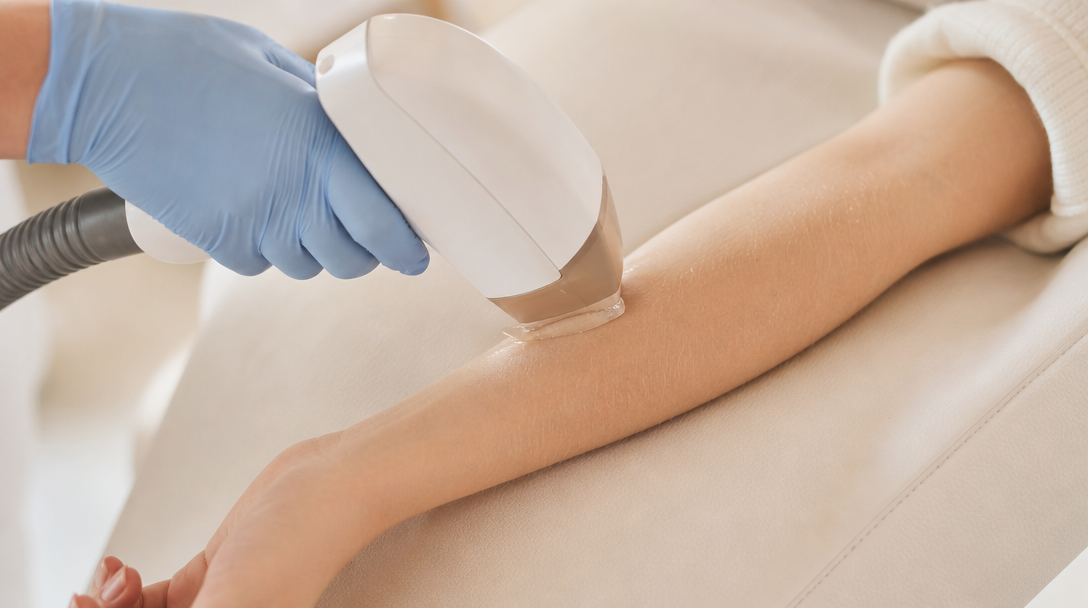
The researchers found no meaningful change in lupus activity, no flares, and no negative shift in the blood markers, with only mild redness and short-lived discomfort reported. Their explanation is the important part: laser hair removal uses red and infrared light, not the ultraviolet light that is known to drive lupus reactions. Since UV exposure is a recognised trigger for lupus flares, and since 40 to 70 percent of people with lupus are photosensitive, the wavelength the laser uses genuinely matters.
For most other autoimmune conditions there is far less published research, and much of what clinicians rely on comes from case reports and individual outcomes. That is exactly why caution and clearance stay in place: a good tolerance record is encouraging, but it is not a substitute for a specialist reviewing your particular case.
Which autoimmune conditions are suitable for laser hair removal?
Autoimmune conditions vary widely, and so does how well they sit with laser hair removal. Here is how the evidence and everyday clinical experience tend to line up, condition by condition.
Systemic lupus erythematosus (SLE). Generally treatable when the disease is stable, the skin type is suitable and correct settings are used. The 2024 study saw no flares, including in patients taking common lupus medicines. Active facial rashes are avoided, and photosensitivity is assessed first.
Rheumatoid arthritis. There is little direct research, but most patients do well when the skin over the treated area is not inflamed. Immunosuppressant medicines can slow healing and long-term steroids can thin the skin, so longer gaps between sessions are sometimes sensible.
Scleroderma (systemic sclerosis). This calls for the most caution. Scleroderma involves skin thickening and fibrosis driven by excess collagen, so healing can be unpredictable and there is a theoretical concern about aggravating fibrotic skin. Clearance from a rheumatologist and a dermatologist is essential before considering treatment.
Sjögren’s syndrome. Usually considered manageable, because the condition does not directly target the hair follicle or skin pigment. Dry skin is common, so extra moisturising and gentle aftercare help.
Inflammatory bowel disease (Crohn’s, ulcerative colitis). This does not typically cause autoimmune skin damage, so laser is an option for many people. Steroid medication may delay healing, so treated areas are monitored closely.
Vitiligo. This is the highest-caution group. Trauma to the skin can trigger new depigmented patches through the Koebner phenomenon, so active patches are not treated and only unaffected skin is ever considered.
Alopecia areata. Because this condition causes autoimmune hair loss, laser is not needed on the affected areas, and any treatment elsewhere is entirely optional.
What are the risks and possible complications?
The main risk for autoimmune patients is that already-vulnerable skin reacts more strongly than average skin, not that the laser attacks the immune system. Because the skin barrier and healing response can be compromised, the reactions that any laser patient might see are more likely and can last a little longer.
Possible issues to be aware of include:
- Delayed healing after a session
- Redness or swelling that lingers longer than usual
- Photosensitivity reactions in conditions such as lupus
- A higher infection risk where healing is slow
- Temporary changes in pigmentation
Vitiligo deserves a specific mention. The Koebner phenomenon, where new lesions appear at sites of skin trauma such as burns or cuts, occurs in a meaningful share of vitiligo patients, and there are reports of laser or IPL triggering new white patches. Reassuringly, one review found laser or IPL-induced depigmentation in only around 0.27 percent of vitiligo patients, so it is uncommon, but it is the reason active patches are left well alone. The British Association of Dermatologists notes that repeated trauma to the skin can set off new areas of vitiligo in some people.
How should autoimmune patients prepare for laser hair removal?
Preparation for autoimmune patients is more thorough than a standard course, and that extra care is what makes treatment predictable. A detailed health review comes before any laser touches the skin.
Sensible steps to expect include:
- Written clearance from your dermatologist or rheumatologist, or both
- Confirmation that your condition is currently stable rather than flaring
- A full list of your medicines, especially steroids and biologics, because corticosteroids can slow wound healing and thin the skin
- No treatment over active rashes, lesions or affected vitiligo patches
- A mandatory patch test to see how your skin actually responds
- An honest assessment of photosensitivity before the first full session
- Gentler laser settings and wider spacing chosen for fragile skin
8 safety tips for laser hair removal with an autoimmune disorder
If you are weighing up laser hair removal and you live with an autoimmune condition, these eight points cover the ground that keeps treatment safe.
- Get medical clearance first. Ask the specialist who manages your condition before you book, and treat their answer as the deciding factor.
- Only treat when your condition is stable. Postpone during a flare, when skin is more reactive and slower to heal.
- Share every medication. Steroids, biologics and other immunosuppressants change how skin heals and should shape your settings.
- Insist on a patch test. A test patch a few days before your first session shows how your skin responds before any large area is treated.
- Never treat active skin. Rashes, open lesions and active vitiligo patches are left alone, full stop.
- Expect gentler settings and wider spacing. Fragile skin usually needs a more conservative approach and a longer course.
- Protect against light. Photosensitive conditions call for daily SPF and strict sun avoidance around each session.
- Follow aftercare closely. Keep the area cool, moisturised and out of the sun, and report anything unusual quickly so it can be reviewed.
For hair that laser cannot treat safely, such as very fine or unpigmented hair, or on skin where laser is not advised, electrolysis is often the better route because it does not rely on pigment or the same heat load.
How does CoLaz approach laser hair removal for autoimmune patients?
Every autoimmune patient at CoLaz starts the same way: a free consultation, a full medical review, a patch test and a written plan, with nothing sold on day one. We would rather ask for your specialist’s clearance and adjust the plan around your condition than treat around it.
That approach is partly about standards. The UK aesthetic sector is guided by the JCCP register and the Save Face accreditation scheme, both recognised by the Professional Standards Authority, and our clinicians work to those expectations. It is also about honesty: if laser is not the right or safe choice for your skin, we will tell you, and we will suggest an alternative rather than push ahead.
The number of sessions and the spacing are always confirmed after the patch test, in line with how we plan a standard course of sessions, just with more caution built in. If you would like to know whether laser hair removal is suitable for your condition, book a free consultation at your nearest CoLaz clinic and bring your specialist’s advice with you, and we will plan it together.
Ready to begin
Book a free Laser Hair Removal consultation at your nearest CoLaz clinic.
Thirty minutes with a qualified clinician. Skin assessment, candid recommendation, no obligation. Read about Laser Hair Removal at CoLaz, from £30 (upper lip, single session).
WhatsApp replies in minutes during opening hours
About the author
Alayika Parvez
Owner, CoLaz Aesthetics Clinic
Alaiyka Parvez bought the CoLaz franchise network in 2023, having joined the company as a Slough clinic employee in 2013 and gone on to open the Hounslow and Wembley franchises. She writes here on the treatments CoLaz delivers across its seven UK clinics.
Read more about Alaiyka and CoLaz →More on Hair removal
Keep reading.

2 September 2026 · 12 min
Is laser hair removal safe on dark skin? What the evidence says
Laser hair removal on dark skin works, but only when the wavelength matches your skin type. Here is the science behind why melanin matters, which lasers suit Fitzpatrick V and VI, and the questions to ask before you book.
1 July 2026 · 7 min
IPL vs laser hair removal: why the device you choose matters
The real difference between IPL and laser hair removal, why it changes your results and safety, and how CoLaz matches the right device to your skin and hair.

25 June 2026 · 8 min
Laser hair removal on the face: what women should know before booking
What women should know before booking facial laser hair removal: realistic session counts, the hormone link, matching the laser to your skin tone, and sun protection.
Begin
Book a free consultation
at your nearest CoLaz clinic.
Thirty minutes with a qualified clinician. Skin assessment, candid recommendation, written plan. No obligation.