
Hair removal · 3 March 2025 · 7 min read
Can You Wear Makeup After Laser Hair Removal?
By Alaiyka Parvez
Owner, CoLaz Aesthetics Clinic
The short version
- • Yes, you can wear makeup after laser hair removal, but wait at least 24 to 48 hours so the treated skin can settle.
- • Right after a session the skin is red, warm and slightly swollen, and its natural barrier is briefly weaker, so early makeup can clog pores or trigger folliculitis.
- • If your skin still feels sensitive, extend the wait to 72 hours, and hold off on heavy full-coverage products for a few days.
- • When you do go back to makeup, choose non-comedogenic, fragrance-free, mineral-based formulas and apply them with clean brushes.
- • At CoLaz, every laser course starts with a free consultation and patch test, and you leave with written aftercare so you know exactly when makeup is safe again.
Yes, you can wear makeup after laser hair removal, but not straight away. The safe rule is to wait at least 24 to 48 hours before putting anything on the treated area, because the skin is briefly red, warm and more reactive than usual. Rush it, and you risk clogged pores, breakouts or a longer patch of redness. Wait the right amount of time and pick the right products, and you can cover up without setting your results back.
Below is exactly when makeup is safe again after laser hair removal, which formulas to reach for, what to avoid in the first day or two, and how the team plans your aftercare at CoLaz.
Can you wear makeup after laser hair removal?
Yes, makeup is fine after laser hair removal once the skin has calmed down, which usually means waiting a day or two rather than applying it the same afternoon. The laser leaves the treated area slightly inflamed, so covering it too soon can trap heat and bacteria against skin that is still recovering.
This matters most for facial treatments such as the upper lip, chin and jawline, where people are keen to get back to their usual routine quickly. The NHS advises that laser hair removal is a cosmetic procedure that should be carried out by a suitably qualified practitioner who gives you clear aftercare, and the makeup timeline is part of that aftercare. When in doubt, follow the written instructions your own clinic gives you, because they know the exact settings used on your skin.
How long should you wait before applying makeup?
Wait a minimum of 24 to 48 hours, and up to 72 hours if your skin still feels sensitive or looks pink. This gives the redness and mild swelling time to settle before anything sits on top of the skin.
Guidance from the Leeds Teaching Hospitals NHS Trust describes the treated area as looking a little red and swollen for a short period after each session, similar to mild sunburn. NHS patient leaflets, including one from Sandwell and West Birmingham, advise avoiding make-up on the treated skin for around 48 hours to prevent rubbing and friction while it recovers. A few practical pointers:
- Face: aim for 48 hours before foundation, concealer or powder goes near the treated area.
- Body areas covered by clothing: the timing matters less for makeup, but the same heat and friction rules apply.
- Still pink or tender at 48 hours: give it another day. There is no prize for rushing.
- Use a cool compress, not makeup, if you want to calm redness in the first day.
What happens if you apply makeup too soon?
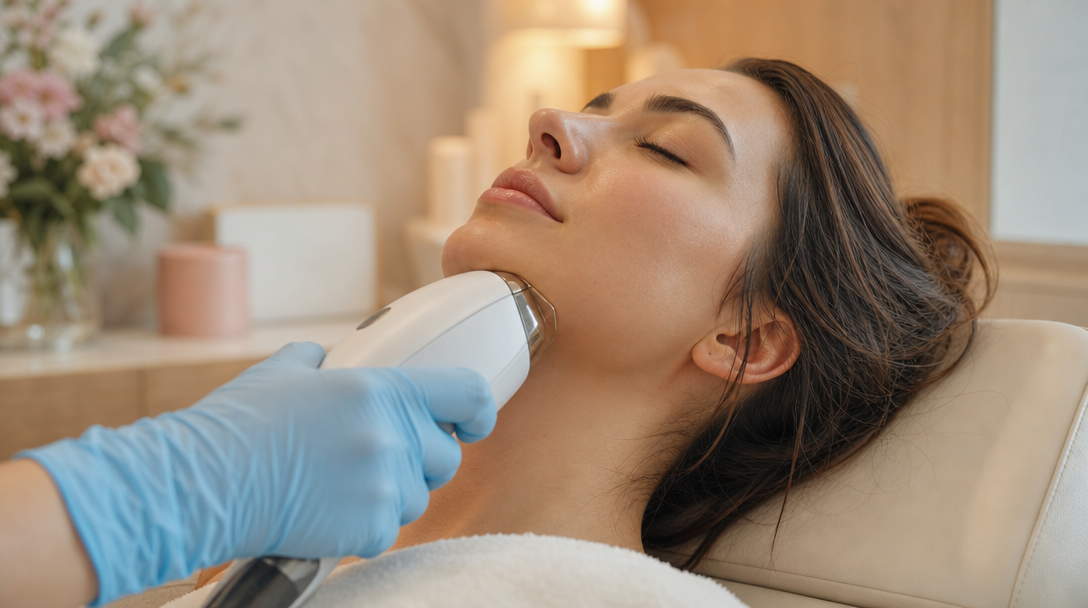
Applying makeup too soon can clog freshly treated pores, introduce bacteria and prolong the redness you are trying to hide. The skin barrier is briefly weaker after treatment, so it is less able to cope with heavy products and old, unwashed brushes.
Three things can go wrong when makeup goes on too early:
- Clogged pores and breakouts. Heavy or oil-rich foundation can block follicles that are already irritated, which is one of the habits dermatologists link to worse acne on reactive skin.
- Folliculitis. Laser treatment can occasionally inflame the hair follicles, and research on laser-induced folliculitis notes it as a recognised, usually short-lived side effect. Trapping bacteria under makeup does not help.
- Longer-lasting redness or pigment change. Transient redness and mild swelling around the follicles are expected side effects of laser hair removal, and irritating the area further can drag them out, particularly on deeper skin tones prone to post-inflammatory pigmentation.
None of this is a reason to worry about laser itself. It is simply why the short wait exists.
Why is your skin more sensitive right after treatment?
Your skin is more sensitive because the laser deliberately heats the hair follicles, which leaves the surrounding skin briefly inflamed. Clinicians actually look for this mild reaction as a sign the treatment reached the follicle.
Medical references describe the ideal end point of a laser session as perifollicular oedema and erythema, which in plain terms means slight swelling and redness around each treated follicle. The American Academy of Dermatology compares the immediate effect to a mild sunburn and suggests a cool compress for comfort. While that reaction is present, the skin barrier is doing repair work, so it is more reactive to fragrance, preservatives and physical rubbing than usual. Giving it a day or two to reset is what keeps your results and your comfort on track.
Which makeup is safest once your skin has healed?
Once the 24 to 48 hour window has passed, the safest choice is a lightweight, non-comedogenic, fragrance-free formula that lets the skin keep breathing. Mineral-based makeup is a sensible default because it tends to be lighter and less likely to clog pores.
Look for these labels and features:
- Non-comedogenic: designed not to block pores, which the AAD recommends for anyone prone to congestion.
- Fragrance-free rather than “unscented”: genuine fragrance-free products are less likely to irritate recovering skin.
- Mineral or lightweight formulas: breathable coverage beats a heavy, occlusive layer while the skin settles.
What to skip for the first few days:
- Heavy, full-coverage liquid foundations that sit thickly on the skin.
- Oil-rich or long-wear “transfer-proof” formulas that are harder to remove.
- Talc-heavy powders and anything with active exfoliating acids or strong fragrance.
How should you apply and remove makeup after laser?
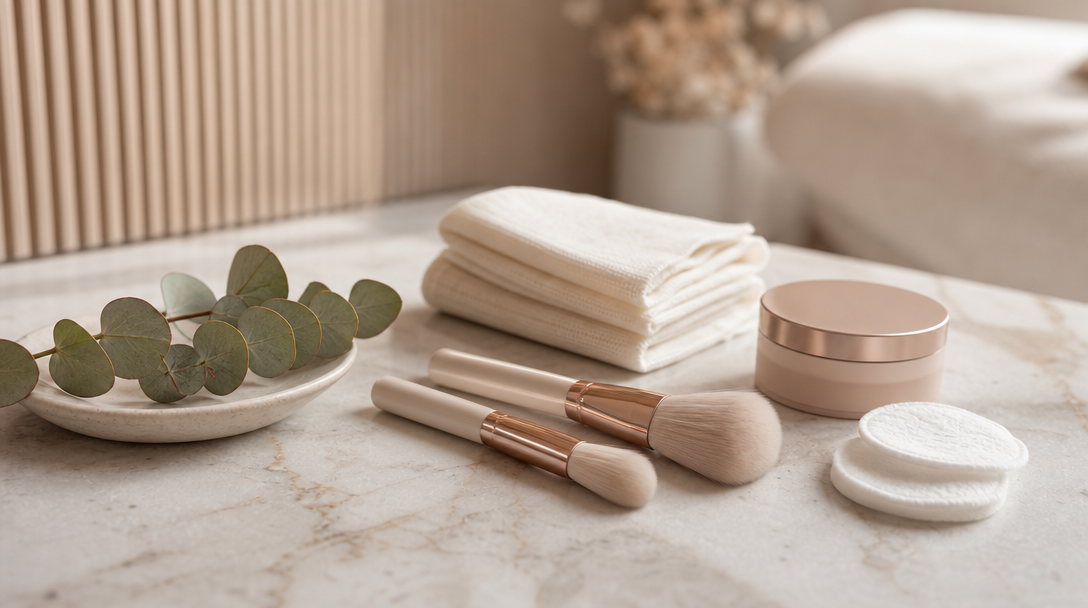
Once your skin is ready, gentle technique matters as much as the product. The aim is coverage without dragging, rubbing or reintroducing bacteria to skin that has only just recovered.
- Start with clean tools. Wash brushes and sponges, or use fresh disposable applicators, so you are not pressing old bacteria into the skin.
- Prep with a light, soothing moisturiser on fully settled skin to create a smooth base before any colour goes on.
- Dab, do not drag. Press product on with a light patting motion rather than rubbing, which reduces friction on the treated area.
- Remove it gently at night. Use a mild, fragrance-free cleanser or micellar water. Leaving makeup on overnight is one of the acne-worsening habits dermatologists flag, and it is worse still on recovering skin.
What else should you avoid in the first 24 to 48 hours?
Makeup is only one part of laser aftercare, and the same window that protects your skin from cosmetics applies to a few other things too. Heat, friction and sun are the main ones to manage.
- Sun and sunbeds. Treated skin is more vulnerable to burning and pigment change, so keep it covered and use a daily SPF. The NHS recommends at least SPF 30 with good UVA protection, applied generously, on any exposed treated area. If you want the full timeline, see our guide on tanning after laser.
- Heat and sweat. Skip hot baths, saunas, steam rooms and intense exercise for 24 hours while the skin cools down.
- Perfumed products and strong actives. Retinoids, glycolic or salicylic acid, and heavily scented lotions can all sting reactive skin, so pause them for a couple of days.
- Deodorant on treated underarms for 24 to 48 hours, to avoid irritating the area.
When should you see a professional?
See your clinician if you notice blistering, crusting, weeping or redness that keeps getting worse rather than settling over a couple of days. These are uncommon but worth a quick check rather than covering with makeup.
NHS trust leaflets note that blistering can occasionally follow laser treatment and is more likely when sun, make-up or perfumed products have been left on the skin, which is exactly why the aftercare window exists. Choosing a properly trained, registered practitioner in the first place lowers this risk: the JCCP register lets you check that whoever treats you meets recognised UK standards. If anything looks or feels wrong, contact the clinic that treated you before reaching for concealer.
How does CoLaz plan your treatment and aftercare?
At CoLaz, every laser hair removal course begins with a free consultation and a patch test, and you leave each session with clear written aftercare that spells out when makeup, sun and heat are safe again. Nobody should have to guess the timeline.
If your hair is white, grey or very fine, laser has little pigment to target, and we may suggest electrolysis instead, which is not affected by the same makeup considerations in the same way. Whatever route suits your skin, the plan is set in writing after we have seen how you respond, not sold as a fixed package on day one.
If you would like to know what your own course and aftercare would look like, our free consultation is genuinely free and includes the patch test. Book at your nearest CoLaz clinic and we will map it out together.
Ready to begin
Book a free Laser Hair Removal consultation at your nearest CoLaz clinic.
Thirty minutes with a qualified clinician. Skin assessment, candid recommendation, no obligation. Read about Laser Hair Removal at CoLaz, from £30 (upper lip, single session).
WhatsApp replies in minutes during opening hours
About the author
Alaiyka Parvez
Owner, CoLaz Aesthetics Clinic
Alaiyka Parvez bought the CoLaz franchise network in 2023, having joined the company as a Slough clinic employee in 2013 and gone on to open the Hounslow and Wembley franchises. She writes here on the treatments CoLaz delivers across its seven UK clinics.
Read more about Alaiyka and CoLaz →More on Hair removal
Keep reading.

2 September 2026 · 12 min
Is laser hair removal safe on dark skin? What the evidence says
Laser hair removal on dark skin works, but only when the wavelength matches your skin type. Here is the science behind why melanin matters, which lasers suit Fitzpatrick V and VI, and the questions to ask before you book.
1 July 2026 · 7 min
IPL vs laser hair removal: why the device you choose matters
The real difference between IPL and laser hair removal, why it changes your results and safety, and how CoLaz matches the right device to your skin and hair.

25 June 2026 · 8 min
Laser hair removal on the face: what women should know before booking
What women should know before booking facial laser hair removal: realistic session counts, the hormone link, matching the laser to your skin tone, and sun protection.
Begin
Book a free consultation
at your nearest CoLaz clinic.
Thirty minutes with a qualified clinician. Skin assessment, candid recommendation, written plan. No obligation.