
Can you exercise after laser hair removal?
 Owner, CoLaz Aesthetics Clinic
The short version
- Skip the gym for 24 to 48 hours after a laser hair removal session so freshly treated skin can settle.
- Gentle walking and light stretching are usually fine the same day, as long as you do not raise your body temperature or sweat heavily.
- High-intensity workouts, plus saunas, steam rooms, hot baths and swimming, are best left for 48 hours or more, and NHS trusts advise up to seven days for heat and swimming.
- Exercising too soon can trigger folliculitis (inflamed follicles) and prolong the normal redness and swelling that follow a session.
- At CoLaz, your clinician sets your personal timeline in writing at your free consultation, based on the area treated and how your skin responds.
TL;DR
- Skip the gym for 24 to 48 hours after a laser hair removal session so freshly treated skin can settle.
- Gentle walking and light stretching are usually fine the same day, as long as you do not raise your body temperature or sweat heavily.
- High-intensity workouts, plus saunas, steam rooms, hot baths and swimming, are best left for 48 hours or more, and NHS trusts advise up to seven days for heat and swimming.
- Exercising too soon can trigger folliculitis (inflamed follicles) and prolong the normal redness and swelling that follow a session.
- At CoLaz, your clinician sets your personal timeline in writing, based on the area treated and how your skin responds.
You can walk and stretch gently straight after laser hair removal, but you should wait 24 to 48 hours before returning to the gym, running or any workout that makes you sweat or overheat. The reason is simple: the laser has just delivered heat into your skin, and piling more heat and friction on top before it calms down is what causes most avoidable irritation.
Below is a clear, evidence-based guide to exercising after laser hair removal: how long to wait, what is safe in the meantime, and the two main risks of rushing back too soon. If you are new to the treatment, our laser hair removal page explains how the whole course works.
Can you exercise after laser hair removal?
Not straight away, and not at full intensity. Light movement such as a slow walk is usually fine on the day, but anything that raises your core temperature or brings on a sweat should wait at least 24 to 48 hours.
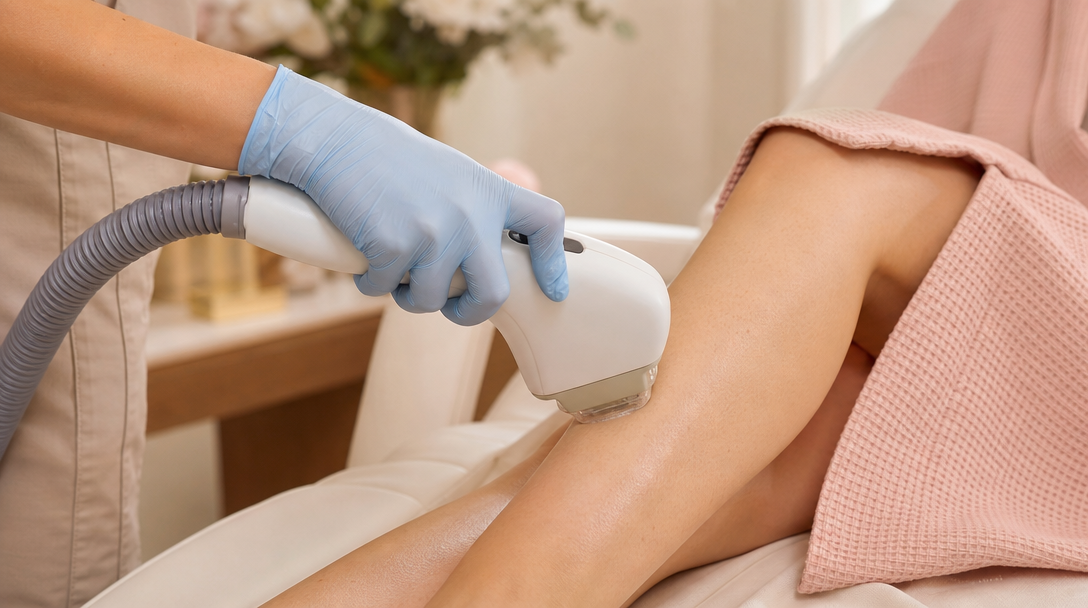
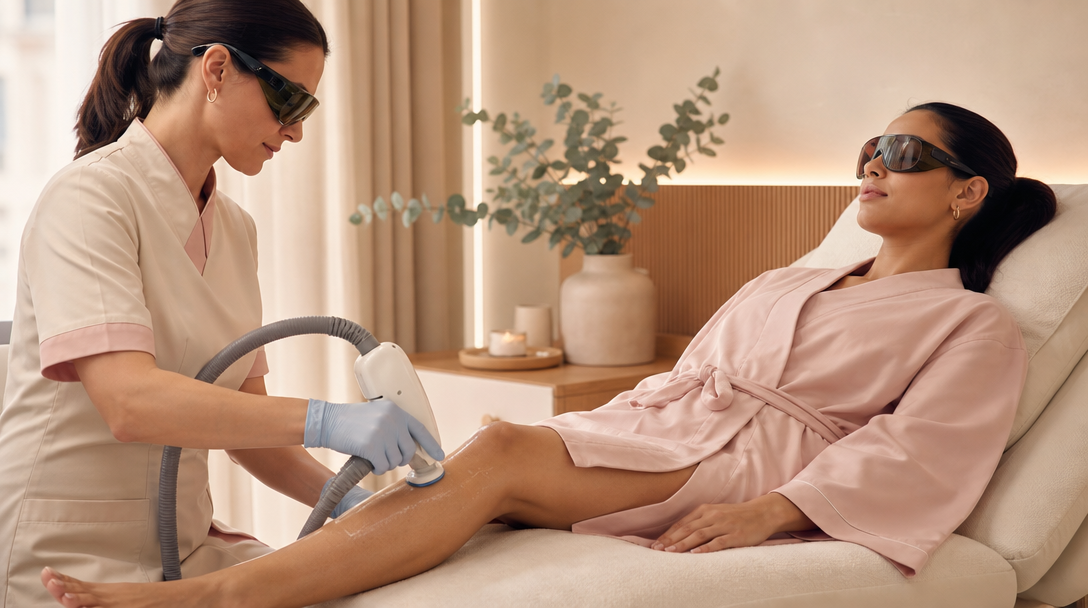
Here is what is actually happening. During treatment, the laser targets pigment in the hair follicle and converts light into heat. That controlled heat is what disables the follicle, and it also leaves the surrounding skin warm, slightly inflamed and more sensitive than usual for a day or two. The NHS notes that the treated area can be red, tender or swollen for a few hours up to a couple of days after a session. Exercise adds more heat and more friction to skin that is already working to recover, so the sensible move is to give it a short head start.
Why should you wait before working out?
You should wait because heat, sweat and friction are exactly the things freshly treated skin copes with least well. All three peak during a workout.
The biggest issue is your own body heat. When you exercise, your core temperature climbs and your body cools itself by sweating: the eccrine sweat glands can release a large volume of fluid to shed that heat. On skin that has just absorbed laser energy, that combination of raised temperature and salty sweat can sting, prolong redness and make the area feel more irritated than it needs to.
Friction is the second problem. Tight gym leggings, sports bras and waistbands rub against treated areas, and sweat trapped under close-fitting fabric creates a warm, damp environment around the follicles. That is a known setup for irritation and infection, which is why NHS guidance on ingrown hairs and inflamed follicles points to tight clothing, shaving and friction as common triggers. Waiting a day or two, then choosing loose cotton over synthetic gym wear, takes most of that risk away.
How long should you wait to exercise after laser hair removal?
For most people, wait 24 hours before light exercise and 48 hours before anything strenuous, then take your cue from how the skin looks and feels. If there is still redness, warmth or tenderness, give it more time.
Guidance varies a little by area and by clinic, and it is worth knowing the fuller picture:
- Light activity (walking, gentle stretching): usually fine within 24 hours, once any immediate redness has settled.
- Moderate to high-intensity exercise (running, weights, classes, sport): leave it at least 48 hours. The American Academy of Dermatology points out that laser hair removal needs little real downtime, with side effects such as redness and swelling typically fading in one to three days, so a short pause is usually all you need.
- Heat-based activities and swimming: be more cautious. Leeds Teaching Hospitals NHS Trust advises avoiding strenuous exercise, swimming, saunas, steam rooms and hot baths or showers for seven days after a session, because chlorine, shared water and prolonged heat all add risk while the skin is recovering.
Larger or more sensitive areas, such as the back, chest, bikini line or full legs, tend to stay reactive a little longer than a small patch like the upper lip, so lean towards the longer end of these ranges after a big session.
What exercise is safe during recovery?
Low-impact movement that keeps you cool and dry is safe, and it is a good way to stay active without straining the treated skin. The rule of thumb is: if it does not make you sweat or overheat, it is usually fine.
Reasonable options in the first 24 to 48 hours include:
- Gentle walking. A relaxed walk keeps you moving without spiking your body temperature.
- Light stretching or slow yoga. Stick to calm, restorative poses rather than a heated or fast-flowing class, and skip anything that leaves you dripping.
- Light, low-resistance strength work. Very gentle bodyweight movements are usually tolerable, but avoid heavy lifting, which raises heat and friction over treated areas.
Whatever you choose, wear loose, breathable clothing, keep the treated area clean and dry, and hold off if the skin still feels warm or looks pink. Cool showers are better than hot ones while you recover.
What are the risks of exercising too soon?
The two main risks are folliculitis and prolonged irritation. Neither is common when you follow aftercare, but both become more likely if you overheat and sweat on skin that has just been treated.
Folliculitis and breakouts. Folliculitis is inflammation of the hair follicles that shows up as small red or pus-topped bumps. It is a recognised, usually self-limiting side effect of laser hair removal: one dermatology case analysis links it to hairs being shed and extruded through the skin after treatment, which triggers a local inflammatory reaction. Sweat, heat and friction from an early workout give that reaction a helping hand, much as they aggravate the follicle irritation described by the British Association of Dermatologists. Keeping skin cool and clean for a couple of days is the simplest way to lower the odds.
Prolonged redness, swelling and pigment changes. Some redness and mild swelling around the follicles is normal after most sessions and settles on its own. Push heat and friction onto that skin too soon and you can extend it. A clinical review of management lists transient redness and follicular swelling among the usual short-term effects of laser hair removal, and notes that irritation, crusting and, rarely, pigment changes are more likely when skin is not looked after between and after sessions. Giving the area a calm 48 hours protects both your comfort and your results.
What else should you avoid after a session?
Alongside strenuous exercise, avoid anything that heats, rubs or exposes the treated skin while it recovers. The list is short and mostly common sense.
- Saunas, steam rooms, hot tubs and very hot baths or showers. Prolonged heat prolongs irritation, which is why the Bristol Laser Centre and other NHS services group these with strenuous exercise in their aftercare advice.
- Swimming pools. Chlorine and shared water can irritate and, rarely, infect recovering skin, so leave it for several days.
- Sun and sunbeds. Treated skin is more sun-sensitive afterwards. The NHS advises daily SPF 30 or higher on treated areas for at least four weeks, and avoiding deliberate tanning across the whole course. Our guide on tanning after laser covers this in detail.
- Deodorant, perfume and active skincare on the treated area for 24 to 48 hours, since fragrances and acids can sting freshly treated skin.
If your hair is white, grey or very fine, laser has little pigment to target and may not be the right tool. In that case electrolysis is the alternative your clinician may suggest.
How does CoLaz support your recovery?
At CoLaz, your aftercare is set out in person, not left to guesswork. Every new patient starts with a free consultation and a patch test, and your clinician gives you written aftercare tailored to the area treated and your skin type.
That means you leave knowing exactly when you can get back to the gym, what to watch for, and how to keep the area calm in between. Because we run seven UK clinics, you also have a local team to message if a patch of redness lingers longer than you expected or you are unsure whether a bump is normal healing. For a fuller picture of how a course is planned, see our guide on laser hair removal sessions.
If you are thinking about starting treatment, or you just want your aftercare questions answered before you book, arrange a free consultation at your nearest CoLaz clinic and we will plan it around your routine.
Ready to begin
Book a free Laser Hair Removal consultation at your nearest CoLaz clinic
Time with a qualified clinician: a skin assessment, an honest recommendation and no obligation. Read about Laser Hair Removal at CoLaz, from £30 (upper lip, single session).
More on Hair removal
Keep reading
-
Does laser hair removal hurt? Laser hair removal pain by body area
Laser hair removal is uncomfortable, not painful, and the level depends almost entirely on the area. Here is our honest area-by-area rating, what the evidence says about cooling, and the one thing not to do before a session. Read the article -

Is laser hair removal safe on dark skin? What the evidence says
Laser hair removal on dark skin works, but only when the wavelength matches your skin type. Here is the science behind why melanin matters, which lasers suit Fitzpatrick V and VI, and the questions to ask before you book. Read the article -
IPL vs laser hair removal: why the device you choose matters
The real difference between IPL and laser hair removal, why it changes your results and safety, and how CoLaz matches the right device to your skin and hair. Read the article
Book a free consultation at your nearest CoLaz clinic
Time with a qualified clinician: a skin assessment, an honest recommendation and a written plan. No obligation.