
10 aesthetic clinic red flags: when to walk out of the consultation
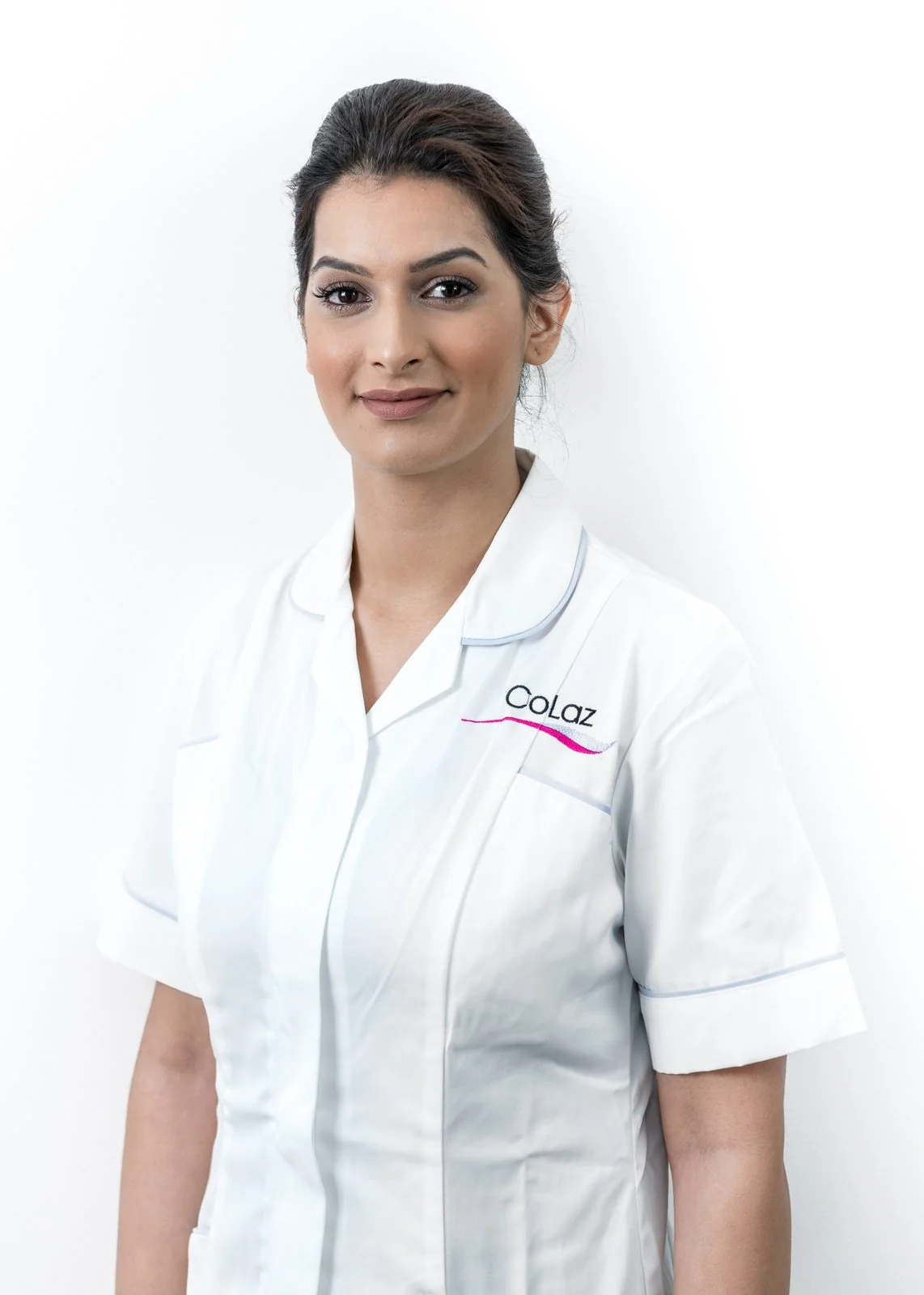 Owner, CoLaz Aesthetics Clinic
The short version
- Non-surgical treatments such as dermal fillers are still largely unregulated in England, so there is no legal requirement for the person injecting you to hold a medical qualification.
- The clearest aesthetic clinic red flags are a practitioner you cannot check, no listing on an accredited register, no written plan, same-day pressure and no protocol for complications.
- Save Face logged 2,824 complaints in a single year, and 89 per cent of those patients had found their practitioner on social media.
- A safe consultation covers medical history, realistic outcomes, an itemised price and a written plan you take away before you commit to anything.
- You are allowed to leave a consultation without booking. A clinic that treats that as a problem has told you something useful.
TL;DR
- Non-surgical treatments such as dermal fillers are still largely unregulated in England, so there is no legal requirement for the person injecting you to hold a medical qualification.
- The clearest aesthetic clinic red flags are a practitioner you cannot check, no listing on an accredited register, no written plan, same-day pressure and no protocol for complications.
- Save Face logged 2,824 complaints in a single year, and 89 per cent of those patients had found their practitioner on social media.
- A safe consultation covers medical history, realistic outcomes, an itemised price and a written plan you take away before you commit to anything.
- You are allowed to leave a consultation without booking. A clinic that treats that as a problem has told you something useful.
Most people choose a clinic on trust. They see a result they like, they message the account, and they book. The aesthetic clinic red flags that matter most are rarely dramatic, and they almost never show up in the treatment itself. They show up in the half hour before it: in how the clinic talks to you, in what it writes down, and in what it will not tell you.
We have been running clinics since 2005, and in that time the pattern has barely changed. The patients who come to us unhappy with work done elsewhere almost never describe a bad injection. They describe a bad consultation.
Here are the ten warning signs worth knowing, in roughly the order they tend to appear.
Why do aesthetic clinic red flags matter more in the UK than most people expect?
They matter because the safety net most patients assume already exists does not yet cover non-surgical treatments. In England there is currently no legal requirement for the person injecting your face to hold any medical qualification at all.
That is changing. The government published its consultation response in August 2025, after 11,848 people replied, setting out a licensing scheme that sorts procedures into red, amber and green risk tiers. Injectables, lasers and threads sit in the amber band, which would mean non-healthcare practitioners could only deliver them under the oversight of a named regulated healthcare professional. The scheme is not in force yet.
Until it is, the checking falls to you. The scale of the gap is measurable: Save Face recorded 2,824 complaints in a single year, 1,948 of them about dermal fillers, and 89 per cent of those patients had found their practitioner on social media.
Red flags 1 to 3: who is actually treating you
1. You cannot find out who will hold the needle
If you cannot get a name, a qualification and a training history before you book, that is the first warning. The NHS is direct about this and advises avoiding practitioners who have only completed a short training course, because complications of dermal fillers can include infection, nerve damage and blindness.
Ask two questions at the consultation: how many of these have you done, and what qualification do you hold for this specific treatment. A clinician who does this every week will answer both without hesitation. At CoLaz, every laser, IPL and energy-device treatment is delivered by a practitioner holding a VTCT / Ofqual Level 4 Certificate in Laser and IPL Treatments, and we will tell you which clinician is treating you before you book.
2. The clinic is not on any accredited register
Two UK registers are accredited by the Professional Standards Authority: the JCCP register and Save Face. Neither is compulsory, which is exactly why voluntary membership tells you something. It means the practitioner has agreed to be checked on training, insurance and standards, and has agreed to be complained about.
That last part matters. Save Face runs a public route to raise a concern against a registered practitioner. If nobody can complain about a clinic to anyone other than the clinic itself, there is no accountability in the system.
3. The treatment is offered somewhere that is not a clinic
Home visits, hotel rooms, injectable “parties” and salon back rooms are all warning signs. The NHS specifically advises avoiding group treatments, events involving alcohol, and mobile services where procedures happen in private homes or hotels.
The reason is practical rather than snobbish. If a vascular occlusion starts twenty minutes after an injection, you want to be in a room that has the emergency drugs, the sharps bin, the sink and the clinical notes. A kitchen table has none of those.

Red flags 4 to 6: how the clinic sells to you
4. The headline price does not add up
A price far below the cost of the product plus the clinician’s time is a signal about what is in the syringe, or about how fast the appointment will be. Good hyaluronic acid filler, proper consent time and a two-week review all cost money. At CoLaz, dermal fillers start from £150 per 1ml and anti-wrinkle injections from £199 for one area, and we itemise it in writing.
The NHS also advises against treatment vouchers sold on group discount or voucher sites. A voucher commits you to a treatment before anyone has assessed whether you are a suitable candidate for it, which is the wrong way round.
5. They can fit you in straight away
Same-day treatment at the first appointment is one of the clearest aesthetic clinic red flags, because it removes the gap in which people change their mind. NHS guidance is that you should be offered a cooling-off period after any consultation, and that you can walk away if you are not completely comfortable.
We will not sell a fixed course on day one before we have seen how your skin responds. For laser, IPL and energy-device treatments we patch test 48 hours before the first session, and we confirm the plan in writing after that patch test, not before it.
6. Nothing is written down
If you leave with no plan on paper, you have no record of what was promised, what was priced, or what was ruled out. A written plan should name the treatment, the number of sessions, the spacing, the product or device, the price per session and the maintenance you will need afterwards.
When I took over the CoLaz network in 2023, the first thing I rewrote was the consultation script every clinic uses, precisely because that document is the thing patients rely on six months later. Across our seven UK clinics, the written plan goes home with the patient before anything is booked.
Is it a red flag if a clinic advertises botulinum toxin by brand name?
Yes, and it is one of the easiest to check from your sofa. Botulinum toxin is a prescription-only medicine, and there is an absolute ban on advertising prescription-only medicines to the UK public. That covers the brand name in captions, in hashtags, in price lists and in paid ads.
The Advertising Standards Authority issued an enforcement notice on this in January 2020 and has been reporting problem posts for removal ever since. So red flag 7 is a clinic that names the prescription brand in its marketing, and red flag 8 is a clinic that runs before-and-after photographs of that treatment, which the ASA treats as an efficacy claim for a prescription-only medicine.
Neither breach means the injecting is unsafe. It does mean the clinic either has not read the rules that govern its own trade, or has read them and decided they do not apply. Both are worth knowing before you hand over your medical history.

What should a clinic have in place if something goes wrong?
A named person to call, a written complications protocol, and the drugs and referral route to manage the specific risks of the treatment you are having. If a clinic cannot describe that in one sentence, that is red flag 9.
The risk is not theoretical. A literature review of filler-related visual loss found 233 cases reported worldwide, with 82.3 per cent of those patients left with severe visual impairment in at least one eye, and the nose, glabella and forehead accounting for the majority of injection sites involved. A separate systematic review of filler safety concluded that the practitioner must have appropriate education, be able to provide emergency care, and know when to refer a patient on.
Red flag 10 is the absence of a proper screen before treatment. No medical history, no questions about medication, autoimmune conditions, pregnancy or recent isotretinoin, no consent form, and no age check. Administering botulinum toxin or a cosmetic filler to anyone under 18 in England has been a criminal offence since October 2021, outside narrow medical exemptions. A clinic that does not ask is not a clinic that is checking.
What does a good consultation look like instead?
It looks like a clinical assessment, not a sale. Expect 30 to 45 minutes covering medical and aesthetic history, current skincare, allergies and medication, Fitzpatrick skin type, your actual goals, contraindications and a realistic account of what the treatment can and cannot do.
The honest answer sometimes is no. We have turned patients away for laser (very light, grey or downy hair), for fillers (active acne, active cold sore, certain medications), for IV drips (pregnancy, blood-thinning medication) and for HIFU (recent filler in the same area). Saying no protects the patient, and it is the part of the job that separates a clinic from a counter.
You should also hear an alternative when the answer is no. A patient who arrives asking for cheek filler because a colleague had it may actually be unhappy with skin laxity along the jawline, which is a different problem needing a different product. If nobody asks what you are trying to change, nobody can tell you whether the thing you booked will change it.
Can you change your mind and walk out?
Yes, at any point, and you owe nobody an explanation. A free consultation is an assessment, not a contract, and the NHS position is that you should take time to think and can walk away if you are not comfortable.
If a clinic reacts badly to that, you have your answer in the cleanest possible form. In my experience the practitioners who are confident in their own work are the calmest about a patient going home to think, because they know the plan holds up on a second reading.
Aesthetic clinic red flags: what to do next
Run the ten checks before you book, not after. Who is treating you, are they on a register, where is the treatment happening, does the price make sense, is there a cooling-off period, is there a written plan, does the advertising follow the prescription-only rules, are there before-and-after claims on a prescription treatment, is there a complications protocol, and did anyone take a proper medical history.
If you want the longer version of the checking process, our guide to choosing a clinic covers registers, qualifications and questions in more detail. If you would rather just have the conversation, every CoLaz treatment starts with a free consultation and a written plan you take away, at whichever of our clinics is closest to you.
Ready to begin
Book a free Dermal Fillers consultation at your nearest CoLaz clinic
Time with a qualified clinician: a skin assessment, an honest recommendation and no obligation. Read about Dermal Fillers at CoLaz, from £150 (1ml, lip, jawline, chin, naso-labial or marionette, therapist tier).
More on Aesthetics
Keep reading
-

How to tell a qualified aesthetic clinician from a great one
Six checks you can run on a qualified aesthetic clinician in about 60 seconds, and six more that only show up once you are sitting in the consultation room. Read the article -

JCCP, Save Face and CQC: what each register actually checks
Three names come up when you try to check an aesthetic clinic, and they do three different jobs. A plain-English guide to what JCCP, Save Face and CQC each look at, what they leave out, and how to run the checks yourself. Read the article -

How much do dermal fillers cost in the UK? An honest 2026 price guide
Filler pricing in the UK swings from £150 to £600 per ml, and the gap is not random. Here is what you are actually paying for, which quotes should make you walk away, and how to price-check a clinic properly. Read the article
Book a free consultation at your nearest CoLaz clinic
Time with a qualified clinician: a skin assessment, an honest recommendation and a written plan. No obligation.