
Skin imperfections
Verruca removal at CoLaz clinics
Send a photo of your verruca to your nearest CoLaz clinic on WhatsApp. A qualified clinician reviews the image, confirms whether removal is suitable, and replies with a fixed price within one working day.
How the photo quote works
Three steps, no surprises
- 01
Send a photo
Tap the WhatsApp button and choose your nearest clinic. Attach a clear, well-lit photo of the area you would like assessed.
- 02
Get a quote
A qualified clinician checks the photo, confirms whether the treatment suits you and replies with a price within one working day. If it is not suitable, we tell you why and what to do next.
- 03
Book if happy
If the price works for you, book a short appointment. Most are done in one session, and there is no pressure to book on the day.
Good for
Who books Verruca Removal
- Single plantar warts (verrucas) on the sole of the foot or the heel
- Verrucas under pressure points that are painful when walking
- Stubborn verrucas that have not cleared with over-the-counter freeze kits or salicylic acid
- Cluster (mosaic) verrucas spreading across the foot
- Verrucas around the toes or under the toenail
- Adults wanting controlled in-clinic treatment rather than home freezing kits
What to expect
From your first consultation onwards
- 01
Send a photo of the verruca on WhatsApp to your nearest CoLaz clinic that offers the treatment (Reading), or attach the image during a free in-clinic assessment
- 02
Photo reviewed by a qualified clinician within one working day, who confirms the lesion looks like a verruca rather than a corn, callus or other foot lesion
- 03
We reply with a fixed price for the session length needed and outline how many sessions are likely
- 04
If you would like to proceed, book in for your treatment session at our Reading clinic
- 05
Foot soaked briefly and any thick overlying skin gently pared down so the treatment reaches the verruca itself
- 06
Treatment is performed using advanced electrolysis with thermolysis: the probe tip is gently inserted into the verruca and a thermolysis current is delivered through the fine needle, with sessions typically running fifteen to forty-five minutes
- 07
Most verrucas clear within around four weeks; deeper cases may need follow-up sessions
- 08
Antiseptic dressing applied in clinic with written aftercare confirmed before you leave
Verrucas are caused by HPV, they sit deep in the thick weight-bearing skin of the sole, and they are notoriously stubborn because over-the-counter freezing kits often do not reach the active lesion. At CoLaz a qualified clinician reviews a photo of the foot on WhatsApp, confirms removal is suitable, and replies with a fixed price within one working day. Treatment is performed using advanced electrolysis with thermolysis at our Reading clinic.
What a verruca is
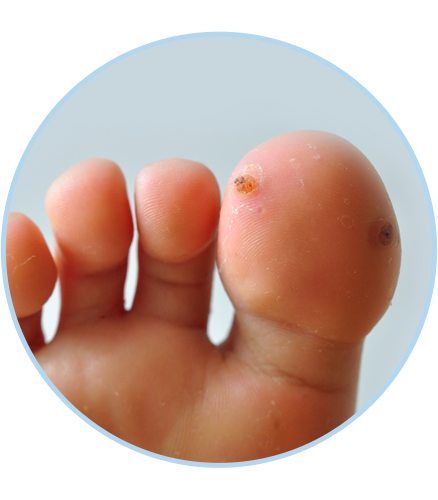
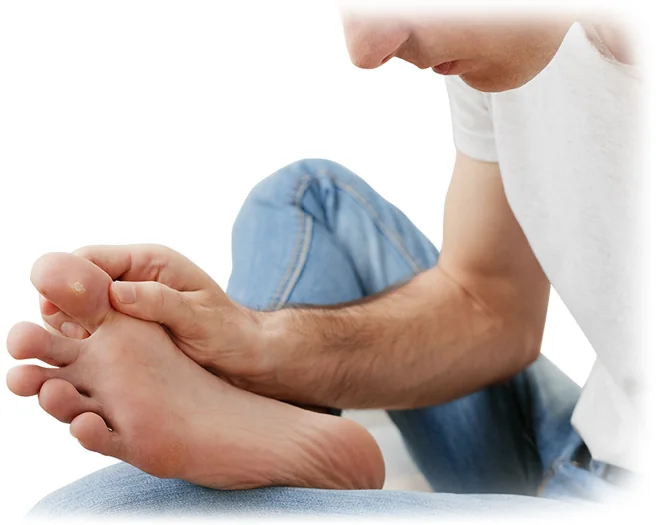
A verruca, known clinically as verruca plantaris or a plantar wart, is a wart on the sole of the foot caused by certain strains of the human papillomavirus (HPV). Because the verruca sits in the thick weight-bearing skin of the sole, it often grows inward under pressure rather than outward, which is why many verrucas have a flat or slightly sunken appearance with small dark dots in the centre.
That position also makes them sore when walking, especially on the heel or the ball of the foot, and that pain is often the reason patients book treatment. They are benign but contagious through direct skin contact or shared damp floors such as swimming pools, gym showers and changing rooms.
Verrucas are not the same strain of HPV that causes genital warts. We only treat verrucas on the feet at CoLaz; genital warts must always be assessed by a GP or a sexual health clinic and are not within our scope.
How removal works in clinic
We use advanced electrolysis with thermolysis as the precision method for verrucas. Any thick overlying skin is gently pared down before treatment so the active ingredient reaches the verruca itself, which is something the home freeze kits cannot do reliably and is part of why home treatment often fails.
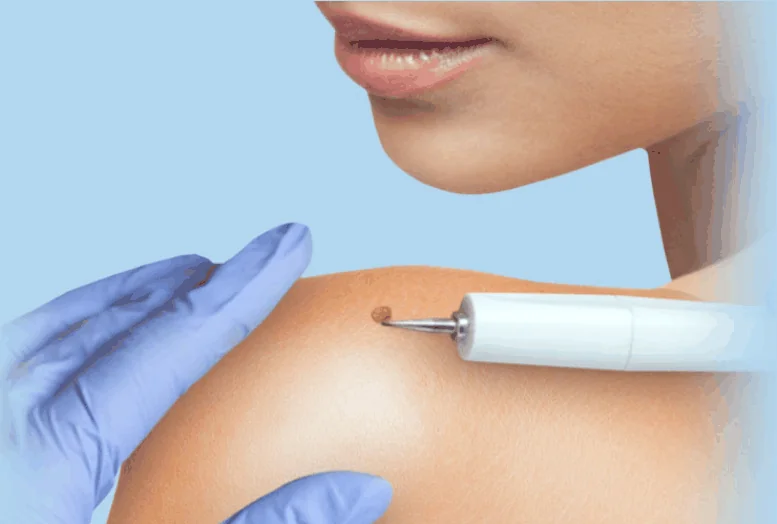
The probe tip is then gently inserted into the verruca and a thermolysis current is delivered through the fine needle. The current treats the lesion from inside the tissue rather than at the surface, which matters because the verruca is sitting under thick skin. Most verrucas clear within around four weeks after in-clinic treatment, with the dead tissue drying and dropping away as the skin heals.
A topical numbing approach is available on request, especially for verrucas on the heel or for patients with multiple lesions. Most patients describe the sensation as a brief warm pressure, with a slightly stronger feeling than face treatments because the skin on the sole is thicker. Sessions are typically fifteen to forty-five minutes.
Course length and aftercare
Verrucas commonly need two to three sessions spaced four to six weeks apart to clear fully, and stubborn or older verrucas can need more. They are harder to clear than most other warts because they sit deep in the thick skin of the sole and HPV is a persistent virus that can leave residual tissue between sessions.
A small scab or blister forms over the treated site within twenty-four to forty-eight hours. Keep the area clean and dry, elevate the foot for the first few hours if comfortable, and apply the antiseptic balm we provide twice daily for ten to fourteen days. Let the scab or blister heal naturally rather than picking or popping it.
Between sessions, cover the treated area in pools, communal showers and shared changing rooms with a waterproof plaster. HPV spreads through shared damp floors, and a simple cover makes a real difference to your healing and to the people around you.
Available at our Reading clinic
Verruca removal is delivered at our CoLaz Reading clinic by qualified clinicians. Book a free consultation via the clinic page for Reading, or send a WhatsApp message, most clinics reply within five minutes during opening hours.
Often considered alongside
Patients booking verruca removal often consider common warts removal for verruca vulgaris on the hands or body caused by the same family of viruses, seborrhoeic keratosis removal for benign waxy age-related growths, and skin tag removal for soft pedunculated growths on the neck or underarms.
Common questions
What patients ask first
Something else? Message your nearest clinic and a clinician will answer.
What is a verruca?
A verruca, known clinically as verruca plantaris or a plantar wart, is a wart on the sole of the foot caused by certain strains of the human papillomavirus (HPV). Because the verruca sits in the thick weight-bearing skin of the sole, it often grows inward under pressure and can be painful when walking. Verrucas are benign but contagious through direct skin contact or shared damp floors such as swimming pools, gym showers and changing rooms. They are not the same strain of HPV that causes genital warts.
How does verruca removal work at CoLaz?
We use advanced electrolysis with thermolysis as the precision method. Any thick overlying skin is gently pared down first so the treatment can reach the active verruca itself (something home freeze kits cannot do reliably and a key reason home treatment often fails). The probe tip is then gently inserted into the verruca and a thermolysis current is delivered through the fine needle, treating the lesion in a few minutes. Sessions typically run fifteen to forty-five minutes depending on verruca size and number, and most verrucas clear within around four weeks.
How do I send a photo for a quote?
Tap the Send a photo on WhatsApp button at the top of this page. Choose our Reading clinic. WhatsApp opens with a pre-filled message; attach a clear, well-lit close-up of the sole of the foot showing the verruca and send. We may ask one or two follow-up questions (how long it has been there, whether it is painful when walking, whether you have diabetes or any condition affecting circulation) so we can quote you accurately.
What if my photo shows something that isn't a verruca?
If the photo shows a lesion that looks like a corn or callus rather than a verruca, the clinician will explain the difference and recommend a podiatrist. If the lesion has changed in colour, size or shape unexpectedly, bleeds without being knocked, has more than one colour or is pigmented, the clinician will decline to quote and refer you back to your GP. Patients with diabetes, peripheral vascular disease or any condition affecting circulation or sensation in the feet need GP or podiatrist clearance first. Children with verrucas are often managed conservatively because many clear on their own.
How many sessions will I need?
Verrucas commonly need two to three sessions spaced four to six weeks apart to clear fully, and stubborn or older verrucas can need more. They are harder to clear than most other warts because they sit deep in the thick skin of the sole and HPV is a persistent virus. Single small verrucas occasionally clear in one session. We confirm the likely number of sessions in your photo quote reply and review the foot at every follow-up.
Will it leave a scar?
Scarring is uncommon with advanced electrolysis on the sole of the foot in trained hands, because the method is precise and stays at the lesion. A small pink or pale mark can stay for several weeks while the skin remodels and usually fades by three months. A small permanent mark is possible on larger or deeper verrucas. Patients with a personal or family history of keloid scarring should mention this at consultation so the plan can be adjusted.
How long will it take to clear?
Most verrucas clear within around four weeks of in-clinic treatment, with the dead tissue drying and dropping away as the skin heals. Deeper or older verrucas can need follow-up sessions over the following months before they fully clear, and we review the foot at each visit. Most patients return to walking and normal activities the same day, though pressure on the heel or ball of the foot may be tender for a few days.
What is the aftercare?
Keep the treated foot clean and dry, and elevate it for the first few hours after the session if comfortable. Apply the antiseptic balm we provide twice daily for ten to fourteen days, and let the small scab or blister that forms heal naturally rather than picking it. Avoid saunas, steam rooms, swimming pools, public showers and intense exercise for forty-eight hours. Between sessions, cover the treated area in pools and communal showers, because HPV can spread to other parts of your own foot or to other people while the lesion is still active.
How much does verruca removal cost at CoLaz?
Verruca removal is priced per verruca, and the price depends on the size, depth and number of verrucas being treated. A single verruca is at the lower end of the range; two or three treated in the same appointment scale up; cluster (mosaic) verrucas or multi-session courses for stubborn cases are quoted higher. Pricing is confirmed per photo quote, in writing, before any treatment is booked. Send a photo on WhatsApp and we reply with a firm price for your specific case within one working day.
Where to book
Available at our Reading clinic

Start with a free verruca removal consultation
Tell us what you would like to change. Your clinician will recommend a plan, confirm the price in writing and leave the booking to you.