Aesthetics · 27 May 2026 · 8 min read
PDO thread lift vs surgical face lift: what is the difference?
By Alaiyka Parvez
Owner, CoLaz Aesthetics Clinic
The short version
- • A PDO thread lift gives a subtle lift and lasts 12 to 24 months; a surgical face lift gives a more dramatic lift and lasts 7 to 10 years.
- • Threads are placed under the skin in a 30 to 60 minute clinic visit under local anaesthetic, with 2 to 5 days of social downtime.
- • A surgical face lift is performed in an operating theatre by a plastic surgeon under general anaesthetic, with 2 to 3 weeks of recovery.
- • Threads are best for mild to moderate skin laxity; a face lift addresses heavier sagging that threads cannot reach.
- • In the UK, the proposed licensing framework puts thread lifts in the 'red' (highest-risk) category, meaning only registered healthcare professionals will deliver them.
These two procedures sit at opposite ends of the same map. A PDO thread lift is a 30 to 60 minute clinic procedure done under local anaesthetic that gives a subtle lift for 12 to 24 months. A surgical face lift is a theatre operation done by a plastic surgeon under general anaesthetic that gives a dramatic lift for 7 to 10 years.
Choosing between them is not “which is better.” It is how much skin laxity you actually have, how much downtime you can take, and how dramatic a change you want. Below is the honest comparison, what the published evidence says about each, and how we decide which patients are right for a PDO thread lift at CoLaz.
How does a PDO thread lift work?
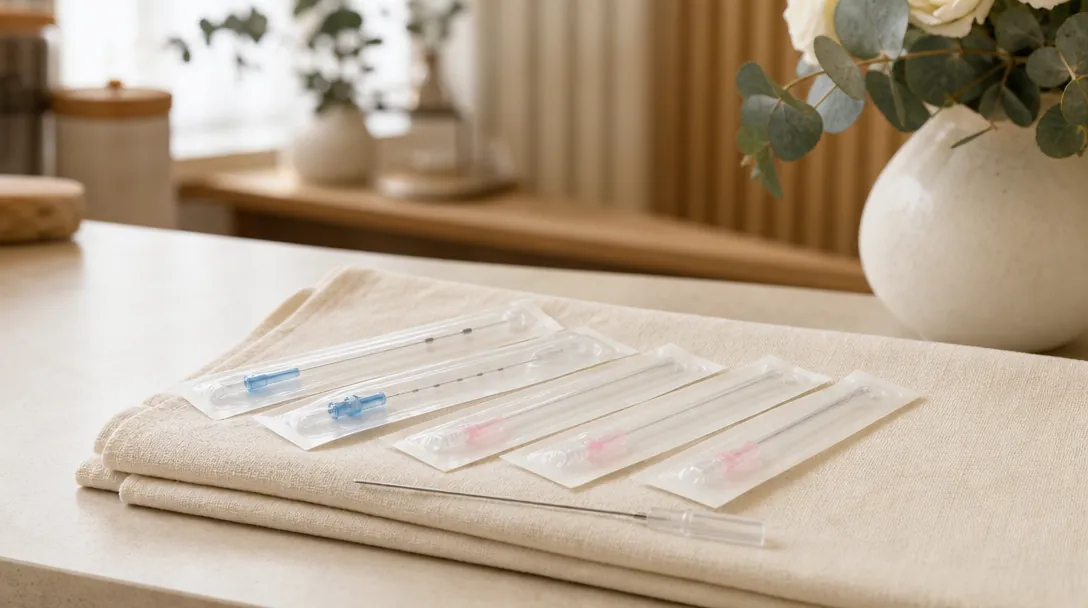
A PDO thread lift inserts fine, absorbable polydioxanone threads under the skin to physically lift sagging tissue and to stimulate the body’s own collagen production around each thread.
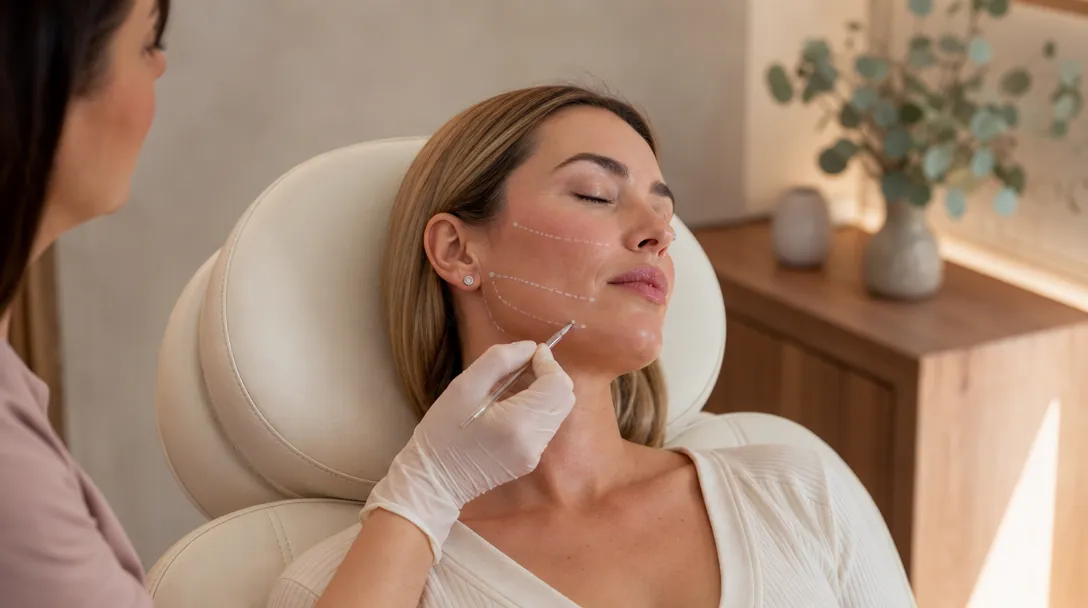
The threads are about the diameter of a human hair, and most carry tiny barbs or cones that grip the underside of the skin. A clinician introduces them with a hollow needle along pre-marked tracks, then anchors them so the soft tissue is pulled gently upwards or inwards. The whole procedure takes 30 to 60 minutes under local anaesthetic, and most patients walk out the same day.
After insertion, two things happen in parallel. The mechanical lift is visible immediately, although softened by initial swelling for the first week. Underneath that, the threads begin a slow biostimulatory process. A 2024 biostimulation study on PDO insertion documented selective inflammation that drives fibroblast activity and new collagen synthesis around each thread track. The threads are absorbed over six to nine months, but the collagen scaffolding they leave behind continues to support the area for longer.
How does a surgical face lift work?
A surgical face lift, formally known as a rhytidectomy, lifts and repositions the deeper soft tissues of the face (the SMAS layer), removes excess skin, and resuspends the underlying muscle and fat at the cheekbone and jawline.
The operation is performed by a plastic surgeon in an operating theatre under general anaesthetic and takes three to five hours. Incisions are made along the hairline and around the ear so the resulting scars sit in natural creases. A patient stays in hospital overnight in many cases and recovers at home for two to three weeks before being comfortable in social settings.
A systematic review of rhytidectomy outcomes across 11,300 patients found overall complication rates of 1.8%, with patient satisfaction averaging 78%. The same review confirmed that SMAS-repositioning techniques produce longer-lasting results than skin-only lifts. The result is dramatic in a way no non-surgical procedure can match. It is also more invasive, more expensive and irreversible.
How long does each procedure last?
A PDO thread lift typically lasts 12 to 24 months. A surgical face lift typically lasts 7 to 10 years. That single difference shapes almost every other comparison between the two.
For threads, the duration depends on the type and thickness of threads, the area treated, and how strongly the patient’s own collagen response holds the result after the threads themselves have dissolved. A clinical case report on PDO thread lifts documented sustained improvement seven months post-procedure in the lower face, and mid-face evidence from the biostimulation study suggests the direct lifting effect can extend to around two years in some patients.
For a face lift, longer-term follow-up shows that 5.5 years after surgery around three-quarters of patients still appeared younger than they did pre-operatively, and SMAS-based techniques routinely sustain the result for the full 7 to 10 years before the natural ageing process catches up.
Across a decade, you would expect to have one face lift or six to eight thread lift courses to maintain a comparable visual result. The economics are not what most people assume; threads are not always the lower lifetime cost.
Who is each procedure for?
PDO threads are designed for mild to moderate skin laxity in patients who still have reasonable skin elasticity. A face lift is for moderate to advanced laxity in patients whose tissues have descended too far for a non-surgical pull to address.
The cleanest test: imagine pulling the skin in front of your ear upwards and back with your fingers. If a small lift gives a refreshed look you like, threads can probably get you there. If you need significant tension to see the change you want, threads will not be enough.
- Mid-thirties to mid-forties, mild jowling, good skin quality. Threads are usually the right answer.
- Mid-fifties onwards, deep nasolabial folds and visible jowls. A face lift is usually right; threads in this group disappoint because tissue descent is greater than threads can hold.
- Late forties to early fifties, moderate laxity, not ready for surgery. The most common group; the choice is a discussion about downtime, cost and permanence.
We also turn patients away. If we conclude that threads will not give a meaningful result, we will say so and recommend you see a plastic surgeon instead. We are members of the JCCP and listed on Save Face, and saying “this is not the right treatment for you” is part of those standards.
What about downtime and recovery?
PDO thread lift downtime is typically 2 to 5 days of social recovery; surgical face lift recovery is 2 to 3 weeks. This is one of the biggest practical differences between the two.
After a thread lift, the first 24 hours often involve mild swelling and tightness; ice packs and paracetamol are usually enough. Most patients are comfortable returning to work within 48 to 72 hours, although strenuous exercise, saunas and dental work should be avoided for two weeks. The result you see at one week is rarely the final result; settling continues over four to six weeks as the threads anchor and the collagen response builds.
After a surgical face lift, the first week involves swelling, bruising and visible dressings. Sutures are usually removed at 7 to 10 days, after which most patients begin to look socially presentable. Office work is feasible at 2 to 3 weeks, public-facing work may take 4 to 6, and the final result settles over 3 to 6 months as the deeper tissues heal.
The recovery difference also affects who can realistically have each procedure. A patient with young children, a public-facing job and limited support at home may genuinely not be able to take three weeks off, regardless of what the face needs.
What are the risks of each procedure?
Both procedures have real risks. The PDO thread lift profile is well documented and the most common issues are reversible. The surgical face lift profile is also well documented but the risks are higher per procedure, and complications are not reversible in the same way.
For PDO threads, a published analysis of thread-lift complications catalogues the main issues: skin dimpling at the entry point, thread extrusion (a thread tip working its way to the surface), asymmetry, and rarely infection or nerve irritation. The British Association of Dermatologists publishes patient guidance and recommends choosing a practitioner on an accredited register.
Save Face reporting shows complaints about thread lifts almost tripled to 213 cases in 2024, with deep infections and permanent scarring among the documented harms. The issue is rarely the threads themselves and almost always the practitioner placing them.
For a face lift, the reconstructive rhytidectomy review put the major complication rate at 1.8% across more than 11,000 patients. The most common issues were haematoma (1.1%) and infection (0.3%), with male sex, BMI over 25 and combined procedures identified as risk factors. These are not common, but they are serious when they occur, which is why a face lift should only ever be performed by a plastic surgeon on the GMC specialist register.

How is each procedure regulated in the UK?
A surgical face lift is regulated as a medical procedure and can only be performed by a plastic surgeon on the GMC specialist register, in a CQC-registered facility. PDO thread lifts are not yet subject to that level of mandatory regulation, but they will be soon.
The House of Commons Library briefing on regulation of non-surgical cosmetic procedures sets out the proposed licensing scheme for England, and the Department of Health consultation classifies thread lifts in the “red” (highest-risk) tier, alongside breast augmentation and deep chemical peels. Under the proposed framework, thread lifts will be restricted to qualified healthcare professionals working in CQC-registered premises. That bar already applies to clinics that have voluntarily signed up to the JCCP and Save Face standards, and it is the bar we apply at CoLaz now.
A clinic that is already CQC-registered and operating to the proposed “red tier” standard will still be open and operating to the same standard once the law changes. A clinic that is not, may not be.
How does CoLaz decide between threads and a referral?
Every new thread lift enquiry at CoLaz starts the same way: a free consultation with the clinician, a physical examination of the area, and an honest conversation about whether threads will achieve what you actually want.
If we think threads are right for you, we agree the plan in writing (number and type of threads, expected duration, price and recovery time) before any procedure is booked. We do not place threads on the day of the first consultation.
If we think threads will not give you a meaningful result, we will say so and recommend you see a plastic surgeon instead. We would rather be remembered as the clinic that gave you the right advice than the clinic that took the booking.
If you are not sure where you sit on that scale, the consultation is free at every CoLaz clinic and is genuinely no-obligation. Bring photos of yourself five and ten years ago if you have them; they help us assess how your face has changed.
Ready to begin
Book a free PDO Thread Lift consultation at your nearest CoLaz clinic.
Thirty minutes with a qualified clinician. Skin assessment, candid recommendation, no obligation. Read about PDO Thread Lift at CoLaz, from £299 (eyes, cheeks or nasolabial folds).
WhatsApp replies in minutes during opening hours
About the author
Alaiyka Parvez
Owner, CoLaz Aesthetics Clinic
Alaiyka Parvez bought the CoLaz franchise network in 2023, having joined the company as a Slough clinic employee in 2013 and gone on to open the Hounslow and Wembley franchises. She writes here on the treatments CoLaz delivers across its seven UK clinics.
Read more about Alaiyka and CoLaz →More on Aesthetics
Keep reading.

20 August 2026 · 8 min
JCCP, Save Face and CQC: what each register actually checks
Three names come up when you try to check an aesthetic clinic, and they do three different jobs. A plain-English guide to what JCCP, Save Face and CQC each look at, what they leave out, and how to run the checks yourself.

13 August 2026 · 9 min
How much do dermal fillers cost in the UK? An honest 2026 price guide
Filler pricing in the UK swings from £150 to £600 per ml, and the gap is not random. Here is what you are actually paying for, which quotes should make you walk away, and how to price-check a clinic properly.

21 July 2026 · 8 min
10 aesthetic clinic red flags: when to walk out of the consultation
Non-surgical treatments are still largely unregulated in England. These are the ten warning signs worth knowing before you book, and the ones that should make you leave.
Begin
Book a free consultation
at your nearest CoLaz clinic.
Thirty minutes with a qualified clinician. Skin assessment, candid recommendation, written plan. No obligation.